If you print gears or moving parts, you want filament that’s tough, precise, and predictable. I’ll show four top choices—from easy-to-print PETG to nylon blends with carbon fiber and PPA—each offering strength, low friction, and dimensional stability for functional parts. I’ll also point out key settings and trade-offs so you know what to expect and which filament fits your project best, so you can pick the right material and avoid costly reprints.
OVERTURE PETG 3D Printer Filament 1.75mm (1kg Spool)
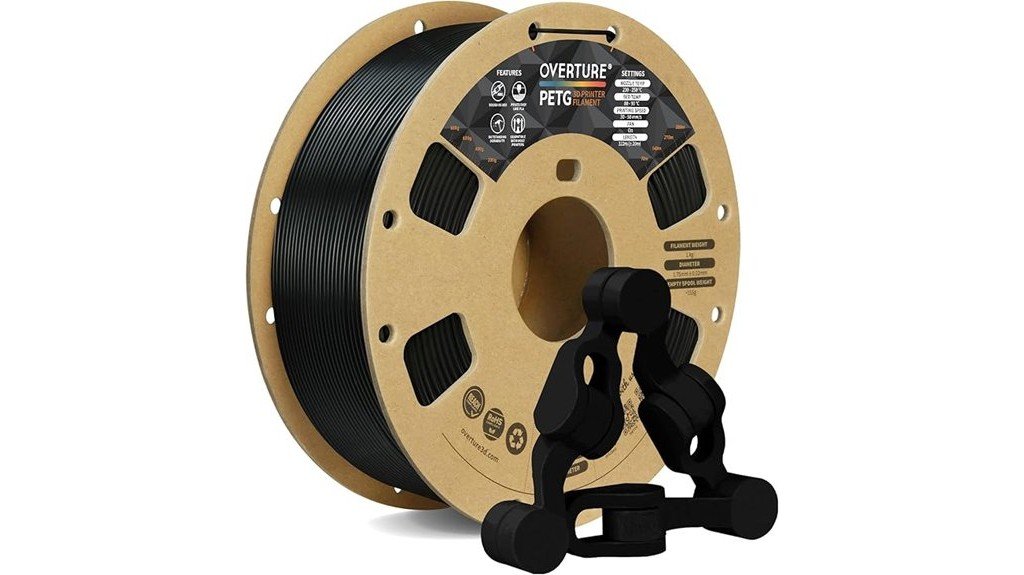
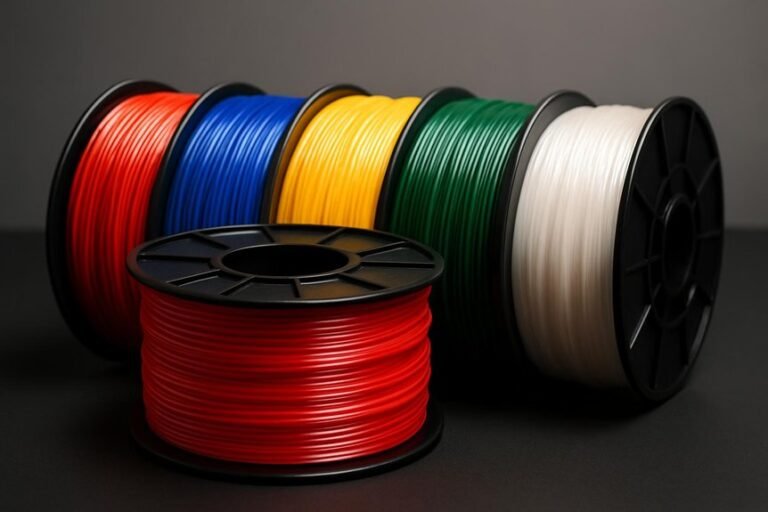
If you need filament that makes tough, reliable gears and moving parts, OVERTURE’s PETG 1.75mm (1kg) spool is a solid choice — think of it as the workhorse of your printer’s toolbox. You’ll appreciate its strength and durability, stronger than PLA and easier to print than ABS, so functional parts hold up under stress. The precision-wound spool and ±0.02mm diameter keep feeds steady, reducing jams and under-extrusion. Print around 245–255°C with a 70–85°C bed and moderate speeds to avoid stringing. It ships vacuum-sealed in a resealable bag, though drying helps if it’s absorbed moisture.
Best For: Makers and hobbyists needing durable, easy-to-print filament for functional parts, gears, and outdoor projects.
Pros:
- Stronger than PLA and easier to print than ABS, making it ideal for mechanical and functional prints.
- Precision-wound spool and ±0.02mm dimensional accuracy reduce jams and under-/over-extrusion.
- Vacuum-sealed packaging with resealable bag helps protect from moisture during storage.
Cons:
- Higher nozzle and bed temperatures (245–255°C nozzle, 70–85°C bed) required compared with PLA.
- Can be prone to stringing at higher print speeds; optimal prints often need slower speeds and tuning.
- Shelf life and moisture sensitivity mean drying may be necessary if not stored properly.
SUNLU Easy PA Nylon 6+66 1.75mm 1KG 3D Printer Filament (Black)
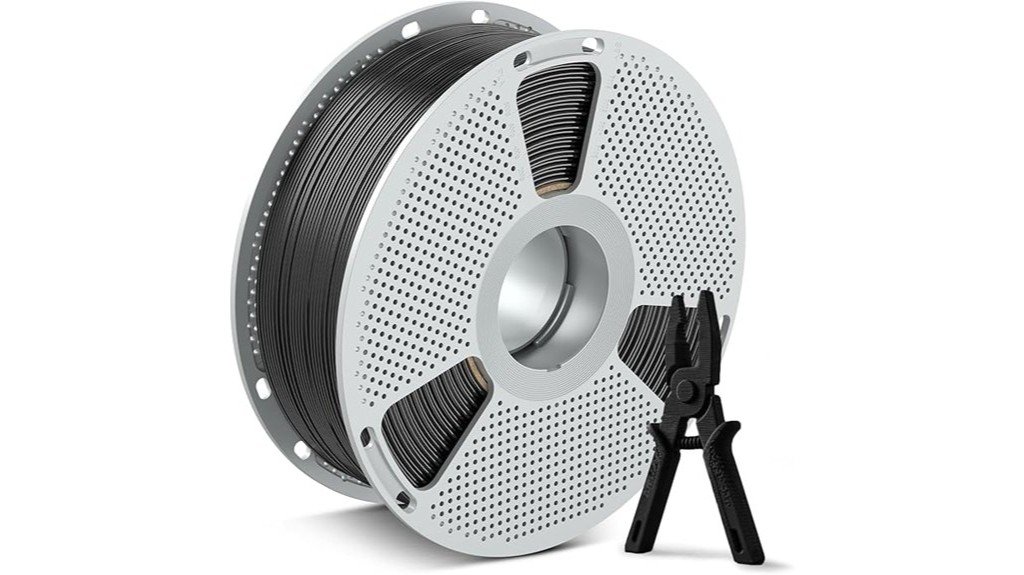
For makers who need strong, reliable moving parts, the SUNLU Easy PA Nylon 6+66 filament is a standout choice — think gears, bearings, and robotic joints that actually last. You’ll get a 1.75mm, 1kg spool of Nylon 6+66 that beats PLA and ABS in tensile and bending strength, with carbon fiber reinforcement for excellent layer adhesion. Vacuum aluminum packaging and a PC spool that tolerates 110°C help prevent moisture damage and make drying easy. Low shrinkage minimizes warping, and a 121°C heat deflection temp suits hot environments. Anneal at 90–130°C to boost performance for demanding applications.
Best For: Makers and engineers who need high-strength, low-warp moving parts (gears, bearings, drone arms, and robotic joints) that withstand mechanical stress and elevated temperatures.
Pros:
- High tensile and bending strength with carbon-fiber reinforcement for excellent layer adhesion and reduced delamination.
- Low shrinkage and warp-free printing plus 121°C heat deflection temperature for reliable dimensional stability in hot environments.
- Vacuum aluminum packaging and a PC spool (rated to 110°C) make moisture control and drying straightforward.
Cons:
- Nylon-based filament often requires higher nozzle/bed temperatures and may need an enclosure or specialty hardware for optimal printing.
- Abrasive carbon-fiber content can wear standard brass nozzles, requiring hardened nozzles for longevity.
- Requires careful moisture management and possible annealing (90–130°C) for best mechanical properties, adding post-processing time.
Polymaker Fiberon PA612-CF Carbon Fiber Nylon 3D Printing Filament (1.75mm, 0.5kg)
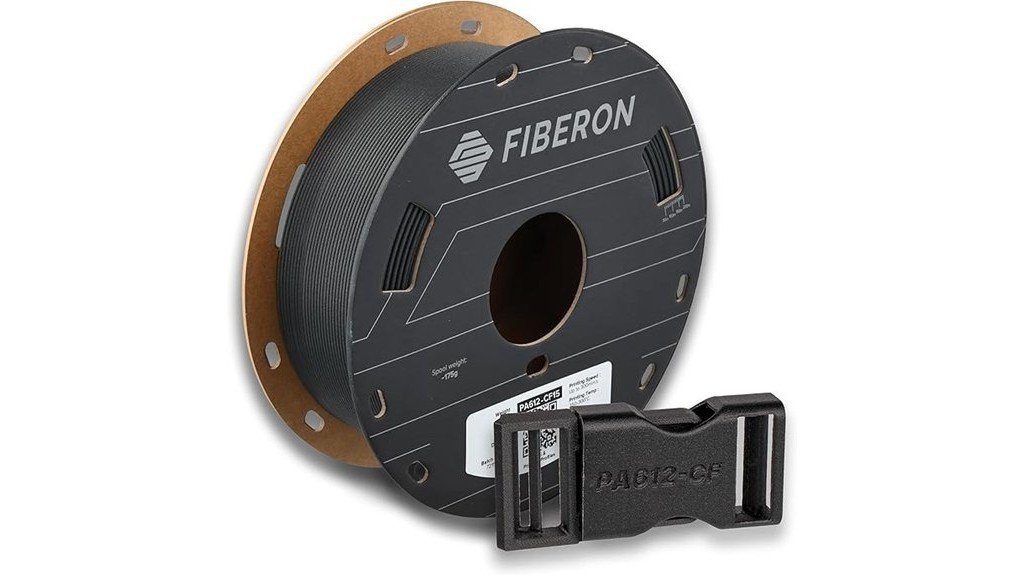
Think of this Polymaker Fiberon PA612-CF as the go-to choice when you need strong, dimensionally stable parts that can actually handle real mechanical stress—perfect for printing gears, hinges, and other moving parts. You’ll get carbon fiber–reinforced nylon that prints fast, sticks well, and resists warping. It’s less moisture-sensitive than many nylons, so you’ll see better consistency, though drying before use can help. The spool’s tangle-free, vacuum-sealed packaging keeps filament clean. Expect crisp dimensions and sturdy parts, but use a hardened nozzle since the filament is slightly abrasive and can be brittle under extreme loads.
Best For: Makers and engineers who need strong, dimensionally stable, fast-printing nylon parts (gears, hinges, tooling, and automotive end-use components) with improved moisture resistance.
Pros:
- Carbon fiber reinforcement delivers high strength, stiffness, and excellent dimensional stability for functional parts.
- Optimized for high-speed printing with good first-layer adhesion and minimal warping or jamming.
- Tangle-free, vacuum-sealed packaging with desiccant and recycled cardboard spool reduces moisture and contamination.
Cons:
- Slightly abrasive and can wear standard nozzles—hardened nozzles recommended.
- Can be brittle under extreme loads and may require design considerations for impact resistance.
- Still moisture-sensitive compared to many non-nylon filaments; drying before use is often advised.
Siraya Tech Fibreheart PPA 3D Printing Filament (1kg, 1.75mm)
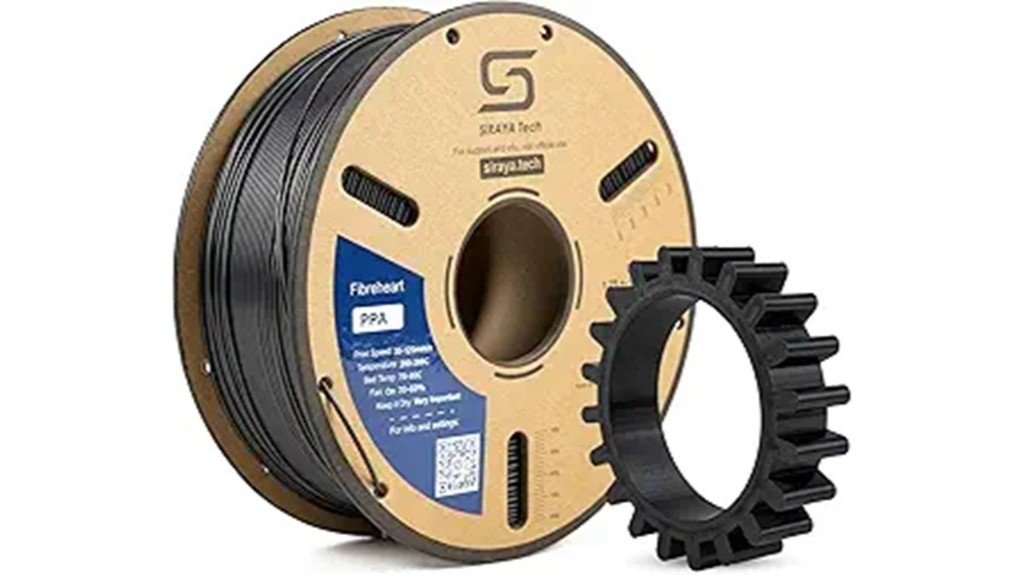
You’ll appreciate Siraya Tech’s Fibreheart PPA if you need a filament that stands up to real mechanical work—this high-performance polyphthalamide (PPA) blends strength, heat resistance, and low friction so gears, bearings, and other moving parts last longer and run smoother. You’ll get a 1kg spool of 1.75mm PPA Black with 70 MPa tensile strength and 114 MPa flexural strength when dry, plus low moisture uptake compared to PA6. It handles heat, chemicals, and wear well, making it great for prototypes and end-use parts. Print hot (260–300°C) on a capable printer, watch for shrinkage, and tweak settings.
Best For: Engineers and advanced hobbyists who need a high-strength, heat- and wear-resistant filament for functional prototypes and end-use mechanical parts like gears and bearings.
Pros:
- Excellent mechanical properties (70 MPa tensile, 114 MPa flexural when dry) for durable, load-bearing parts.
- Low moisture absorption and good chemical/heat resistance, suitable for automotive/aerospace environments.
- Low friction and self-lubricating behavior ideal for moving components and wear-prone applications.
Cons:
- Requires high printing temperatures (260–300°C) and a capable printer, limiting use on entry-level machines.
- Can exhibit brittleness and shrinkage that may require dimensional compensation and tuning in slicer settings.
- Moisture sensitivity (though lower than PA6) demands proper storage and drying for best results.
Factors to Consider When Choosing Highly Rated Filament for Gears & Moving Parts
When you’re picking filament for gears and moving parts, focus first on strength and toughness so the parts don’t crack under load, and on wear resistance so teeth and bearings keep working longer. Check dimensional stability and heat resistance limits so your prints hold their shape and don’t soften in warm conditions, and remember that some materials are sensitive to moisture, which can ruin print quality if not stored properly. Balancing these factors helps you choose a highly rated filament that actually performs in real-world use without surprises.
Strength and Toughness
A strong filament is the backbone of any reliable gear or moving part, so you’ll want materials that can handle repeated stress without failing. Focus first on tensile strength — materials like Nylon 6+66 shine here, offering far better tensile and bending strength than PLA or ABS, so gears resist snapping under load. You’ll also want excellent layer adhesion; parts that bond well between layers are much less likely to delaminate during use. Low moisture absorption matters too — Polyphthalamide Nylons keep mechanical properties steady and avoid becoming brittle after humidity exposure. Heat resistance is key for dynamic applications; Nylon 6+66’s 121°C heat deflection temp helps parts keep shape under warmth. Finally, check printability and dimensional stability, since consistent prints last longer.
Wear and Abrasion
Because gears and moving parts rub against each other constantly, you’ll want a filament that stands up to wear and abrasion so your prints last longer and stay reliable. Pick materials with low friction and self-lubricating traits to cut wear; that means smoother operation and fewer replacements. Nylon, especially carbon‑fiber‑reinforced nylon, offers high tensile and bending strength for repeated motion and impacts. Reinforcing fibers also boost layer adhesion, lowering delamination risk when parts are stressed. Watch for low shrinkage too, since warped teeth or loose fits shorten a gear’s life. In practice, I found reinforced nylon gears run quieter and last much longer than plain PLA. Balance material choice with print settings and post-processing to maximize durability without sacrificing fit.
Dimensional Stability
Dimensional stability matters a lot for gears and moving parts, since tiny changes in size can make the difference between a smooth-running mechanism and one that jams or wears out fast. You want filament with low shrinkage so parts keep their intended shape after printing; some nylons perform well here and cut down warping that throws gears out of mesh. Good layer adhesion also helps — when layers bond well, parts resist delamination and hold tolerances under stress. Watch out for moisture-sensitive materials: absorbed water can swell or distort prints, so you’ll need proper storage and occasional drying. Finally, choose filaments known to stay dimensionally consistent across normal temperature swings so your assemblies stay reliable.
Heat Resistance Limits
You’ve already looked at how steady dimensions keep gears meshing, and heat resistance is the next piece of the puzzle because parts can change shape or lose strength when they get hot. When you pick filament, check heat deflection temperature (HDT) so parts won’t warp under load; Nylon 6+66, for example, holds up around 121°C, which is great for tougher jobs. PPA filaments resist heat and harsh chemicals, so they’re common in automotive and aerospace parts that see high temperatures. Remember printing requirements too—some high-performance filaments need nozzle temps up to 300°C to develop their best properties. Choosing materials rated for your operating temperature reduces the risk of deformation or sudden failure in functional prototypes and end-use gears.
Moisture Sensitivity
When you’re choosing filament for gears and moving parts, moisture sensitivity matters because wet filament can ruin a print in ways you might not expect: bubbling, weak layer bonds, and warping all lead to parts that don’t mesh or hold up under load. You’ll notice nylon-based filaments like Nylon 6+66 and PPA soak up moisture faster, so they need drying before use or you’ll get poor strength and surface flaws. Store filament in vacuum-sealed bags or containers with desiccants to keep humidity out; that simple step often saves a project. Some materials, such as PA612-CF, resist moisture better and give steadier dimensions in humid workshops. When in doubt, dry your filament—especially nylons—before printing functional gears.
Printability and Adhesion
Because a solid first layer sets the stage for everything that follows, printability and adhesion are some of the most important things to check when picking filament for gears and moving parts. You want filament that sticks well to the bed and resists warping, so your tiny teeth and shafts stay true to size. Low-shrinkage materials like nylon or PETG give you better dimensional accuracy for tight fits. Consistent diameter (±0.02 mm) helps your extruder feed smoothly, cutting down on blobs and gaps. Follow the manufacturer’s temperature ranges to get good layer bonding without stringing. Look for user-friendly features too — tangle-free spools and jam resistance save time and frustration when you’re printing complex moving parts.
FAQ
Can These Filaments Be Dyed or Colored After Printing?
FAQ 1: Can I dye 3D printed parts?
Yes, many 3D printed parts can be dyed after printing, depending on the filament used.
FAQ 2: Which filaments take dye well?
Nylon and natural PLA are known to absorb dyes effectively, providing good color results.
FAQ 3: What about PETG and ABS?
PETG and ABS require surface preparation or the use of paint to achieve desired colors, as they do not absorb dyes easily.
FAQ 4: Are there any filaments that resist dyeing?
Certain engineering filaments are resistant to dye absorption and may not take color well.
FAQ 5: How should I prepare PETG or ABS for dyeing?
For PETG and ABS, consider sanding the surface lightly or applying a primer before painting to improve adhesion.
FAQ 6: Can I use fabric dye on 3D printed parts?
Fabric dyes can work on certain filaments like nylon and PLA, but results will vary based on the specific material.
FAQ 7: Is it possible to use spray paint on printed parts?
Yes, spray paint can be an effective way to color PETG and ABS parts after proper surface preparation.
FAQ 8: What is the best dye for nylon?
Acid dyes are typically recommended for nylon, as they provide vibrant and lasting colors.
FAQ 9: Can I use acrylic paint on 3D prints?
Acrylic paint is a suitable option for many filaments, including PLA, after the surface has been prepped.
FAQ 10: Will dyeing affect the strength of my printed part?
Dyeing can impact the mechanical properties of certain filaments, so it’s advisable to test on a sample piece first.
How Do These Materials Behave in Food-Contact Applications?
1. Are 3D printed materials food-safe?
No, most 3D printed materials are not food-safe unless they are explicitly certified for food contact. Using unverified materials can lead to contamination risks.
2. What are the risks of using non-certified materials for food contact?
Non-certified materials can trap bacteria in the layer lines and may leach harmful additives and dyes into food. This poses health risks to consumers.
3. What should I look for in filament for food-safe applications?
Always choose FDA-approved filament for any food-contact applications. This ensures that the material meets safety standards for direct food contact.
4. How can I make my 3D prints safer for food contact?
To enhance safety, smooth and seal your 3D prints to reduce crevices where bacteria can hide. Additionally, consider applying food-safe coatings.
5. Is it necessary to test 3D printed items before they contact food?
Yes, proper testing is essential to ensure that 3D printed items are safe for food contact. Testing can help identify any potential leaching or contamination.
6. What role do additives play in the safety of 3D printed foods?
Additives in the filament can leach into food, potentially causing health issues. Always check for information on additives before using materials for food applications.
7. Can I use any type of dye in my 3D prints for food contact?
Many dyes are not food-safe and can leach into food, so it’s crucial to use dyes that are specifically marked as food-safe. Always verify compatibility.
8. What sealing options are available for 3D prints?
There are various food-safe sealants available, including epoxy and specific food-safe sprays. Ensure the sealant is compatible with the material used in printing.
9. How does the printing process affect food safety?
The printing process can create tiny gaps and layer lines that may harbor bacteria. Proper finishing techniques like sanding and sealing can mitigate these risks.
10. Are there specific types of 3D printers that are better for food contact?
Certain printers designed for food-safe applications may offer features that reduce contamination risks. Research and choose printers that support FDA-approved materials.
11. What should I do if I am unsure about a material’s safety for food contact?
If in doubt, consult with manufacturers or material safety data sheets to determine if the material is certified for food contact. Avoid using unverified materials to ensure safety.
Are Any of These Filaments Recyclable or Compostable?
FAQs on Filament Recycling and Composting
1. Which filaments are recyclable?
PLA and PETG are recyclable, but only in facilities that accept them. TPU is less commonly recycled.
2. Can PLA be composted?
Yes, PLA is technically compostable, but it requires industrial composting facilities for proper breakdown. It does not reliably compost in home settings.
3. What are the challenges of composting PLA at home?
Home composting conditions are typically not optimal for PLA decomposition, making it unlikely to break down effectively. Industrial facilities provide the necessary heat and conditions.
4. Is PETG recyclable in all areas?
No, PETG can only be recycled where specific facilities are equipped to handle it. It’s essential to check local recycling guidelines.
5. How can I find a facility that recycles PLA and PETG?
You can check with local recycling centers or use online resources to locate facilities that accept these materials. Some communities may have specific programs for 3D printing filaments.
6. What happens to TPU waste?
TPU is not commonly recycled, meaning it often ends up in landfills. Efforts to recycle it are limited, so reducing TPU use or seeking alternative materials is advisable.
7. Are there any biodegradable filaments besides PLA?
While PLA is the most recognized biodegradable filament, some brands offer other biodegradable options, though they may not be as widely available or accepted.
8. What is the environmental impact of using non-recyclable filaments?
Non-recyclable filaments contribute to landfill waste and take a long time to decompose, negatively impacting the environment. It’s essential to consider sustainable alternatives.
9. Can I compost other types of filaments besides PLA?
Most other common filaments, like ABS and PETG, are not compostable. Always check the specific material characteristics before disposal.
10. What should I do with failed prints made from recyclable filaments?
Failed prints made from PLA or PETG should be cleaned and taken to a recycling facility that accepts these materials. Check local guidelines for proper disposal methods.
11. Are there any resources for learning about filament recycling?
Yes, various online platforms and community forums provide information on filament recycling and sustainable practices. Exploring these can help you make informed choices.
What Are the Best Adhesives for Bonding Printed Gears?
FAQs on Adhesives for Bonding Printed Gears
1. What adhesive works best for bonding PLA printed gears?
Cyanoacrylate, commonly known as super glue, is highly effective for bonding PLA due to its quick curing time and strong bond.
2. Can I use epoxy for bonding PETG gears?
Yes, epoxy is an excellent choice for PETG as it provides strong joints and enhances the durability of the bond.
3. What adhesive should I use for ABS printed gears?
For ABS, methylene chloride or ABS solvent cement is recommended, as these adhesives effectively dissolve the plastic surfaces for a strong bond.
4. Is there a specific adhesive for gears that will be exposed to vibrations?
Threadlocker or UV-cure adhesives are ideal for applications where vibration resistance is critical, ensuring that the bond remains secure under stress.
5. How does cyanoacrylate perform under temperature changes?
Cyanoacrylate can become brittle under extreme temperature fluctuations, so it’s best used in environments with moderate temperature variations.
6. What is the curing time for epoxy adhesives?
Epoxy typically has a longer curing time compared to cyanoacrylate, often requiring several hours to reach maximum strength, so plan accordingly.
7. Can I use super glue for ABS gears?
Super glue is not recommended for ABS as it may not provide a strong bond; instead, opt for solvent-based adhesives specifically designed for ABS.
8. Are there any special considerations when using UV-cure adhesives?
When using UV-cure adhesives, ensure that the bond area is exposed to UV light for adequate curing, as the bond strength relies on proper light exposure.
9. How do I prepare surfaces before applying adhesive?
For optimal bonding, clean the surfaces of the printed gears to remove any dust, grease, or oils, which can interfere with the adhesive’s effectiveness.
10. Is any adhesive suitable for all types of 3D printed materials?
No single adhesive is suitable for all materials; it’s essential to choose an adhesive based on the specific type of plastic you are bonding to ensure the best results.
Can Printed Gears Be Sterilized Without Degrading?
1. Can all printed gears be sterilized?
No, not all printed gears can be sterilized. The ability to sterilize depends on the materials used in the printing process.
2. What types of materials are suitable for sterilization?
Materials that are heat-, chemical-, or radiation-compatible are suitable for sterilization. Selecting the right filament is crucial for maintaining integrity during the process.
3. How do I know if my filament is suitable for sterilization?
You need to validate the sterilization processes specific to your filament. Reviewing manufacturer guidelines and testing is essential.
4. What is the importance of testing mechanical properties after sterilization?
Testing mechanical properties is important to ensure that the printed gears retain their functionality and strength after the sterilization process.
5. What sterilization methods can be used?
Common sterilization methods include heat sterilization, chemical sterilization, and radiation. The chosen method must be compatible with the material of the printed gear.
6. Does sterilization affect all printed gears in the same way?
No, sterilization can affect different printed gears differently based on the material and the method used. Each gear should be individually assessed.
7. What are the risks of sterilizing inappropriate materials?
Sterilizing inappropriate materials can lead to degradation, loss of mechanical properties, or complete failure of the printed gear. This could render the gear unusable.
8. Is it necessary to validate each sterilization process?
Yes, it is necessary to validate each sterilization process for the specific filament being used. This ensures that the process is effective and safe.
9. How often should I test after sterilization?
Testing should be performed each time a new batch of printed gears is sterilized or if there’s a change in the sterilization process or material.
10. Can I use any sterilization method for any application?
No, the choice of sterilization method must align with the application and the material properties of the printed gear. Compatibility is key for successful sterilization.
Final Thoughts
When it comes to choosing filaments for durable, precision-ready gears and moving parts, you have excellent options that deliver results. OVERTURE PETG is your go-to for ease of use and reliability—perfect for those who want consistent performance without the hassle. SUNLU Easy PA stands out with its strong nylon capabilities, making it a fantastic choice for applications requiring toughness and resilience. If you’re looking for the stability that comes with carbon fiber, Polymaker Fiberon PA612-CF is the way to go; it brings the strength you need for demanding parts. And for low friction and exceptional toughness, Siraya Tech Fibreheart PPA is a top-tier option.
Select your filament based on your specific strength requirements, printability, and the tolerances your parts demand. Always test with smaller components before moving on to larger prints to ensure optimal results. With precise tuning and the right filament, your gears and moving parts won’t just function; they’ll perform exceptionally, ensuring longevity and reliability.