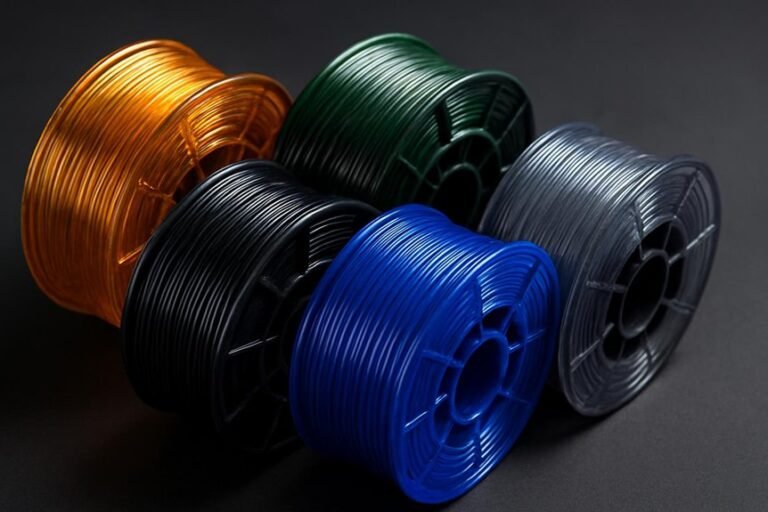
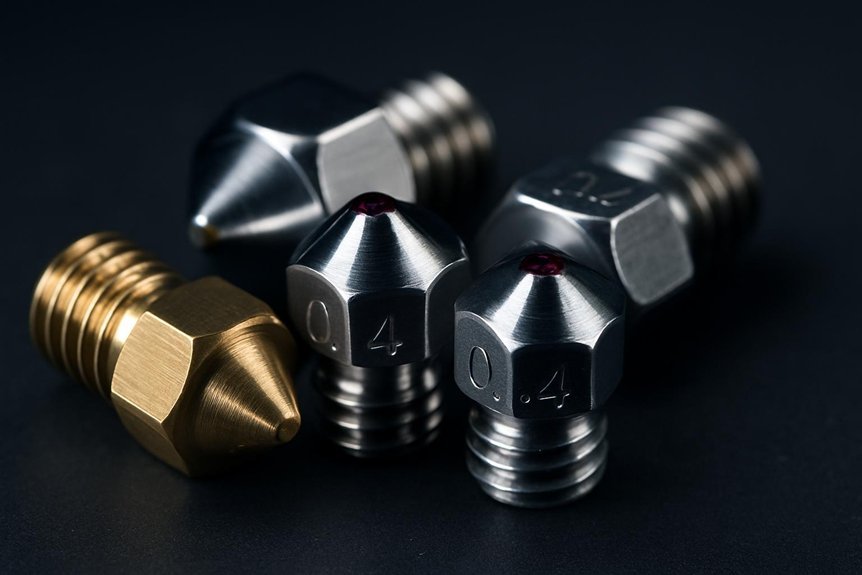
If you print a lot with abrasive filaments, a ruby nozzle can save you time and frustration by cutting wear and reducing clogs. You’ll get better surface finish and more consistent flow, especially on smaller diameters, but there’s an upfront cost to evaluate. I tested four top options across popular printers and noticed clear differences in feel and longevity—stick around to see which one matched performance to price.
0.4mm Ruby Nozzle Hotend Upgrade for FLASHFORGE Adventurer 5M / 5M Pro 3D Printers
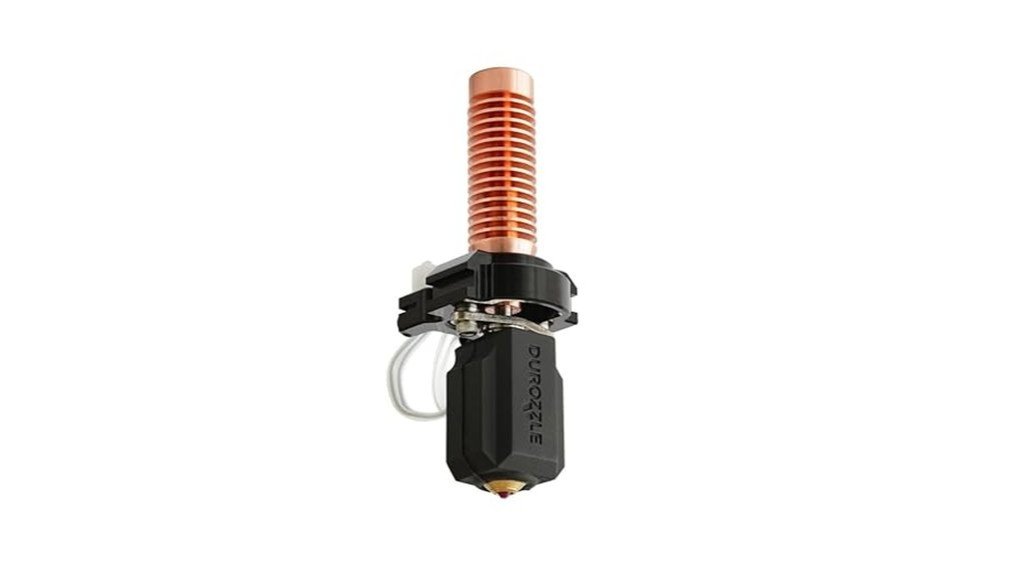
If you run a FLASHFORGE Adventurer 5M or 5M Pro and print tough, abrasive filaments like carbon-filled PA12, this 0.4mm Ruby Nozzle hotend upgrade is built for you; it’s hardened for high-speed, wear-resistant printing so you’ll spend less time swapping nozzles and more time printing. You’ll like the faster heat-up and tight +/-1°C stability, and it handles PLA, ABS, PETG, Nylon, and carbon fiber well. Installation’s mostly simple but you’ll need to lock the red clips, set Z offset to .12mm, recalibrate PID, and wiggle the nozzle for proper seating to avoid leaks.
Best For: Users of FLASHFORGE Adventurer 5M / 5M Pro who frequently print abrasive or high-speed filaments (e.g., carbon-filled, PA12-CF) and want a more wear-resistant, faster-heating nozzle with stable temperature control.
Pros:
- Hardened ruby nozzle offers superior abrasion resistance and longer service life for carbon- and fiber-filled materials.
- Heats up faster than OEM and maintains temperature within ±1°C for more consistent prints.
- Compatible drop-in upgrade for Adventurer 5M/5M Pro with included wrenches and straightforward installation when following the locking, Z-offset, and recalibration steps.
Cons:
- Installation can require careful fitting (lock red clips, wiggle nozzle) and may need adjustments; some users reported initial difficulties.
- Max temperature limited to 280°C, which may restrict certain high-temp materials.
- Manufacturing consistency issues reported by some users and a risk of work-surface damage if Z-offset or seating isn’t set correctly.
Ruby Nozzle 0.4mm for Prusa MK4/XL 3D Printer (Abrasion Resistant)
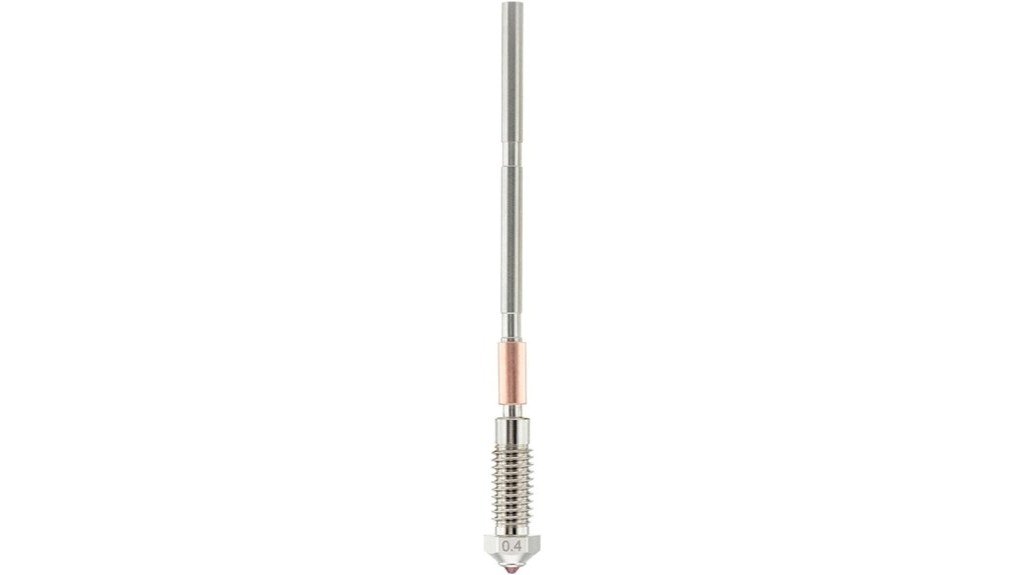
For hobbyists and small-scale pros who print with abrasive filaments, the DUROZZLE Ruby Nozzle 0.4mm for Prusa MK4/XL is a smart upgrade that cuts replacement headaches and keeps prints consistent. You’ll appreciate the genuine ruby tip for wear resistance and the nickel-coated copper alloy body that transfers heat well, so your extrusion stays steady with carbon-fiber and metal-filled filaments. Its funnel-shaped bore helps prevent buildup, though a few users saw PLA clogs—so you’ll want proper temperature and retraction tuning. Installation is straightforward, reviews note improved lifespan, and warranty details are available if you need support.
Best For: Hobbyists and small-scale professionals who frequently print with abrasive filaments (carbon-fiber, glass-filled, metal-filled) on Prusa MK4/XL and want longer nozzle life and consistent extrusion.
Pros:
- Genuine ruby tip provides excellent abrasion resistance and much longer service life than brass nozzles.
- Nickel-coated copper alloy body offers good thermal conductivity for steady extrusion.
- Funnel-shaped bore reduces material buildup and lowers the risk of blockages when tuned properly.
Cons:
- Some users report PLA clogs, so tuning retraction and temperature may be required.
- Higher cost than standard brass nozzles.
- Warranty details are not immediately clear and require inquiry.
Ruby Nozzle 0.6mm for Bambu Lab P1P/P1S/X1/X1C 3D Printer (TZ2.0 Hardened Abrasion-Resistant)
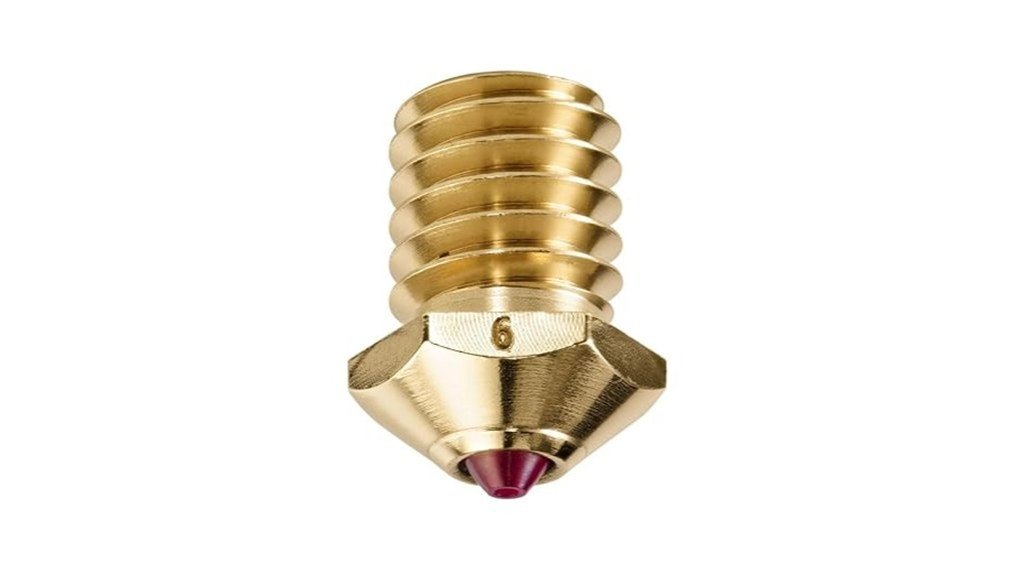
You’ll appreciate the Ruby Nozzle 0.6mm if you print a lot with abrasive filaments and want fewer mid-print headaches; its genuine ruby tip and brass body give you a long-lasting, fast-heating combo that keeps prints flowing. You’ll fit it on Bambu Lab P1P, P1S, X1, and X1C printers and it’s compatible with Durozzle and TZ2.0 hotends. The ruby tip resists wear from carbon, glass, and metal-filled filaments, while the brass body conducts heat well. Its funnel-shaped design reduces dead corners and carbon buildup, so you’ll see fewer clogs and replace nozzles less often, even when switching to PLA or Nylon.
Best For: Makers and professionals who print frequently with abrasive filaments (carbon/glass/metal-filled) on Bambu Lab P1P/P1S/X1/X1C printers and want longer nozzle life and fewer clogs.
Pros:
- Genuine ruby tip greatly improves wear resistance for abrasive materials, extending nozzle lifespan.
- Brass body provides excellent thermal conductivity for reliable heat transfer and consistent extrusion.
- Funnel-shaped design minimizes dead corners and carbon buildup, reducing blockage risk across filament types.
Cons:
- Higher cost than standard brass nozzles due to the ruby tip.
- 0.6mm size sacrifices fine-detail resolution compared with smaller nozzles.
- Requires compatibility with Durozzle or TZ2.0 hotends; not universal for all hotend types.
Ruby Nozzle 0.4mm Hardened Abrasion-Resistant Nozzle for K1/K1 Max/CR-M4/CR-10 SE/Ender 3 V3 KE 3D Printers
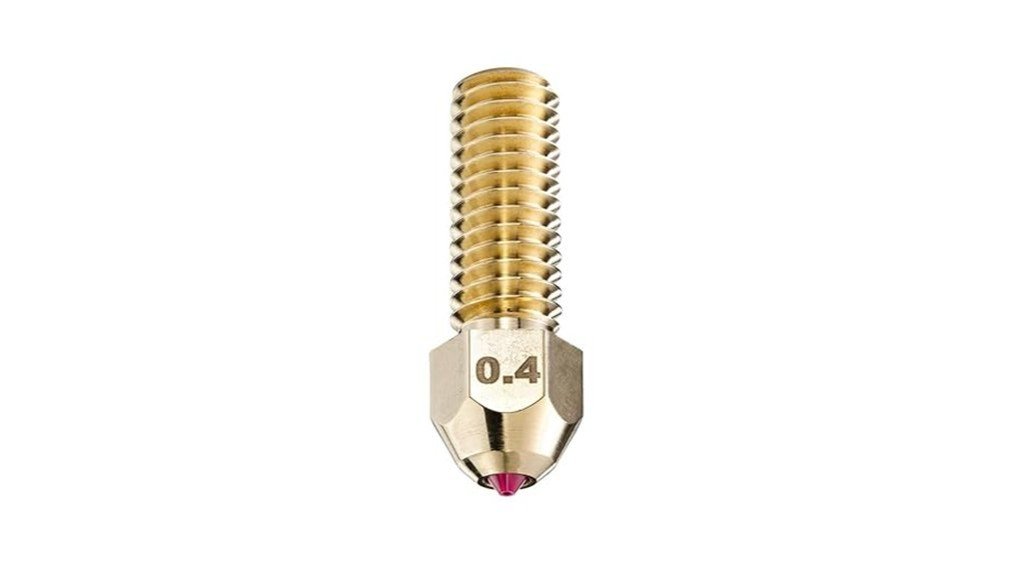
Serious hobbyists and small shops that print abrasive filaments will love this Ruby Nozzle 0.4mm for K1/K1 Max/CR-M4/CR-10 SE/Ender 3 V3 KE, because it pairs a genuine ruby tip with a brass body to give you long-lasting wear resistance without sacrificing heat transfer. You’ll print carbon fiber, glass-filled, and metal-filled filaments with far less wear than with hardened steel. The polished funnel reduces clogging and carbon build-up, and brass keeps temperatures even. Installation’s simple, calibration minimal, and users report cleaner prints and fewer nozzle swaps. It’s cheaper than diamond options and often outlasts carbide—great value.
Best For: Serious hobbyists and small shops that regularly print abrasive filaments (carbon fiber, glass-filled, metal-filled) and want long-lasting wear resistance without sacrificing heat transfer.
Pros:
- Genuine ruby tip with brass body offers excellent abrasion resistance and good thermal conductivity for consistent extrusion.
- Polished funnel shape reduces clogging and carbon buildup, leading to cleaner prints and fewer nozzle swaps.
- More cost-effective than diamond nozzles and often outlasts hardened steel or carbide options.
Cons:
- Higher upfront cost than standard brass nozzles, which may not be justified for occasional use of abrasive filaments.
- Limited to compatible printer models (K1/K1 Max/CR-M4/CR-10 SE/Ender 3 V3 KE) — may require adapters for other machines.
- Ruby tip can be brittle under impact or improper handling, so careful installation and maintenance are needed.
Factors to Consider When Choosing Ruby Nozzles: Are They Worth It?
When you’re weighing whether a ruby nozzle is worth the upgrade, consider how its abrasion resistance and longevity will save you time and money if you print abrasive filaments a lot. You’ll also want to think about thermal conductivity and how that affects print quality, whether the nozzle fits your printer, and the range of materials you’ll use. These factors together help you judge if the improved surface finish and durability justify the higher price.
Abrasion Resistance Longevity
Although they cost more upfront, ruby nozzles often pay for themselves by lasting far longer than standard brass tips, especially if you print with abrasive materials like carbon fiber or glass-filled filaments. You’ll notice you replace nozzles far less often because the genuine ruby tip resists wear and tear that quickly ruins brass. In practice, that means fewer emergency swaps mid-project and lower long-term costs if you print abrasive blends frequently. The funnel-shaped ruby design also helps by reducing material buildup and cutting the chance of carbonization or clogs, so prints stay consistent. Many users find ruby outlasts even hardened steel while keeping great quality, making it a smart choice if durability matters to you.
Thermal Conductivity Impact
Because heat control directly affects print quality, the thermal behavior of a nozzle matters more than you might think, and ruby nozzles do a great job here. You’ll notice their nickel-coated copper alloy body moves heat quickly and evenly from the heater block to the tip, so temperatures stay steady while you print. That steady heat lowers the chance of filament jams and keeps layers consistent, which matters whether you’re printing fine details or bigger parts. Compared with brass, ruby nozzles match or beat thermal performance and last longer because the tip is hardened. The funnel-shaped bore also cuts down material buildup, preventing local overheating and carbonization. Faster heat-up times mean you can switch materials sooner and finish prints faster.
Compatibility With Printers
Steady heat and reduced clogging are great, but you also need to make sure the nozzle actually fits your printer and printing habits. Ruby nozzles often target specific models like FLASHFORGE Adventurer 5M, Prusa MK4, and Bambu Lab printers, so check compatibility before you buy. Sizes matter — a 0.4mm for the MK4 or a 0.6mm for Bambu Lab must match the hotend assembly to avoid leaks or poor prints. Verify specs like diameter and thermal performance against your printer’s requirements, and expect to recalibrate after installation; adjusting Z Offset is common to protect the bed. Also think about the filaments you use, since some ruby nozzles handle abrasive materials better than others.
Material Compatibility Range
Think of a ruby nozzle like a tough little workhorse in your hotend: it handles the rough stuff—carbon fiber, glass-filled, and metal-filled filaments—without wearing out fast, but it also plays nicely with everyday materials like PLA, ABS, PETG, and TPU. You’ll find that ruby nozzles let you switch between abrasive specialty filaments and common choices without swapping hardware constantly. Their durable tip resists wear, so replacements are fewer and you save money over time, especially if you print a lot. The robust design also reduces clogging, so jams are less frequent across filament types. That said, you should still match nozzle size and temperature settings to each material for reliable feeding and flow. Overall, ruby nozzles give broad compatibility and peace of mind.
Print Quality Improvements
If you want crisper details and fewer surprises in your prints, a ruby nozzle can make a noticeable difference. You’ll see tighter lines because the nozzle holds temperature within +/- 1°C, so filament melts evenly and layers stack predictably. The funnel-shaped design also keeps material from building up, which cuts down on clogs and odd blobs that ruin fine features. Users report sharper textures and less blobbing across PLA, PETG, and even abrasive mixes like carbon-fiber blends. The genuine ruby tip resists wear, so long runs don’t degrade edges and blur detail the way worn brass can. In short, you get more consistent finishes and longer-lasting precision, especially if you print detailed parts or use rough, abrasive filaments.
Installation And Calibration
Now that you’re enjoying crisper prints, you’ll want to make sure the ruby nozzle is fitted and tuned right so those gains actually stick. Start by securely locking the red clips onto the hotend, then give the nozzle a gentle wiggle to confirm it’s seated correctly; if it moves, tighten or re-seat it. Recalibrate your printer after installation: set the Z offset around 0.12 mm and run PID tuning for stable temperatures. Watch for material dripping before and after prints — that often signals misalignment or a loose fit. Some users hit snags at first, so don’t be surprised if you need a few tweaks. Finally, follow your printer’s specific instructions closely, since installation varies by model.
Cost Versus Lifespan
Because a ruby nozzle costs more up front, you’ll want to weigh that sticker shock against how long it’ll actually last and what it saves you over time. Think of it like buying a sturdy pair of boots: you pay more now, but you don’t replace them every season. Ruby nozzles last several times longer than brass, especially with abrasive filaments, so you replace parts far less often. That reduces downtime and keeps your prints moving, which matters if you print a lot or run a small shop. You’ll also get better, more consistent results with tricky composites, so fewer failed prints. For serious hobbyists and pros, the longer life and improved productivity usually justify the higher initial cost.
Maintenance And Clogging
When you’re worried about clogs, a ruby nozzle can feel like a smart upgrade because its funnel-shaped opening and hard ruby tip cut down on material buildup and wear. You’ll notice fewer blockages, especially with abrasive filaments like carbon fiber or glass-filled types, since the ruby resists abrasion and reduces carbonization. Users often report long runs between cleanings, and you’ll likely replace nozzles less often. Still, you can’t ignore maintenance: check for dripping filament and make sure the nozzle seats tightly after installation to prevent leaks that lead to clogs. A few simple checks before prints will keep performance high. Overall, ruby nozzles give you better longevity and cleaner prints, though rare clogs can still happen.
FAQ
Can Ruby Nozzles Affect Print Cooling or Fan Settings?
FAQ 1: How do Ruby nozzles influence print cooling?
Ruby nozzles can affect the heat transfer during printing, which may lead to variations in how quickly the print cools. Adjustments to cooling settings may be necessary to maintain optimal print quality.
FAQ 2: Do Ruby nozzles require changes to fan settings?
Yes, using Ruby nozzles often necessitates adjustments to fan speeds. The different thermal properties can alter the cooling efficiency, requiring fine-tuning to achieve the best results.
FAQ 3: What is the impact of Ruby nozzles on extrusion consistency?
Ruby nozzles provide a more consistent extrusion due to their durability and thermal properties. This consistency can influence how cooling is managed during prints.
FAQ 4: Why is it important to tweak part cooling profiles with Ruby nozzles?
Tuning part cooling profiles is crucial because Ruby nozzles may change the temperature of the filament as it extrudes. This can affect layer adhesion and overall print quality if not adjusted properly.
FAQ 5: Can overcooling occur with Ruby nozzles?
Yes, overcooling can happen if the fan settings are not adjusted appropriately. This can lead to issues such as poor layer adhesion and warping.
FAQ 6: Is undercooling a risk when using Ruby nozzles?
Under cooling is a possibility with Ruby nozzles if fan speeds are set too low. This may result in overheating and negatively impact the printed object’s quality.
FAQ 7: What should I monitor when adjusting fan speeds for Ruby nozzles?
When adjusting fan speeds, monitor the print’s thermal behavior and layer bonding. Ensuring the part cools at the right rate is essential for achieving optimal print quality.
FAQ 8: Are there recommended cooling settings for Ruby nozzles?
While specific settings can vary based on the material used, starting with moderate fan speeds and gradually adjusting based on print results is advisable. Experimentation may be needed to find the optimal balance.
FAQ 9: How can I test adjustments to cooling settings with Ruby nozzles?
Conducting test prints with varying cooling settings can help determine the best configuration. Pay attention to how different settings affect the print’s finish and structural integrity.
FAQ 10: Do all filaments behave the same with Ruby nozzles?
No, different filaments will react differently to the cooling profiles when used with Ruby nozzles. Each filament may require unique adjustments to fan speeds and cooling strategies for optimal results.
Do Ruby Nozzles Require Different Retraction Settings?
1. Do Ruby nozzles require different retraction settings?
Yes, Ruby nozzles often necessitate adjustments to retraction settings due to their lower friction properties.
2. What changes should I make to retraction distance with Ruby nozzles?
You may need to lower the retraction distance compared to standard nozzles to prevent under-extrusion.
3. Should I alter retraction speed when using Ruby nozzles?
Yes, it’s advisable to reduce the retraction speed to minimize stringing and ensure consistent extrusion.
4. How do I determine the optimal retraction settings for Ruby nozzles?
Testing and adjusting incrementally is key. Make small changes and observe the results for the best outcomes.
5. Can using a Ruby nozzle lead to stringing issues?
If retraction settings are not adjusted, stringing may occur due to the nozzle’s reduced friction.
6. What is the impact of friction on retraction settings?
Lower friction in Ruby nozzles can lead to different extrusion behavior, necessitating retraction adjustments.
7. Is it common to experience under-extrusion with Ruby nozzles?
Yes, without proper adjustments to retraction settings, under-extrusion can be a common issue.
8. Should I conduct test prints to fine-tune retraction settings?
Absolutely, performing test prints is essential for fine-tuning retraction settings to achieve optimal print quality.
9. Are there standard retraction settings for Ruby nozzles?
There are no one-size-fits-all settings; adjustments should be personalized based on your specific printer and filament.
10. How often should I revisit retraction settings with Ruby nozzles?
It’s a good practice to revisit and adjust retraction settings whenever you change materials or nozzle types for optimal performance.
Are Ruby Nozzles Compatible With Flexible Filaments Like TPU?
1. Can I use ruby nozzles with TPU?
Yes, ruby nozzles are compatible with TPU and other flexible filaments.
2. What adjustments are needed when using ruby nozzles with TPU?
You’ll need to feed the filament gently and print at slower speeds to prevent jams.
3. How can I avoid jams when printing with TPU?
Tuning the retraction settings is essential to minimize the risk of jams during printing.
4. What is important for filament path when using TPU?
Ensure that the filament path has minimal bends to promote reliable extrusion.
5. Are there specific print speeds recommended for TPU?
Slower print speeds are recommended when working with TPU to achieve better results.
6. What kind of maintenance is needed for ruby nozzles with flexible filaments?
Regularly check for clogs and clean the nozzle to maintain optimal performance with flexible filaments.
7. Can I use any settings from standard filaments for TPU?
No, TPU requires specific settings, including slower speeds and adjusted retraction, which differ from standard filaments.
8. Is the extrusion rate different for TPU compared to rigid filaments?
Yes, the extrusion rate may need to be adjusted to accommodate the flexibility of TPU.
9. Do I need a specific printer setup for TPU with ruby nozzles?
While a standard setup can work, ensuring a direct drive extruder or minimal distance between the drive gear and the nozzle can help with TPU.
10. Can I switch between rigid and flexible filaments with the same ruby nozzle?
Yes, but you may need to recalibrate your settings each time you switch filaments to ensure optimal printing quality.
How Does a Ruby Nozzle Impact Nozzle Clog Troubleshooting?
1. What is a ruby nozzle?
A ruby nozzle is a specialized nozzle used in 3D printing and other applications to minimize clogging and enhance durability.
2. How does a ruby nozzle affect clog frequency?
Ruby nozzles significantly reduce the frequency of clogs compared to standard nozzles, leading to less frequent troubleshooting.
3. What challenges arise when a ruby nozzle clogs?
When a ruby nozzle clogs, it can be more challenging to clear due to the material’s hardness, making traditional methods like drilling or abrasion ineffective.
4. What methods can be used to clear a clogged ruby nozzle?
To clear a clogged ruby nozzle, you can use careful cold pulls, solvent cleaning, or, if necessary, replace the nozzle entirely.
5. Are ruby nozzles suitable for all materials?
While ruby nozzles work well with many materials, their performance may vary depending on the specific filament used, so it’s essential to consider compatibility.
6. How often should I check my ruby nozzle for clogs?
Even though ruby nozzles reduce clogs, it’s still advisable to periodically check for blockages, especially after extended use.
7. Can regular maintenance prevent clogs in ruby nozzles?
Yes, regular maintenance, including cleaning and proper filament storage, can help prevent clogs in ruby nozzles.
8. What are cold pulls, and how do they help with clogs?
Cold pulls are a method where the filament is heated and then rapidly cooled before being pulled out, helping to remove debris and clear clogs without damaging the nozzle.
9. Is nozzle replacement common for clogged ruby nozzles?
While it’s not the first option, nozzle replacement may be necessary if clogs persist despite using other clearing methods.
10. What are the benefits of using a ruby nozzle over a standard nozzle?
Ruby nozzles offer improved durability, reduced clogging, and prolonged service life, making them a preferred choice for many 3D printing applications.
Can I Reliably Use Ruby Nozzles for Food-Safe Prints?
1. Do ruby nozzles ensure food-safe prints?
No, ruby nozzles alone do not guarantee food-safe prints. They can resist wear and reduce contamination, but other factors are essential for safety.
2. What type of filament should I use for food-safe prints?
You should use food-safe filament specifically designed for contact with food. Common options include PLA and PETG, but always verify the manufacturer’s safety claims.
3. What practices should I follow to maintain cleanliness in food-safe printing?
Adopt clean printing practices, such as thoroughly cleaning your printer and tools before use. Avoid cross-contamination with non-food-safe materials.
4. Are stainless-steel hotends necessary for food-safe printing?
Yes, stainless-steel hotends are recommended for food-safe prints as they are less likely to harbor bacteria compared to other materials. They offer a smoother surface that can be easier to clean.
5. How can I minimize crevices in my prints?
To minimize crevices, ensure your print settings are optimized for smooth finishes and consider post-processing techniques like sanding or sealing. Proper sealing can help eliminate hiding places for bacteria.
6. Is sealing important for food-safe prints?
Yes, sealing your prints is crucial to prevent bacteria from settling in crevices. Use food-safe sealants to create a barrier between the print surface and food.
7. Can I use any 3D printer for food-safe printing?
While many 3D printers can technically produce food-safe prints, ensure your printer’s materials and components are safe and easily cleanable. Specific designs may be better suited for food applications.
8. What are the risks of using non-food-safe materials?
Using non-food-safe materials can lead to contamination and exposure to harmful chemicals. This can pose health risks when these items come into contact with food.
9. How can I verify if my filament is food-safe?
Check for certifications or safety claims from the filament manufacturer. Look for materials that specifically state they are tested and approved for food contact.
10. What should I do if my print has visible imperfections?
If your print has imperfections, consider reprinting with adjusted settings or post-processing to improve the surface finish. Always prioritize a smooth surface for food safety.
Final Thoughts
If you’re working with abrasive filaments or simply want to minimize clogs and ensure your nozzles last longer, investing in a ruby nozzle is a no-brainer. Yes, the initial cost is higher, but the time and frustration you’ll save down the line is invaluable. You’ll experience superior thermal consistency and achieve cleaner details, particularly on intricate prints. For casual users, this investment might not make sense, but for those who print frequently or professionally, it’s an essential upgrade. Before making a decision, evaluate your material selection and printing volume—this will guide you in making the right choice for your needs.