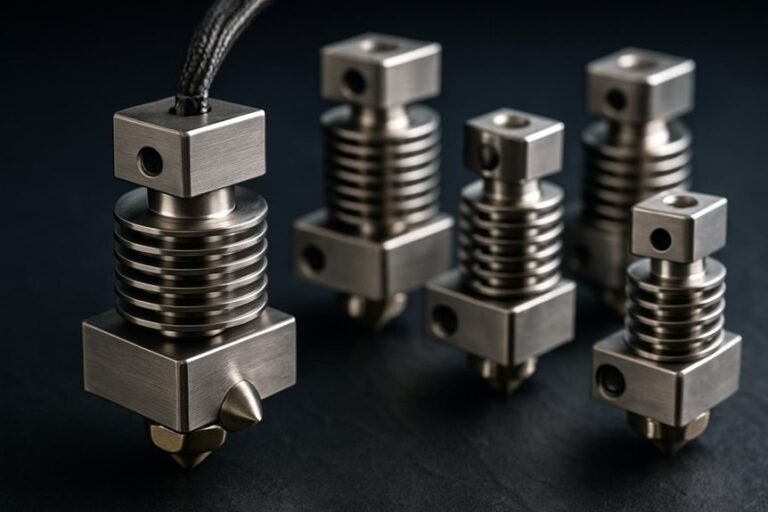
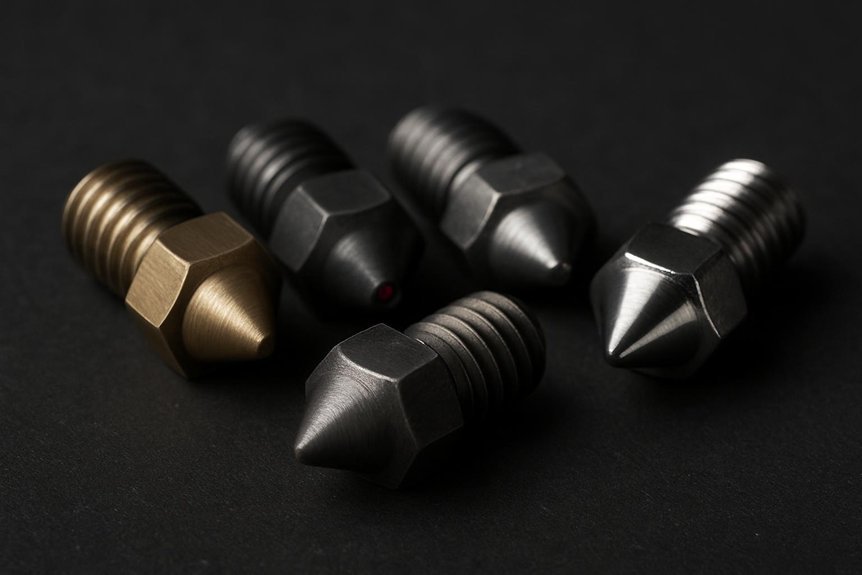
If you print with carbon fiber filament, picking the right nozzle makes a huge difference in print quality and nozzle life. You’ll want something tough enough to resist abrasion, thermally stable, and sized to avoid clogging—options range from hardened steel to silicon carbide and even diamond-tipped designs. I’ll walk you through five top picks and explain why each works better for different printers and parts, so you can choose what fits your setup.
Diamondback V6 Compatible Polycrystalline Diamond Tip 3D Printer Nozzle (0.8mm, Brass)
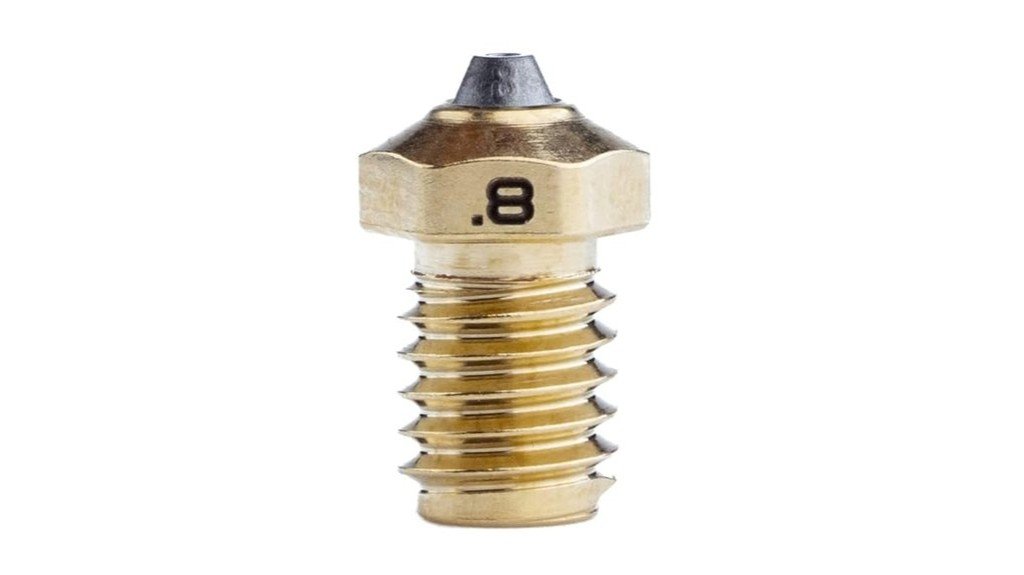
If you regularly print with abrasive blends like carbon-fiber PLA and want a nozzle that stays sharp and clog-free for months, the Diamondback V6-compatible nozzle is built for you — it pairs a solid polycrystalline diamond tip with a brass body to give you exceptional wear resistance and better heat transfer than standard nozzles. You’ll notice smoother extrusion, fewer clogs, and longer life compared with carbide tips, especially when running kilograms of carbon fiber or other fillers. It’s made in the USA, works up to 300°C, and comes in several sizes. It’s pricey, but pros say it pays off.
Best For: serious enthusiasts and professionals who frequently print abrasive or filled filaments (like carbon-fiber blends) and need a long-lasting, clog-resistant V6-compatible nozzle.
Pros:
- Exceptional wear resistance and longevity from a polycrystalline diamond tip, outperforming carbide nozzles.
- Improved thermal conductivity and smoother extrusion, reducing clogs and improving layer adhesion across many filaments.
- Made in the USA and available in multiple sizes, suitable for high-volume use with abrasive materials.
Cons:
- Higher upfront cost may be prohibitive for casual or occasional hobbyists.
- Maximum recommended temperature of 300°C limits use with some high-temperature specialty materials.
- Brass body still less hard than all-metal nozzles, so extreme misuse or repeated mechanical impact could damage the assembly.
4pcs Hardened Steel V6 0.4mm Nozzles for V6 Hotend (Compatible with Prusa, Anycubic, etc.)
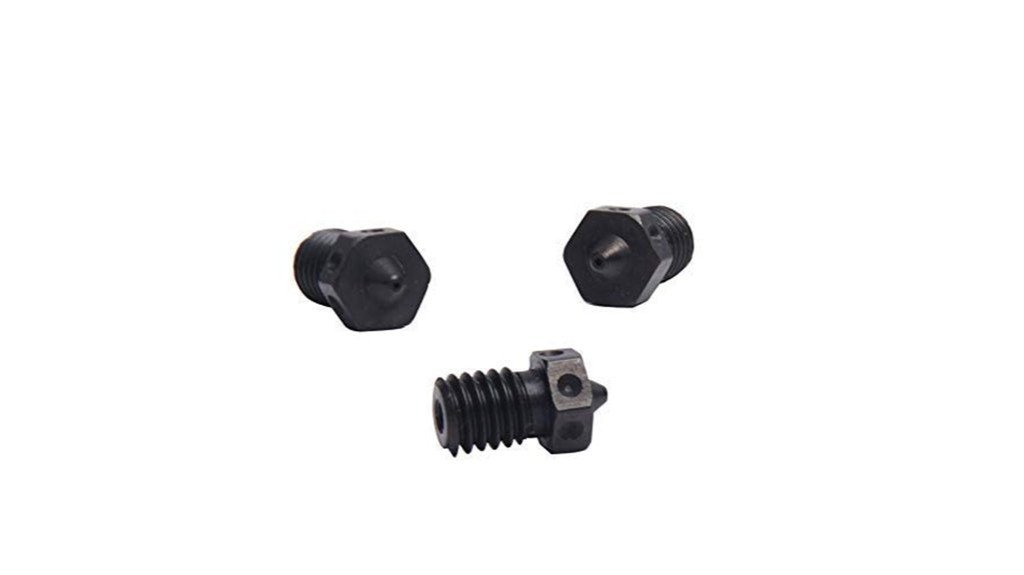
For anyone who prints abrasive filaments like carbon fiber PLA or nylon blends, these 4pcs hardened steel V6 0.4mm nozzles are a smart upgrade that’ll save you time and money over brass tips. You’ll get four M6-threaded, CNC-machined nozzles marked by dot codes (0.4mm = 3 dots) for 1.75mm filament, compatible with V6 hotends on Prusa, Anycubic, Flsun and similar printers. They resist wear from carbon-filled materials and usually improve surface finish and consistency, though a few users mention rust or clogs. Install is simple, but expect to tweak z-offset because they sit slightly shorter than stock nozzles.
Best For: Makers and hobbyists who frequently print abrasive filaments (carbon-fiber, nylon blends, ASA) and want longer-lasting, wear-resistant 0.4mm V6 nozzles compatible with Prusa, Anycubic, Flsun and similar printers.
Pros:
- Durable hardened steel construction resists wear from abrasive filaments, lasting far longer than brass.
- CNC-machined M6 0.4mm nozzles (3-dot marking) give consistent, improved surface finish and dimensional stability.
- Broad compatibility with V6 hotends and common printers (Prusa i3 MK3/MK3S, Prusa Mini, Anycubic, Flsun, Voron, etc.) and simple to install.
Cons:
- Can be more prone to corrosion or clogging for some users compared with brass, requiring occasional maintenance.
- Slightly shorter length than some stock nozzles, so z-offset adjustment is often needed after installation.
- A few customers report receiving defective or incomplete sets, so quality can be inconsistent.
Creality Phaetus K2 Plus 0.4mm Silicon Carbide Quick-Swap 3D Printer Nozzle
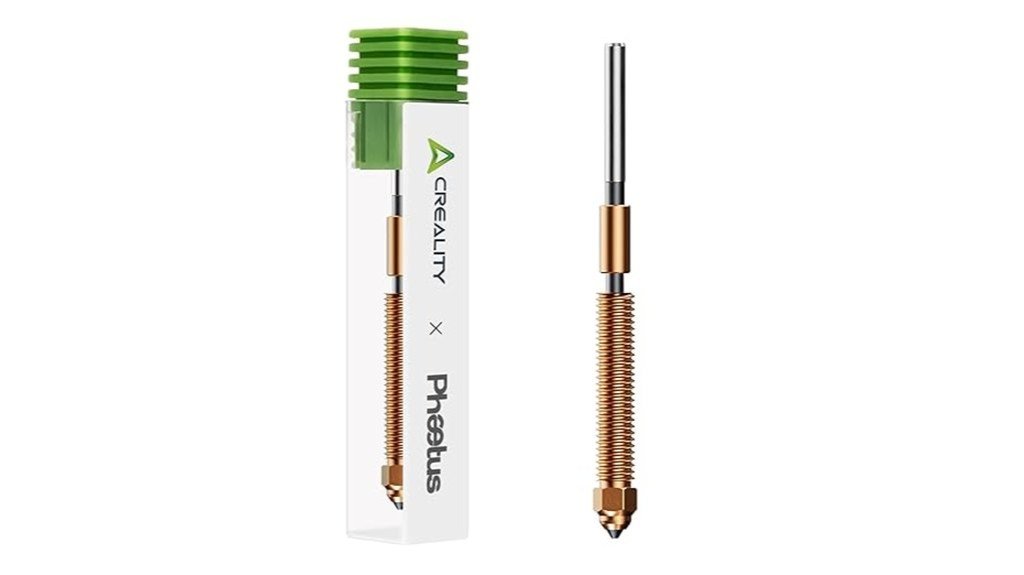
Think of the Creality Phaetus K2 Plus 0.4mm Silicon Carbide Quick-Swap nozzle as the go-to upgrade for makers who push printers with abrasive, composite filaments—especially carbon fiber blends. You’ll like the quick-swap, all-metal design that makes swapping painless and cuts downtime. Precision machining and a smooth inner finish (Ra<0.4) keep filament feeding consistent and reduce leaks. The larger chamber and 30mm³/s flow support high-speed prints up to 600mm/s, while silicon carbide plus EndCoat wear protection lasts about seven times longer than hardened steel. Users report smoother layers and no clogs after long runs, though some wish for thermal paste and shorter length options.
Best For: Makers and prosumers who print abrasive composite filaments (carbon/glass/metal-filled) and want a durable, quick-swap 0.4mm nozzle for high-speed, high-flow printing with minimal downtime.
Pros:
- All-metal, quick-swap design with precision machining (Ra<0.4) for smooth feeding and easy replacement.
- Silicon carbide + EndCoat wear protection offers up to ~7× the service life of hardened steel nozzles.
- Larger chamber and 30mm³/s flow support high-speed prints (up to 600mm/s) and reliable performance with composite/abrasive filaments.
Cons:
- No thermal compound included in the package (users suggested it would be useful).
- Fixed nozzle length may be suboptimal for multi-color or specific hotend setups—some users want shorter options.
- Premium materials/coating may increase cost compared with standard hardened steel nozzles.
Creality K1C/K1 SE Phaetus Silicon Carbide 0.4mm Quick-Swap 3D Printer Nozzle
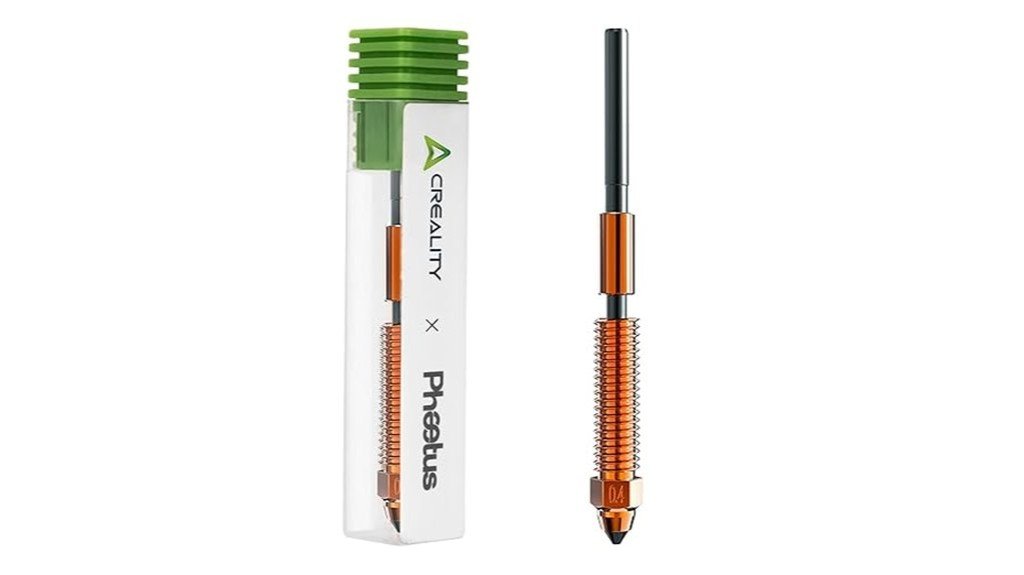
The Creality K1C/K1 SE Phaetus Silicon Carbide 0.4mm Quick-Swap nozzle is a great pick if you want a durable, low-maintenance solution for printing abrasive composite filaments like carbon fiber and glass fiber. You’ll appreciate the quick-swap, all-metal design that’s easy to remove and replace, especially when you switch materials. Silicon carbide with EndCoat gives dual wear resistance, lasting about seven times longer than hardened steel. It supports high flow (30 mm³/s) and speeds up to 600 mm/s, yet precision machining (Ra<0.4) keeps feeding smooth and clogging rare. It’s compatible with common printers and many filament types, so it’s versatile.
Best For: users who frequently print abrasive composite filaments (carbon/glass/wood-filled, etc.) and want a durable, easy-to-change nozzle for high-speed, high-flow printing.
Pros:
- Excellent wear resistance (silicon carbide + EndCoat) offering ~7× the life of hardened steel, ideal for abrasive filaments.
- Quick-swap all-metal design simplifies nozzle changes and maintenance.
- Supports high flow (30 mm³/s) and speeds up to 600 mm/s while maintaining smooth feeding and low clogging (Ra<0.4).
Cons:
- Premium materials/coating make it more expensive than standard hardened steel nozzles.
- 0.4 mm diameter may be limiting for very fine-detail prints; larger or smaller sizes may be needed.
- Compatibility mainly listed for Creality/Ender and K1 series—may require adapters for other hotend systems.
Creality Phaetus K2 Plus 0.6mm Silicon Carbide Quick-Swap 3D Printer Nozzle
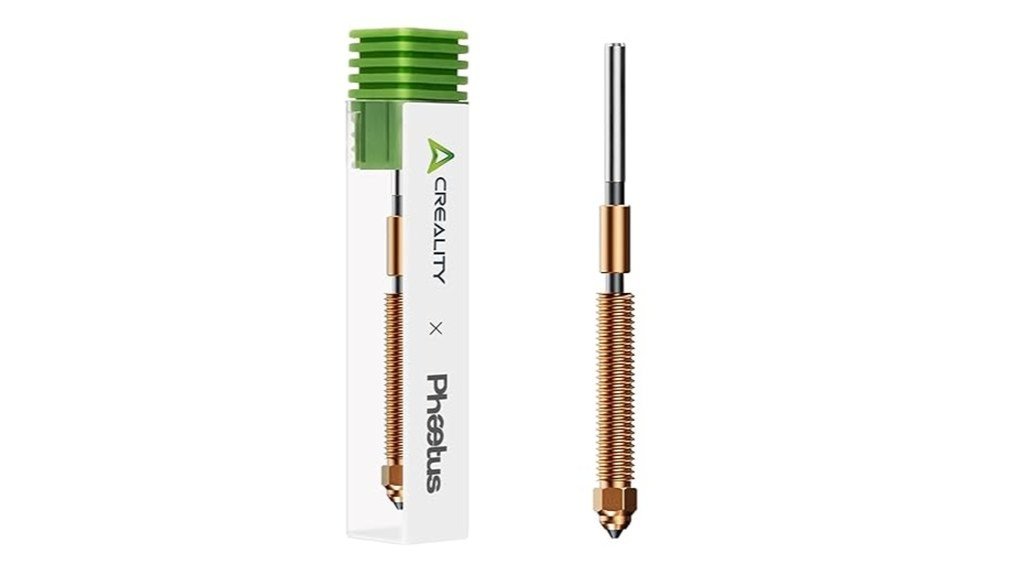
If you want a nozzle that handles abrasive carbon-fiber blends without constant swapping or clogging, the Creality Phaetus K2 Plus 0.6mm Silicon Carbide Quick-Swap is a strong pick. You’ll appreciate the quick-swap design that makes removal and replacement painless, and the all-metal build feels solid in your hand. The 0.6mm throat and larger chamber push up to 30mm³/s, so you can print faster without starving the hot end—Creality rates speeds up to 600mm/s. Silicon carbide plus EndCoat give about seven times the wear life of hardened steel, and tight fits with Ra<0.4 reduce clogs for smoother composite prints.
Best For: Makers and pros who print abrasive composite filaments (carbon/glass-filled) and want a durable, quick-swap 0.6mm nozzle for faster, high-flow prints.
Pros:
- Silicon carbide with EndCoat gives roughly 7× the wear life of hardened steel, ideal for abrasive filaments.
- Quick-swap all-metal design makes removal/replacement painless and robust.
- 0.6mm chamber supports up to 30mm³/s flow and high-speed printing (up to 600mm/s) for faster production.
Cons:
- 0.6mm nozzle reduces fine-detail resolution compared with smaller diameters.
- Specialized material/coating may cost more than standard hardened steel nozzles.
- Quick-swap compatibility is limited to K2 Plus/K2/K2 Pro and Creality Hi systems.
Factors to Consider When Choosing Nozzles for Carbon Fiber Filament
When you’re picking a nozzle for carbon fiber filament, you’ll want to think about how hard the material is and whether the nozzle’s coating or base metal can stand up to the abrasive fibers. Tip shape and size affect print detail and flow, while thermal conductivity and stability determine how evenly the filament melts and sticks, so choose something that balances heat transfer with wear resistance. Also consider how easy it is to swap the nozzle when it wears out—quick-change designs or common thread sizes save time and frustration.
Material Hardness and Wear
You’ll want to pick a nozzle material that can stand up to carbon fiber’s abrasive nature, because softer nozzles like brass wear out fast and can ruin print quality. Harder materials such as hardened steel or PCD last far longer — often two to eight times the life of brass — so you’ll replace nozzles less and keep dimensions accurate. Silicon carbide is even tougher, offering dual wear resistance and a service life about seven times that of standard hardened steel, which sounds great when you’re printing long runs. Hardness matters because it helps the nozzle keep its shape and resist grooving that causes clogs. Many users report fewer jams and less maintenance with harder nozzles, so they’re a practical investment.
Nozzle Coating Options
Because carbon fiber filaments chew through soft metals, the right nozzle coating can make a big difference in how long your nozzle lasts and how clean your prints come out. You’ll want to take into account coatings like silicon carbide or proprietary EndCoat that greatly enhance wear resistance, letting you print abrasive filaments far longer before replacing the nozzle. Coated nozzles often improve thermal conductivity, so temperatures stay steady and layer adhesion gets better during extrusion. Pay attention to inner-surface roughness — Ra<0.4 helps prevent leaking and clogging and keeps feed consistent. Some hardened-steel coatings also tolerate higher flow rates and speeds without ruining quality. Overall, a durable coating reduces maintenance and replacement costs, making it a practical upgrade for frequent carbon-fiber printing.
Tip Geometry and Size
Coatings and surface finish matter, but the shape and size of the nozzle tip play an equally big role when you’re printing with carbon fiber filament. Tip geometry directly affects flow rate and print quality; a larger diameter helps the thicker, abrasive composite move through more easily, so you’ll see fewer under-extrusion problems. Sizes from 0.4mm up to 1.0mm are common—pick bigger for faster, sturdier parts and less clog risk. Conical or tapered tips guide filament smoothly into the melt zone, reducing jams and making extrusion more consistent. Also watch for a smooth inner finish to cut friction and sticking. Finally, pair the right geometry with a durable material like hardened steel or silicon carbide so the tip lasts against fiber wear.
Thermal Conductivity and Stability
When you’re printing with carbon fiber filament, the nozzle’s ability to move heat where it’s needed makes a huge difference in part quality and reliability. You want a nozzle that conducts heat efficiently so filament melts evenly and flows predictably. Materials like silicon carbide or polycrystalline diamond heat and cool faster, which helps reduce warping and improves layer bonding. Thermal stability matters too — a stable nozzle keeps temperature steady during high-speed prints, cutting the chance of clogs or poor adhesion. Good design also limits heat creep, preventing the filament from softening too far up the feed path. Since carbon fiber filaments run around 250–300°C, pick nozzles rated for those temperatures to avoid degradation and surprises.
Ease of Replacement
Now that you know how thermal performance affects print quality, let’s look at how easy it is to swap nozzles — because with abrasive carbon fiber blends you’ll be changing tips more often. You want a system that gets you back to printing fast: quick-swap designs let you disassemble and replace nozzles with minimal downtime, and precision machining helps prevent filament leaks when you put a new tip on. Integrated, all-metal units add durability and usually don’t need special tools, so you can swap in the shop or on the go. Look for compatibility with your standard hotend and user-friendly cues like marked sizes or color coding; they remove guesswork and help you pick the right nozzle for each carbon fiber job.
FAQ
Do Hardened Steel Nozzles Affect Print Temperature Settings?
1. Do hardened steel nozzles affect print temperature?
Yes, hardened steel nozzles can influence perceived print temperature due to their different heat conduction properties compared to brass.
2. How do I know if I need to adjust my print temperature?
Monitor the adhesion of your first layer. If it isn’t sticking well, you may need to adjust your temperature settings.
3. What adjustments might be necessary when using a hardened steel nozzle?
You may need to slightly modify both your print temperatures and flow calibration to achieve optimal results.
4. Can I use my existing temperature settings with a hardened steel nozzle?
While you can start with your existing settings, it’s advisable to tweak them based on the performance you observe during printing.
5. What should I pay attention to when printing with a hardened steel nozzle?
Focus on first-layer adhesion and overall print quality, as these will indicate whether your temperature settings are appropriate.
6. Will my print speed need to change with a hardened steel nozzle?
In some cases, adjusting print speed might be necessary if you find that the material isn’t melting effectively at your current settings.
7. How can I retune my settings after switching nozzles?
Start with small adjustments to temperature and flow, then conduct test prints to fine-tune until you achieve the desired results.
8. Is it common to experience issues when switching to a hardened steel nozzle?
Yes, it’s common to need some adjustments when switching, as the thermal properties of the nozzle can vary significantly from brass.
9. What materials are best suited for hardened steel nozzles?
Hardened steel nozzles are ideal for abrasive filaments, which may require different temperature settings than standard materials.
10. Are there specific temperature ranges for hardened steel nozzles?
While it depends on the filament being used, a general rule is to start at the manufacturer’s recommended temperatures and adjust as needed.
Can Nozzle Wear Be Measured Without Special Tools?
1. Can I measure nozzle wear without special tools?
Yes, nozzle wear can be assessed without specialized equipment by observing print quality and extrusion consistency.
2. What should I look for in print quality?
Check for inconsistencies such as gaps, under-extrusion, or poor layer adhesion, which can indicate nozzle wear.
3. How does extrusion consistency relate to nozzle wear?
If you notice irregularities in filament flow or inconsistent extrusion, it may signal that your nozzle is wearing out.
4. What visual inspections can I perform?
Inspect the nozzle tip visually or with a magnifier for any signs of wear, such as a rough surface or buildup.
5. How can I assess dimensional accuracy?
Measure the dimensions of your printed objects against the intended specifications; discrepancies may suggest nozzle wear.
6. Does filament usage provide insight into wear?
Yes, tracking filament usage can help; if you notice unusual increases in filament consumption, it may indicate a worn nozzle.
7. What specific signs of wear should I look for?
Look for noticeable gaps in prints, under-extrusion, or rough surfaces, all of which can indicate the nozzle is worn.
8. Is it worth monitoring nozzle wear regularly?
Regular monitoring can help maintain print quality and prevent costly printing issues caused by nozzle wear.
9. Can environmental factors affect nozzle wear?
Yes, factors such as filament quality, temperature, and printing speed can influence the rate of nozzle wear over time.
10. What should I do if I suspect nozzle wear?
If you suspect nozzle wear, consider cleaning the nozzle first; if issues persist, it may be time to replace it.
Are Silicon Carbide Nozzles Safe for Food-Contact Prints?
1. Are silicon carbide nozzles safe for food contact?
Yes, silicon carbide nozzles are safe in terms of material. However, safety also depends on the printed parts and the materials used.
2. What type of filament should I use for food-safe prints?
You should use food-grade filament specifically designed for food contact. This ensures that the printed parts do not leach harmful substances.
3. Is the nozzle finish important for food safety?
Yes, the finish or coating of the nozzle should be certified as food-safe. This helps prevent any contamination during the printing process.
4. Can contamination occur during printing?
Yes, contamination can occur if proper sanitation measures are not followed. It’s crucial to maintain a clean workspace and equipment.
5. What is porosity and why is it a concern?
Porosity refers to tiny holes in the printed material that can harbor bacteria. It’s a concern for food safety as it can lead to contamination.
6. Do I need to sanitize printed parts?
Yes, you must sanitize printed parts before using them for food contact. This is essential to eliminate any potential contaminants.
7. Are all 3D printed parts food-safe?
No, not all 3D printed parts are food-safe. The choice of filament, nozzle type, and sanitation practices all play critical roles in ensuring safety.
8. How does the printing process affect food safety?
The printing process can introduce contaminants or create porosity in the material. Careful selection of materials and practices is essential for food safety.
9. What regulations should I consider for food-safe printing?
You should consider local food safety regulations and standards. Compliance ensures that your printed items are safe for food contact.
10. Can I use any type of 3D printer for food-safe prints?
Not all 3D printers are suitable for food-safe prints. Ensure that your printer can handle food-grade filaments and that it is maintained in sanitary conditions.
Do Nozzle Coatings Change Adhesion to Carbon Fiber Filaments?
1. Do nozzle coatings affect adhesion to carbon fiber filaments?
Yes, nozzle coatings can influence adhesion to carbon fiber filaments, altering how well the material bonds during printing.
2. What type of nozzle coating reduces abrasion?
Hard coatings are known to minimize abrasion, which can enhance the longevity of the nozzle when printing with carbon fiber filaments.
3. How do low-friction finishes impact carbon fiber printing?
Low-friction finishes can change the wetting characteristics of the filament, which may affect adhesion and flow during the printing process.
4. Will I need to adjust printing temperatures with coated nozzles?
Yes, when using coated nozzles, you might need to adjust the printing temperatures to achieve optimal flow and bonding with carbon fiber filaments.
5. Is retraction affected by nozzle coatings?
Retraction settings may need to be tweaked when using different nozzle coatings to ensure proper filament flow and prevent issues like stringing.
6. Can nozzle coatings improve print quality with carbon fiber?
Coatings can enhance print quality by reducing wear and tear on the nozzle, leading to more consistent extrusion and better surface finishes.
7. Are there specific coatings recommended for carbon fiber filaments?
While there are various coatings available, hard and low-friction finishes are often recommended for better performance with carbon fiber materials.
8. Do all nozzle coatings work equally well with carbon fiber?
No, the effectiveness of nozzle coatings can vary based on the specific filament and coating type, so experimentation may be necessary.
9. How do nozzle coatings affect the lifespan of the nozzle?
Coatings can prolong the lifespan of the nozzle by reducing wear from abrasive materials like carbon fiber, leading to fewer replacements.
10. Should I test different nozzle coatings for my specific application?
Yes, testing different nozzle coatings can help determine which one best suits your specific carbon fiber printing needs for optimal results.
Is Nozzle Clogging More Common With Composite Filaments?
FAQ 1: Why are composite filaments more prone to clogging?
Composite filaments contain abrasive fibers and inconsistent particle sizes, which can disrupt the flow through the nozzle.
FAQ 2: What type of nozzle is recommended for using composite filaments?
Hardened nozzles are recommended for composite filaments to withstand the abrasive nature of the materials and minimize clogging.
FAQ 3: How can print speed affect clogging with composite filaments?
Slower print speeds can help reduce the likelihood of clogs by allowing more consistent material flow through the nozzle.
FAQ 4: What maintenance procedures should be followed to prevent clogs?
Regular cold pulls and nozzle swaps are effective maintenance techniques to prevent material buildup and ensure reliable extrusion.
FAQ 5: What happens if I use a standard nozzle with composite filaments?
Using a standard nozzle may lead to faster wear and a higher chance of clogs, compromising print quality and reliability.
FAQ 6: Are there specific brands of composite filaments that are better than others?
Some brands may have more consistent particle sizes and better formulations, reducing the likelihood of clogging, but it’s essential to research and test different options.
FAQ 7: Can environmental factors influence clogging in composite filaments?
Yes, humidity and temperature can affect filament properties, potentially leading to increased clogging if the materials absorb moisture or degrade.
FAQ 8: Is it possible to unclog a nozzle without replacing it?
Yes, techniques like cold pulls can help clear clogs without needing to replace the nozzle, though severe blockages might require more extensive cleaning.
FAQ 9: How often should I perform maintenance on my printer when using composite filaments?
Regular maintenance should be performed after each spool or as needed, depending on the frequency of clogs and the type of composite filament used.
FAQ 10: Are there specific settings that need adjustment when printing with composite filaments?
Yes, adjusting temperature settings and retraction parameters can help optimize performance and reduce clogging with composite filaments.
Final Thoughts
When it comes to printing with carbon fiber filament, you need to make informed choices that prioritize durability, heat transfer, and user-friendliness. Opt for hardened steel or silicon carbide nozzles; these materials excel in wear resistance and will stand the test of time. Larger nozzle diameters are crucial for reducing clogging, ensuring smoother print operations. Quick-swap designs are a game changer—these save you valuable time during your setups.
If you’re aiming for top-tier performance, consider investing in PCD-tipped or coated nozzles. They not only enhance the finish of your prints but also extend the nozzle’s lifespan. Always match your nozzle size and material to your print speed and the detail required for your parts. By doing so, you’ll achieve cleaner prints while minimizing maintenance. Trust me, making these strategic choices will elevate your carbon fiber printing experience significantly.