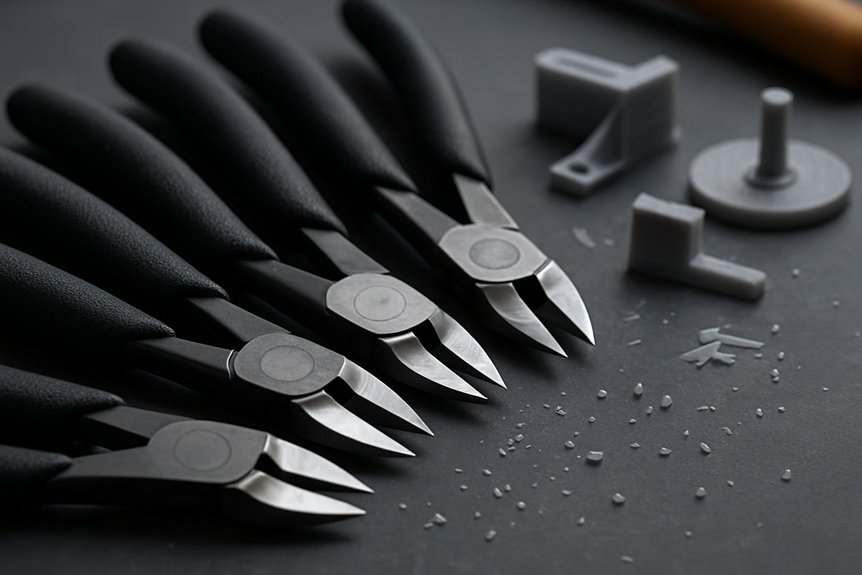
If you want cleaner 3D-print trims without gouging your parts, choosing the right flush cutters makes a big difference. You’ll want cutters with hardened, precise tips, comfy handles, and a spring for easy control—especially for delicate supports and tight corners. I’ve tested several budget and pro options and found clear winners for different needs. Keep scrolling to see the top five and which one fits your workflow best.
Flush Cutter Wire Cutters (BS-8109) Precision Micro Pliers for Electronics, Jewelry, 3D Printing
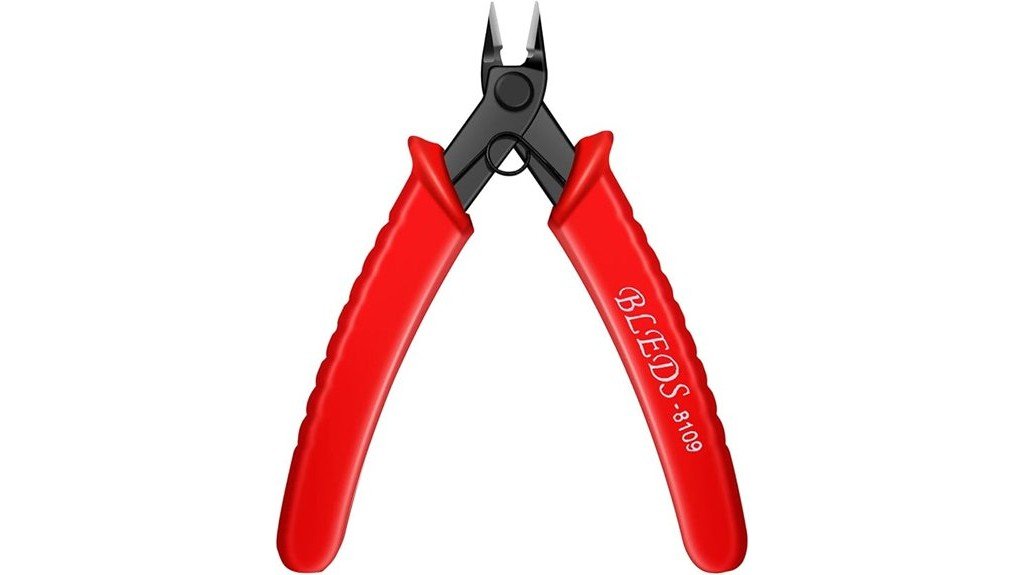
If you do a lot of 3D printing and need tidy, precise results, the BS-8109 flush cutter is a smart little workhorse to keep on your bench. You’ll find these micro pliers fit small spaces and give clean trims on supports, filament strings, and bead wires. Made from high-quality carbon steel with edge hardening, they stay sharp and feel solid in your hand. The anti-slip handles make long sessions easier, and they cut soft wire up to 18 AWG (1 mm). They’re not for hard or large wire, but for electronics, jewelry, and printing tasks, they’re reliable and affordable.
Best For: Makers, electronics hobbyists, and jewelry or 3D-printing enthusiasts who need a compact, precise cutter for trimming soft wire and cleanup in tight spaces.
Pros:
- High-quality carbon steel with edge hardening for lasting sharpness and durability.
- Anti-slip handles and compact design for comfortable use in small spaces and long sessions.
- Cuts soft wire up to 18 AWG (1 mm) and handles supports, filament strings, bead wires, cable ties, and plastics well.
Cons:
- Not suitable for hard or large-diameter wires.
- Limited warranty (3 months) which may be short for heavy users.
- May wear faster if used on materials beyond its intended soft-wire capacity.
VCELINK Small Spring-loaded Precision Flush Cutter Pliers (5-Inch)
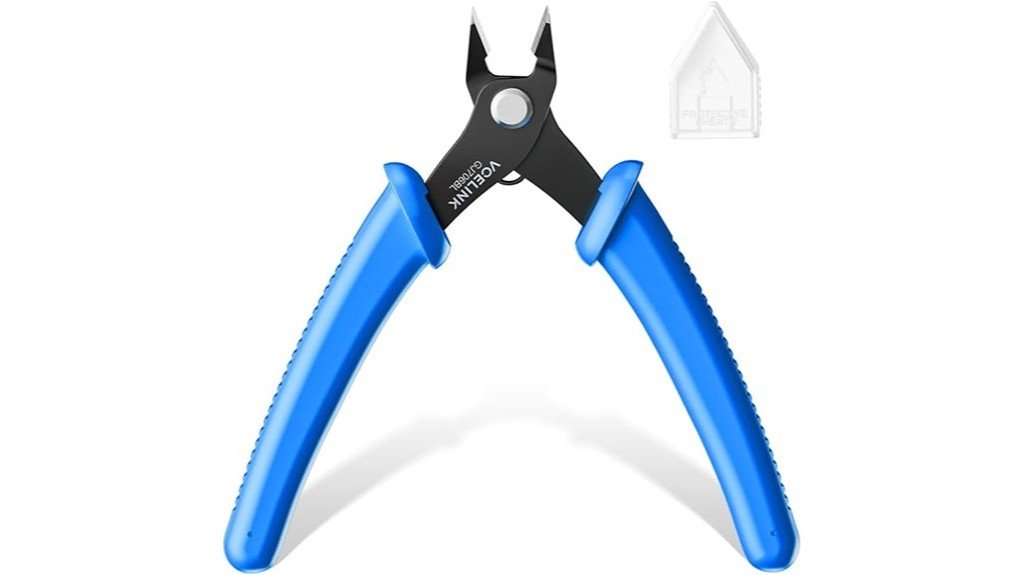
For hobbyists who do a lot of delicate trimming on 3D prints, the VCELINK 5-inch spring-loaded flush cutters are a smart, compact choice — they’re built to give clean, precise cuts on plastic burrs, zip ties, and small wiring without wearing you out. You’ll like the sharp carbon-steel edge (HRC51–53) that stays durable and resists rust, while the spring mechanism and ergonomic PVC handles reduce hand fatigue. They cut copper and aluminum up to 16 AWG and thin iron, but don’t use them on hard steel. At 2.11 ounces they’re portable, backed by an 18-month warranty.
Best For: Hobbyists and makers who need a compact, precise cutter for trimming 3D-print burrs, zip ties, PCB leads, and light wiring without hand fatigue.
Pros:
- Sharp, durable carbon-steel blade (HRC51–53) provides clean, precise cuts and resists rust.
- Spring-loaded, ergonomic PVC handles reduce hand fatigue and improve control in small spaces.
- Lightweight and portable (2.11 oz) with an 18-month warranty for added confidence.
Cons:
- Not suitable for hard steel or heavy-gauge wires; using such materials may damage the cutter.
- Some users report occasional alignment issues affecting cut consistency.
- PVC handle may be less comfortable for extended heavy use compared with higher-end grip materials.
BOENFU Small Flush Cut Nippers / Wire Cutters 2-Pack (5 Inch)
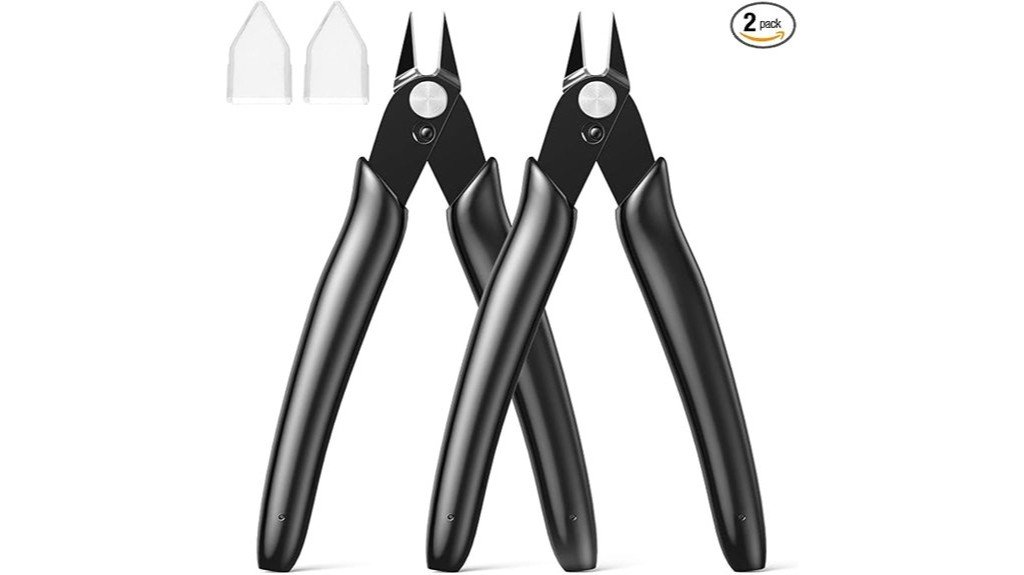
Hobbyists and makers who do lots of small, close-up work will like the BOENFU Small Flush Cut Nippers because they’re built for precision in tight spaces. You get a 2-pack of 5-inch, heat-treated high carbon steel cutters with long-cutting jaws that leave neat flush cuts, perfect for trimming filament remnants, zip ties, and model sprues. The dolphin-style grips and opening spring make repetitive tasks easier, and they’ll slice up to 16 AWG wire. They’re not for heavy steel or thick gauges, and a few users saw breakage with rough use, but overall they’re sharp, comfy, and great value.
Best For: hobbyists, makers, and electronics or jewelry hobbyists who need precise, flush cuts in tight spaces for tasks like trimming sprues, zip ties, filament, and light-gauge wire.
Pros:
- Long, flush-cutting jaws and sharp heat-treated high carbon steel provide neat, precise cuts for small work.
- Dolphin-style non-slip grips and an opening spring reduce hand fatigue and improve control during repetitive tasks.
- Comes as a 2-pack (good value) and handles up to 16 AWG—useful for jewelry, electronics, and model building.
Cons:
- Not suitable for cutting hard or thick steel wires; attempting such use can damage the cutters.
- Some users reported breakage after extended or rough use, indicating limited durability under heavy workloads.
- Small size may be uncomfortable or insufficient for larger-scale projects requiring more leverage or reach.
5 Pack Small Diagonal Flush Wire Cutters / Mini Nippers for Crafting, Electronics, Jewelry Making
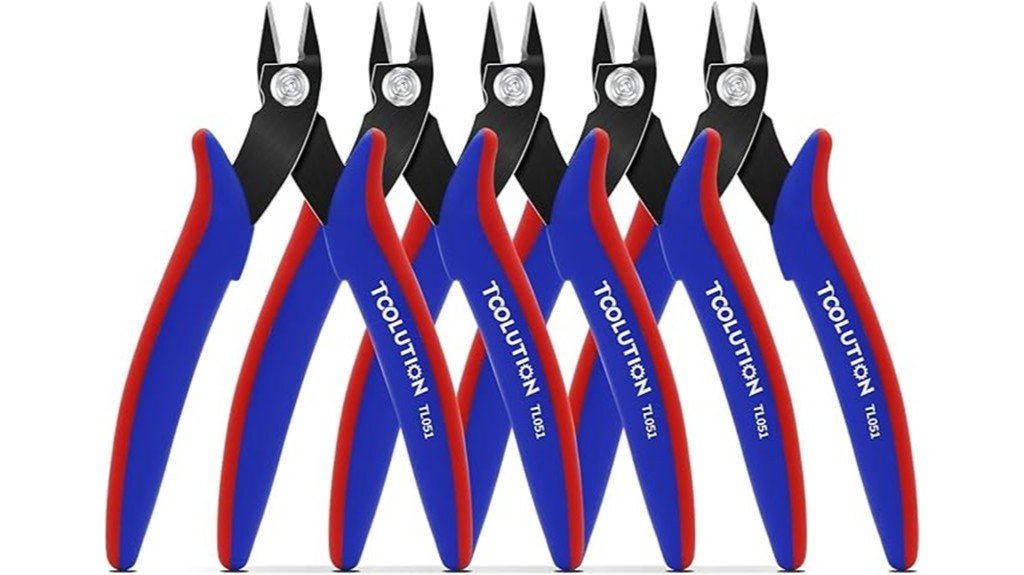
When you need clean, precise snips on tiny parts, these 5 pack small diagonal flush wire cutters are a smart choice for makers who work with 3D prints, models, and delicate electronics. You’ll get five mini nippers that shine on zip ties, plastic models, and finishing printed parts. The 11 mm fine tips handle wires up to 16 AWG (1.3 mm) copper or soft wire, though you shouldn’t try steel. The 25° angled head gives better sightlines in tight spots, and the spring-loaded action reduces hand strain. Ergonomic rubber handles feel secure, making them a handy, affordable multipack for hobbyists.
Best For: Makers and hobbyists—model builders, 3D printing enthusiasts, electronics tinkerers, and jewelry makers who need precise, flush cuts on small plastic and soft copper wires.
Pros:
- 11 mm fine tips for precise, flush cuts on small parts and wires up to 16 AWG (1.3 mm) copper.
- 25° angled head and compact size improve visibility and access in tight spots.
- Spring-loaded action and ergonomic bi-material rubber handles reduce hand fatigue and improve grip.
Cons:
- Not suitable for cutting steel or hardened wire.
- Small size limits use to light-duty tasks; not for heavy-gauge wiring or repetitive industrial use.
- Pack includes multiple tools but quality may vary compared with higher-end single-piece cutters.
Deburring Tool Kit for 3D Printing (18 pcs)
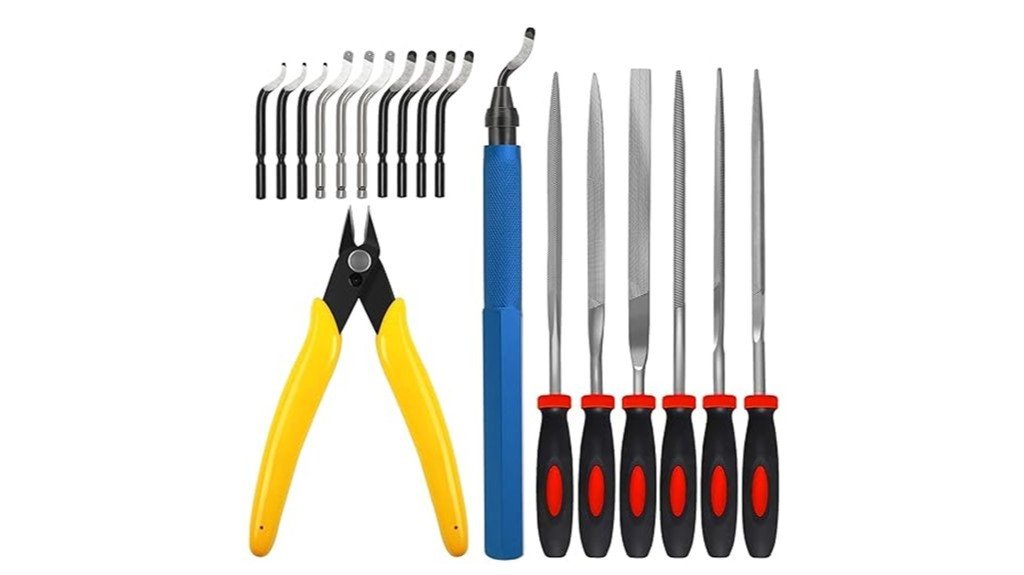
If you want a single, compact kit that covers most finishing tasks, the 18-piece Deburring Tool Kit is a great pick for 3D printing enthusiasts who also work with metal, resin, or plastic. You get 10 multiuse blades, six hardened needle files, and a micro flush cutter — enough for support removal, smoothing seams, and trimming soft wire up to 16 gauge. Files include flat, square, triangular, round, half-round and flat warding shapes for detailed work. Users praise its heft, safety compared with exposed blades, and daily usefulness. It’s a smart, affordable starter set you’ll keep by the printer.
Best For: 3D printing hobbyists and model makers who want an affordable, compact starter kit for finishing prints, removing supports, and light metal/plastic work.
Pros:
- Versatile 18-piece set (10 blades, 6 needle files, micro flush cutter) covers most finishing tasks for plastic, resin, and soft metals.
- Users report solid heft, good safety compared with exposed utility blades, and easy handling for intricate work.
- Good value and durability for an entry-level kit; convenient all-in-one storage near the printer.
Cons:
- Not a substitute for professional-grade precision tools for heavy-duty metalworking or industrial use.
- Limited number of specialized blades — may run out of specific blade types for frequent heavy users.
- Micro flush cutter is limited to soft wire up to 16 gauge (1.3 mm) and not suitable for harder wire.
Factors to Consider When Choosing Flush Cutters for 3D Prints
When you pick flush cutters for 3D prints, pay attention to cutting capacity and gauge so the tool can handle different filament thicknesses without crushing or bending. Look at blade material and hardness plus the jaw design and angle, since those determine how cleanly the nibble comes off and whether you can reach tight spots. Also consider handle comfort and grip and a good spring/rebound mechanism, because a comfy, responsive cutter makes long cleanup sessions faster and less tiring.
Cutting Capacity & Gauge
Cutting capacity matters more than you might think, because it tells you what gauges and materials a pair of flush cutters can handle without nicking your print or the blade. You’ll usually see cutters rated for soft wires up to 16–18 AWG (about 1.0–1.3 mm), which covers most PLA or TPU filament trimming tasks and common wiring near printers. Check specs to match cutters to the material—some are made for softer metals like copper or aluminum and will struggle with harder wires. Pick a fine-tipped pair for precision in tight spots, and look for a spring-loaded mechanism to cut hand fatigue during repetitive trims. Finally, note blade hardness ratings when evaluating durability and long-term performance.
Blade Material & Hardness
Think of the blade as the heart of your flush cutters, because the material and hardness determine how cleanly and reliably they trim filament or soft wire. You’ll usually see high carbon steel blades — they give the durability and strength needed to cut soft wires and trim 3D-print supports without bending. Look for blades hardened to about HRC51–53; that range balances sharpness and wear resistance so edges stay crisp longer. Many cutters use high-frequency heat treatment to toughen the cutting edge, which really improves longevity. A fine 11 mm tip helps you reach tight spots for precise snips. Remember these cutters are made for soft wire up to about 16 AWG; don’t use them on harder metals or you’ll ruin the blade.
Jaw Design & Angle
Good jaw design can make the difference between a tidy finish and a fiddly mess, so you’ll want cutters that give you visibility, reach, and control. Look for a 25° angled head — it tilts the cutting edge so you can see what you’re trimming and reach tricky nooks without twisting your wrist into uncomfortable positions. Long-cutting jaws are standard for flush cutters; a 10mm jaw length, for example, helps you get beside delicate features or into tight corners to remove supports cleanly. Ergonomic jaw shaping also matters: well-contoured jaws guide small parts into the blades and reduce hand strain during detailed work. Choosing the right jaw angle and length makes finishing faster, neater, and less frustrating.
Handle Comfort & Grip
Once your jaw angle and length let you reach tiny nooks, you’ll notice how much the handles matter during longer sessions — they’re the part you actually hold for every snip. You want cutters with ergonomic handles that reduce hand fatigue when you trim a pile of supports. Soft PVC or rubber coatings give cushioning and last through repeated use, while anti-slip textures help you keep control in awkward spots. Aim for a lightweight tool, around 2–3 ounces, so your wrist won’t tire after many cuts. Also check handle size and shape: they should fit your hand without forcing a tight grip that causes cramping. Test a few designs if you can — comfort is personal, and the right fit speeds up precise, painless work.
Spring & Rebound Mechanism
Because a spring-loaded rebound makes repetitive cuts much easier, you’ll want to pay attention to how the mechanism feels as much as whether it’s there. A built-in spring lets the cutters open automatically after each snip, cutting hand fatigue and speeding up long sessions. You’ll notice differences: some springs give a soft, smooth rebound while others push back harder, and that tension changes how much effort you use each time. In tight spots where you need quick, precise trims, a consistent rebound helps you stay steady and accurate. Many hobbyists say an ergonomic springed tool made long builds far more comfortable, so test the feel if you can. Pick a tension that matches your strength and cutting rhythm.
Maintenance & Durability
After you’ve found a cutter with a comfortable spring and smooth rebound, you’ll want to think about how long that tool will keep performing well. Pick cutters made from high-quality carbon steel — they resist rust and hold up under repeated use, so you won’t replace them every few projects. Look for edge hardening or high-frequency heat treatment, which keeps the blade sharp longer and makes trims cleaner. Keep your cutters working by wiping debris away and oiling the joint and blades occasionally; it’s a two-minute habit that prevents corrosion. Ergonomic design, anti-slip grips, and reliable springs reduce fatigue and extend usable life. Finally, choose models with a warranty so you can get repairs or replacements if something goes wrong.
FAQ
Can Flush Cutters Be Sterilized for Use on Medical-Grade Prints?
1. Can flush cutters be sterilized for medical-grade prints?
Yes, flush cutters can be sterilized for use with medical-grade prints if they meet specific criteria.
2. What material should flush cutters be made from for sterilization?
Flush cutters must be made from autoclavable stainless steel to ensure they can withstand sterilization processes.
3. Are plastic handles acceptable on flush cutters for sterilization?
No, flush cutters with plastic handles should be avoided as they may not withstand the sterilization process effectively.
4. What sterilization protocols should be followed?
It is essential to adhere to validated sterilization protocols to ensure the effectiveness of the sterilization process on flush cutters.
5. How often should flush cutters be inspected for corrosion?
Flush cutters should be inspected regularly for signs of corrosion or damage to ensure they remain safe and effective for use.
6. What type of sterilization method is recommended for flush cutters?
Autoclaving is the recommended method for sterilizing flush cutters made from autoclavable stainless steel.
7. Is it necessary to clean flush cutters before sterilization?
Yes, flush cutters should be thoroughly cleaned before sterilization to remove any contaminants.
8. What should be done if flush cutters show signs of damage?
If flush cutters show any signs of damage or corrosion, they should be replaced immediately to maintain safety standards.
9. Can flush cutters be used on other materials aside from medical-grade prints?
While flush cutters can be used on various materials, their sterilization requirements specifically apply to medical-grade prints.
10. What is the importance of using validated sterilization protocols?
Using validated sterilization protocols ensures that all contaminants are effectively eliminated, making the tools safe for medical applications.
Do Flush Cutters Damage Flexible Filament or TPU?
FAQs on Using Flush Cutters with TPU and Flexible Filament
1. Can flush cutters damage TPU?
Generally, flush cutters do not damage TPU if used carefully. However, the risk increases with poor-quality tools.
2. What happens if I use dull flush cutters on flexible filament?
Dull flush cutters can pinch, tear, or deform flexible filament, leading to unsatisfactory cuts.
3. How can I prevent damage when cutting TPU?
To prevent damage, use sharp and well-aligned flush cutters, ensuring a clean cut without excess force.
4. Is it better to use high-quality flush cutters?
Yes, high-quality flush cutters are essential for effective cutting, especially on flexible materials like TPU.
5. What cutting technique should I use for flexible filament?
Snipping slowly is recommended to avoid stretching or squashing the filament during the cutting process.
6. Do I need to worry about the type of flush cutters I use?
Yes, using cheap flush cutters can lead to issues, so investing in quality tools is advisable for optimal results.
7. Can I use flush cutters on all types of filament?
While flush cutters can be used on various filaments, caution is needed with flexible materials to avoid damage.
8. Is it safe to cut TPU in one swift motion?
Cutting in one swift motion may not be safe; it’s better to cut slowly to maintain control and prevent damage.
9. How do I know if my flush cutters are sharp enough?
If your flush cutters easily slice through materials without pinching or tearing, they are likely sharp enough for use.
10. Are there specific flush cutters recommended for TPU?
Look for flush cutters specifically designed for soft materials, which typically feature sharper edges and better ergonomics.
How Do I Sharpen or Maintain My Flush Cutters?
1. How often should I clean my flush cutters?
Regular cleaning is essential to maintain the performance of your flush cutters. It’s recommended to clean them after each use to remove debris and prevent rust.
2. What is the best way to oil the pivot of my flush cutters?
Use a light machine oil or lubricant specifically designed for tools. Apply a small amount to the pivot area and work the cutters back and forth to distribute the oil evenly.
3. How do I strop my flush cutters?
To strop your flush cutters, use a leather strop or a fine diamond file at a very shallow angle. This helps refine the cutting edge without removing too much material.
4. When should I consider sharpening my flush cutters?
If you notice that your flush cutters are not cutting cleanly or are leaving rough edges, it’s time to sharpen them. Avoid aggressive sharpening methods that may alter the geometry.
5. How can I check the alignment of my flush cutters?
You can check alignment by closing the cutters and observing if the blades meet evenly along the cutting edge. Misalignment can affect cutting quality and should be adjusted if necessary.
6. What signs indicate that the blades need to be replaced?
If the blades are chipped, excessively worn, or rusted, it’s time for a replacement. Regularly inspecting the blades will help you catch these issues early.
7. Can I use a regular grinding method to sharpen my flush cutters?
No, aggressive grinding methods can damage the cutting edge and geometry of flush cutters. Use gentle sharpening techniques like stropping or a fine diamond file instead.
8. What type of file is best for sharpening flush cutters?
A fine diamond file is ideal for sharpening flush cutters, as it allows for precise sharpening without removing too much material. Ensure the file is clean before use.
9. Should I lubricate my flush cutters after every use?
While it’s not necessary to lubricate after every use, doing so regularly helps maintain smooth operation and prevents rust. Apply oil as needed based on usage frequency.
10. What maintenance routine should I follow for my flush cutters?
A good maintenance routine includes cleaning after each use, oiling the pivot regularly, checking alignment, and sharpening or replacing blades as needed. This will extend the life of your tools.
Are There Safety Guidelines for Kids Using Flush Cutters?
FAQs on Safety Guidelines for Kids Using Flush Cutters
1. Should kids be supervised when using flush cutters?
Yes, kids should always be supervised while using flush cutters to ensure their safety and proper usage.
2. What type of cutters should kids use?
Kids should use child-safe cutters specifically designed for their age group to minimize the risk of injury.
3. How should kids hold the cutters?
Teach kids the proper grip for the cutters, ensuring they hold them securely and with control.
4. What is the correct cutting technique for kids?
Instruct kids to cut away from their body to avoid accidents and injuries.
5. Is eye protection necessary when using flush cutters?
Yes, providing eye protection is crucial to protect kids from potential flying debris or accidents during cutting.
6. How should flush cutters be stored?
Store tools in a locked cabinet or container to prevent unsupervised access by children.
7. Are there age-appropriate tasks for kids using flush cutters?
Yes, assign age-appropriate tasks that do not involve handling sharp or risky parts to ensure a safe experience.
8. What should I do if a child is uncomfortable using the cutters?
If a child feels uncomfortable, encourage them to stop and provide additional guidance or practice until they feel more confident.
9. Can kids use flush cutters without prior experience?
No, kids should receive proper instruction and practice under supervision before using flush cutters independently.
10. What should I do if an accident occurs?
If an accident occurs, stay calm, assess the injury, and provide appropriate first aid while seeking medical help if necessary.
11. How can I teach kids about the importance of tool safety?
Discuss the importance of safety, demonstrate proper usage, and encourage questions to foster understanding and respect for tools.
Can Flush Cutters Be Used for Cutting Small Metal Parts?
1. Can flush cutters be used on metal parts?
Yes, flush cutters can cut small metal parts, especially soft metals like brass and copper.
2. What types of metal are flush cutters suitable for?
Flush cutters work best on soft metals. They are not recommended for hard metals due to the risk of damaging the tool.
3. Can flush cutters damage when used on hard steel?
Yes, using flush cutters on hard steel can damage their jaws, so caution is advised.
4. Are there specific flush cutters for metal cutting?
Yes, there are flush cutters specifically rated for metal cutting. These are designed to withstand tougher materials.
5. What should I use for cutting tougher alloys?
For tougher alloys, it’s better to use appropriate snips or cutting tools designed for harder metals.
6. Can I use flush cutters for jewelry making?
Flush cutters are popular in jewelry making for cutting soft metal components, but ensure they are suitable for the specific metal used.
7. What size of metal parts can flush cutters handle?
Flush cutters are ideal for small metal parts, making them a good choice for precision work.
8. Do flush cutters leave a clean edge when cutting metal?
Yes, flush cutters are designed to leave a clean edge, which is particularly useful in detailed projects.
9. How do I maintain flush cutters used for metal?
To maintain flush cutters, regularly clean them after use and avoid cutting hard materials that could dull the blades.
10. Are flush cutters versatile for other materials?
Yes, flush cutters can also be used on plastics and other softer materials, making them versatile tools for various projects.
Final Thoughts
When it comes to post-print cleanup, having the right flush cutters is non-negotiable. You need tools with hardened, precision-tipped blades that can handle the intricacies of 3D prints. Look for ergonomic grips that provide comfort during extended use, and a built-in spring mechanism for effortless operation. Trustworthy brands are worth your investment, but don’t hesitate to test a small pack to find the perfect fit for your hand and printing style.
To elevate your finishing process, pair your flush cutters with a deburring kit for those razor-sharp edges. Remember, proper maintenance is key—keep your tools clean and lubricated to ensure they remain effective over time. With the right care, these cutters will help you achieve consistently sharp, professional-looking prints every time.