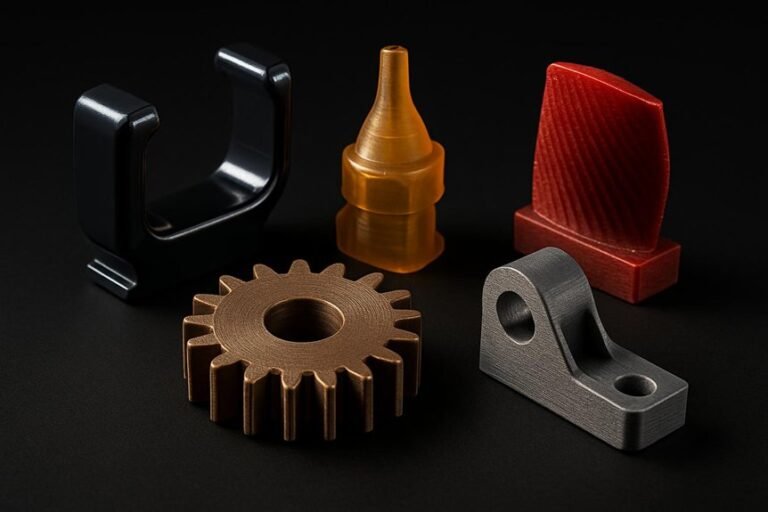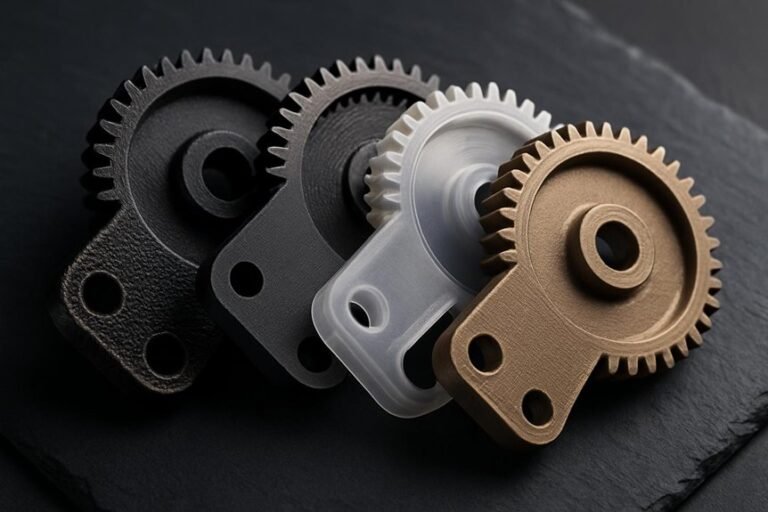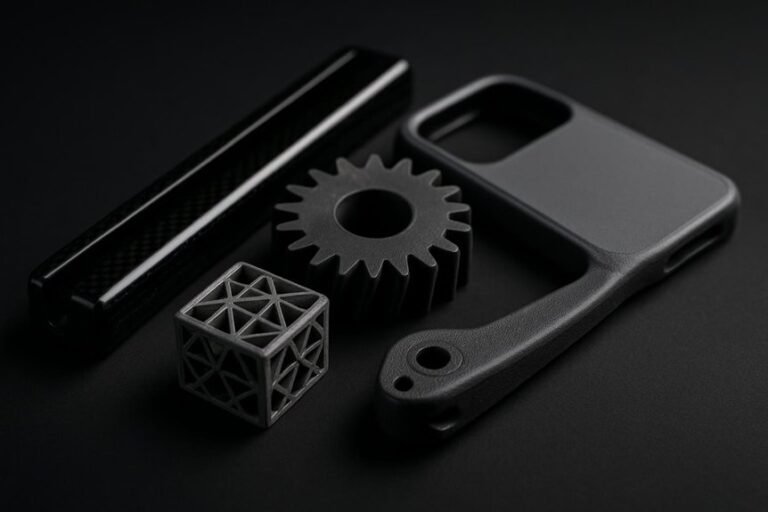
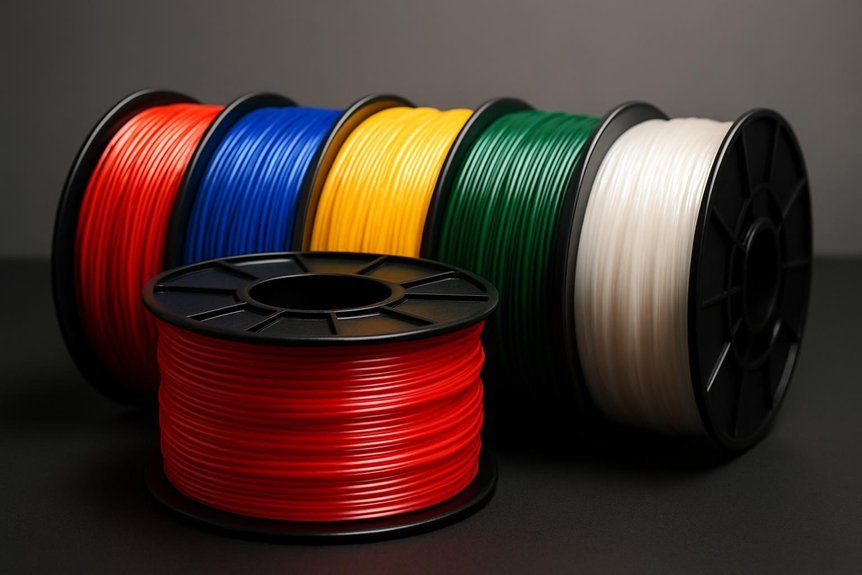
If you print often, picking the right PLA saves time and frustration, and you’ll want something reliable, easy to use, and consistent. I’ll walk you through five solid choices—from budget-friendly dual spools to tougher PLA+—and explain why each works for everyday parts, prototypes, or colorful projects. You’ll get practical tips on bed temps, print settings, and when to choose PLA+ over standard PLA, so you can avoid common mistakes and get better results.
Creality PLA 1.75mm 2kg Filament Bundle (Black, 2-Pack)
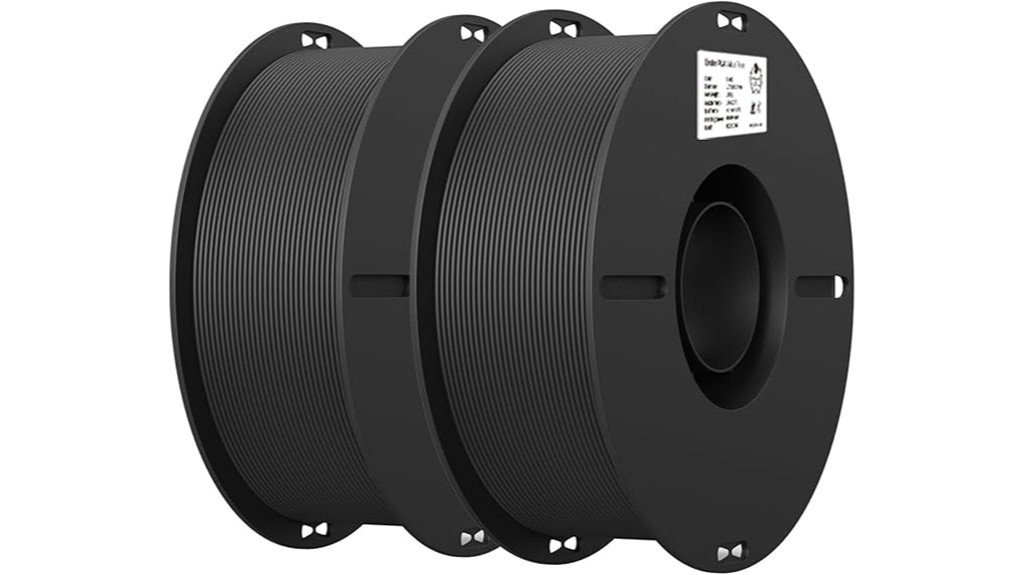
If you’re looking for a budget-friendly spool that doesn’t skimp on reliability, the Creality PLA 1.75mm 2kg bundle is a solid pick — especially if you print often or teach classes where you go through filament fast. You’ll get two 1kg black spools that save money without sacrificing quality. The filament arrives vacuum-sealed after a 24-hour drying process, so prints stay clog- and bubble-free. Mechanical winding cuts tangles and snapping, while larger spools feed smoothly. It’s compatible with most FDM printers and made from plant-based PLA, with tight +/-0.02mm tolerances for consistent, dependable results.
Best For: Makers, teachers, and frequent FDM printers who need an economical, reliable supply of black PLA for high-volume printing and class use.
Pros:
- Cost-effective 2×1kg bundle delivers good value for frequent printing or classroom use.
- Vacuum-sealed after a 24-hour drying process for clog- and bubble-free prints and consistent performance.
- Mechanical winding and larger spools reduce tangles and snapping; high dimensional accuracy (±0.02mm) ensures reliable feeding.
Cons:
- Limited to a single color (black) in this bundle, which may not suit projects needing multiple colors.
- PLA is less heat-resistant than some engineering filaments, so not ideal for high-temperature applications.
- Pack size (2kg) may be excessive for casual or occasional users who print infrequently.
SUNLU PLA+ 1.75mm 1KG Black 3D Printer Filament
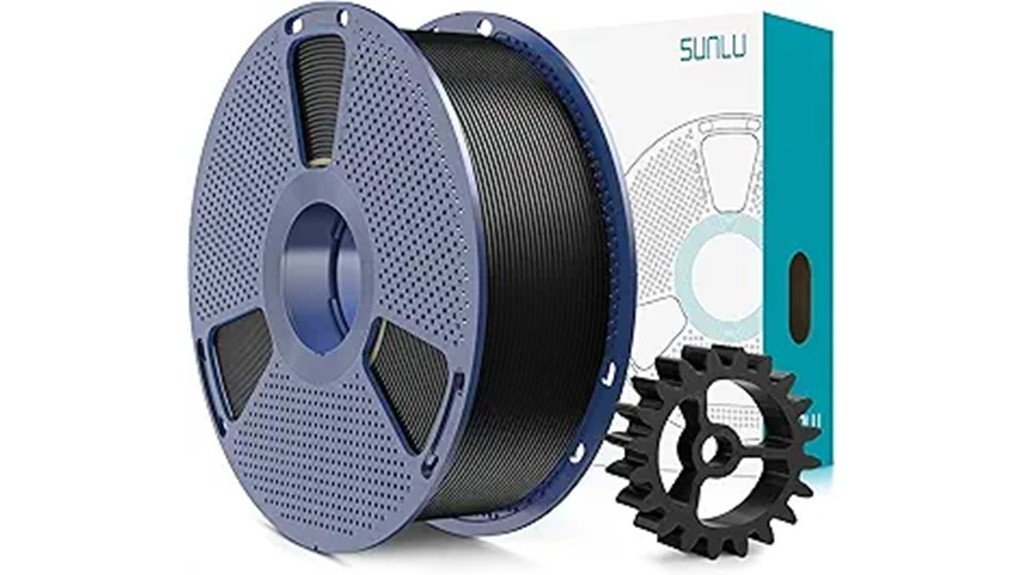
For hobbyists and small-shop makers who want a reliable, easy-to-print black filament, SUNLU PLA+ 1.75mm is a solid choice that balances strength and convenience. You’ll appreciate the 1kg spool with tight +/- 0.02mm tolerance and neat winding that avoids tangles and clogs. It’s tougher than standard PLA+, so your parts resist brittleness and cracking while keeping good layer adhesion and smooth surfaces. Print at 205–220°C with a 50–60°C bed and push speeds from 100 up to 300mm/s when you need faster output. With strong reviews and broad printer compatibility, it’s user-friendly for beginners and pros alike.
Best For: hobbyists and small-shop makers who need a reliable, easy-to-print black filament that balances strength, printability, and fast-print capability.
Pros:
- Tight dimensional tolerance (+/- 0.02mm) and neat winding reduce tangles and clogging for consistent prints.
- Enhanced PLA+ formulation offers better resistance to brittleness and cracking with strong layer adhesion and smooth surface finish.
- Wide compatibility and recommended settings support speeds up to 300mm/s, suitable for both beginners and advanced users.
Cons:
- PLA+ is less heat-resistant than engineering plastics (e.g., PETG, ABS), limiting high-temperature applications.
- Fast print speeds may require fine-tuning printer settings and cooling to maintain quality.
- Only available in 1.75mm/1kg spool size (as described), which may not suit users needing different diameters or larger spools.
eSUN PLA Basic 1.75mm 1KG (2.2 LBS) Light Blue 3D Printer Filament
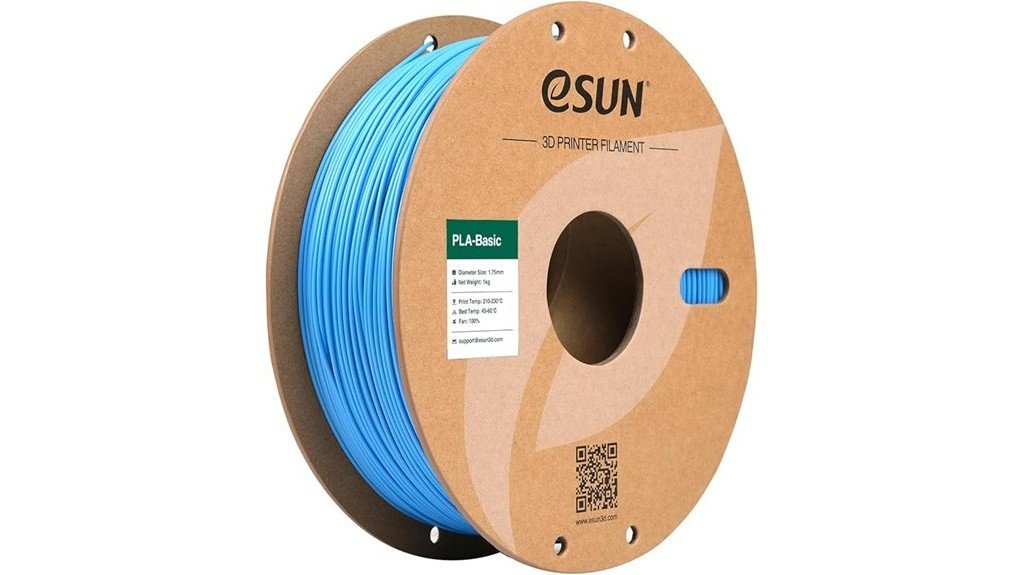
eSUN’s PLA Basic in light blue is a great pick if you want a reliable, budget-friendly filament that prints faster than ordinary PLA, making it ideal for hobbyists and small shops who crank out prototypes or colorful props. You’ll like its improved fluidity and tight diameter tolerance, which cut down on stringing and clogging. It works with most FDM printers and delivers bright color and precise prints, though you may need to raise the bed to about 70°C for better adhesion. It comes vacuum-sealed with desiccant, costs less than many rivals, and suits everyday projects—just watch for occasional spool inconsistencies.
Best For: Hobbyists and small shops looking for an affordable, fast-printing PLA option for colorful prototypes, props, and everyday 3D printing projects.
Pros:
- Improved fluidity and tight diameter tolerance for faster prints with reduced stringing and fewer clogs.
- Wide compatibility with most FDM printers and bright, precise color results.
- Vacuum-sealed spool with desiccant for good storage and minimal moisture issues out of the package.
Cons:
- May require a higher bed temperature (~70°C) for reliable adhesion on some printers.
- Some users report occasional spool inconsistencies that can cause tangling or clogging.
- Not suitable for high-heat applications and may need print settings adjustments for optimal results.
eSUN PLA Basic 1.75mm Pink 1KG 3D Printer Filament
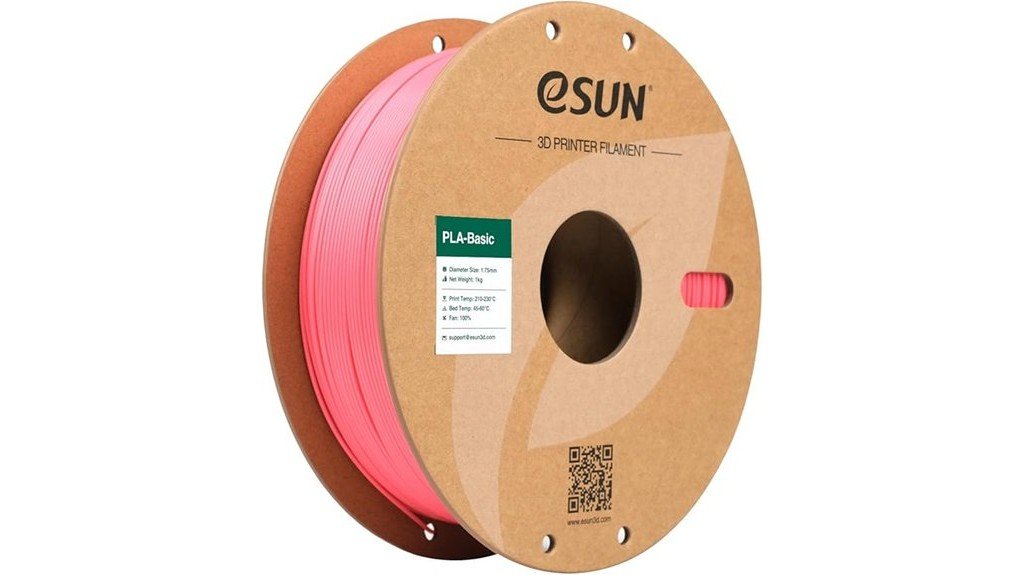
Hobbyists and budget-minded makers will like this pink PLA spool because it balances reliable printing with an affordable price, making it a solid pick for everyday projects and quick prototypes. You’ll find eSUN’s improved PLA formulation prints fast with good fluidity, low odor, and minimal warping, so you can tackle models without fuss. It works with most FDM printers and arrives vacuum sealed with a desiccant to keep moisture out. Many users praise its vibrant color and smooth feeding, though a few note occasional adhesion or spool-winding issues. For the price, it’s a dependable choice if you tweak bed temps and monitor larger prints.
Best For: Hobbyists and budget-minded makers who need an affordable, easy-printing pink PLA for everyday projects and quick prototypes.
Pros:
- Improved PLA formulation with good fluidity, fast printing, low odor, and minimal warping.
- High compatibility with most FDM printers and arrives vacuum-sealed with a desiccant for moisture protection.
- Vibrant color, smooth feeding, and generally reliable performance at a competitive price.
Cons:
- Some users report occasional adhesion and extrusion consistency issues, requiring bed-temp tweaks (e.g., ~70°C).
- Occasional spool-winding problems that can cause feeding issues or tangles.
- Mixed quality-control reports — exercise caution for large or critical prints.
SUNLU PLA 1.75mm 3D Printer Filament, 1kg Spool (Black)
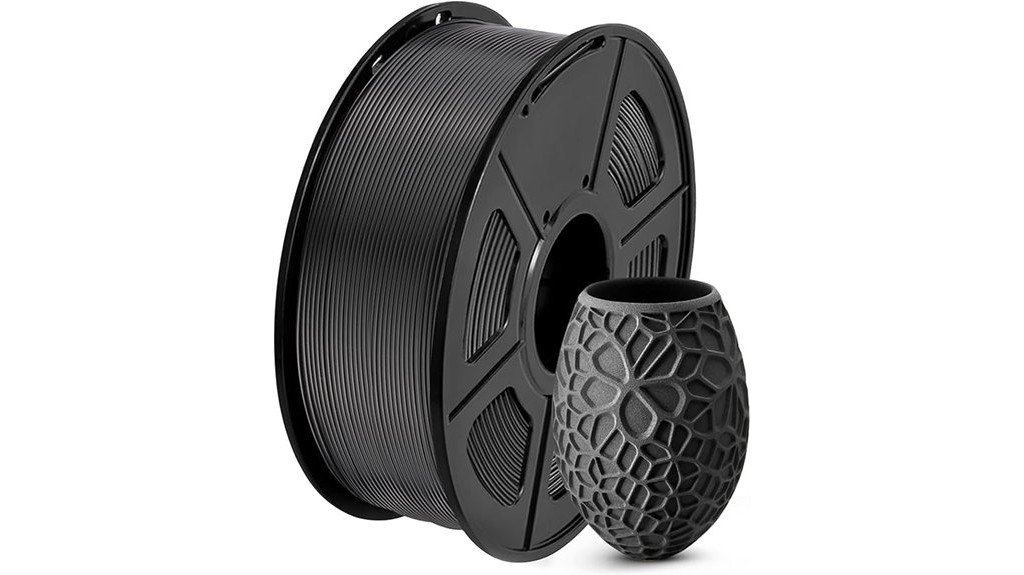
If you want a reliable, no-fuss PLA that works straight out of the box, SUNLU’s 1.75mm black spool is a strong pick — especially if you’re newer to 3D printing or just want consistent, predictable results. You’ll appreciate its tight dimensional accuracy (+/- 0.02mm), excellent layer adhesion, and lack of clogs, bubbles, or tangles. The neat winding and small diameter error mean it feeds smoothly on most 1.75mm FDM printers, and the spool fits common mounts. Print at 200–230°C with a 50–65°C bed and moderate speeds (50–100mm/s). SUNLU also offers dryers and accessories if you expand your setup.
Best For: Beginners and hobbyists who want a reliable, easy-to-use PLA filament that prints consistently with minimal troubleshooting.
Pros:
- Excellent dimensional accuracy (+/- 0.02mm) for consistent extrusion and fit between parts.
- Neat winding and low diameter error reduce tangles, jams, and printing interruptions.
- Good layer adhesion and absence of clogs or bubbles make it user-friendly and suitable for high-quality prints.
Cons:
- PLA is less heat- and impact-resistant than engineering filaments (not ideal for high-temp or load-bearing parts).
- Spool dimensions (8.00cm diameter, 2.50cm width) may not fit all printer spool holders without adapters.
- Limited to a single 1kg spool size — frequent replacements if you print large volumes.
Factors to Consider When Choosing PLA Filament for Everyday Printing
When you pick a PLA filament for everyday printing, you’ll want to check a few practical things like dimensional accuracy tolerance and the recommended print temperature range so your parts come out the right size and without a warpy mess. Also pay attention to bed adhesion needs and spool winding quality, because good sticking and smooth feeding can save you time and frustration. Finally, consider the material source and sustainability if you care about eco-friendly choices and consistent quality over time.
Dimensional Accuracy Tolerance
One small number can make a big difference: a typical PLA filament tolerance of around ±0.02 mm can be the line between parts that snap together perfectly and pieces that need sanding or reprinting. When you pick filament, that tolerance tells you how consistently the diameter stays true as it winds on the spool. Consistent diameter means steady extrusion, fewer clogs, and predictable layer widths so parts fit and function as intended. Tighter tolerances also give you repeatable results across multiple prints, which matters for functional prototypes or intricate assemblies. If you’ve ever sanded a peg to make it fit, you know why this matters. Look for manufacturers that publish tolerance specs and test reports — they save you time and frustration.
Print Temperature Range
Print temperature is one of the easiest settings to tweak but also one of the most important for getting good PLA results, so you’ll want to understand how it affects your prints. Most PLA prints well between 190°C and 220°C, and you’ll find small changes can make a big difference: lower temps often cut stringing and sharpen detail, while higher temps improve flow and layer bonding. Always check the manufacturer’s recommended range because brands and blends vary, and using their guidance helps keep prints consistent. Some tougher PLAs, like PLA+, can handle up to about 230°C for stronger parts. Also take into account bed temperatures typically sit around 50–70°C to support printing, so set both carefully.
Bed Adhesion Needs
Anyone who’s ever had a print peel up mid-job knows how frustrating weak bed adhesion can be, so you’ll want a PLA that helps hold the first layers firmly in place. Check for filaments with low shrinkage and improved flow — they spread evenly and cling better, cutting down warping and layer separation. Using a bed temperature around 70°C often boosts initial stick, especially for larger or complex parts. Consistent filament diameter (about ±0.02mm) matters too, since steady extrusion makes that all-important first layer uniform. Some PLAs are formulated specifically to minimize layer separation and improve adhesion, which gives you more reliable results and fewer failed prints. Pick a filament that balances these traits for everyday, hassle-free printing.
Spool Winding Quality
Smooth spool winding can make or break your 3D printing session, and you’ll notice the difference the moment you load the filament. When the filament is neatly and evenly wound, you’ll avoid tangles that cause sudden jams or clogs, and that peace of mind keeps projects moving. Manufacturers that use mechanical winding and inspection tend to deliver spools that hold tight diameter tolerance and stay perfectly round, so extrusion stays consistent. Poorly wound spools can snap or feed inconsistently, and you’ll spend more time troubleshooting than printing. Pick brands that mention winding quality or inspection; users often report fewer interruptions and better results. A little attention to spool winding saves you frustration and improves print reliability.
Material Source Sustainability
You’ve seen how something as simple as spool winding affects your print day, and material sourcing matters just as much for the planet and your conscience. PLA comes from plants like corn or sugarcane, so you’re choosing a renewable option instead of petroleum-based plastic. That usually means a smaller carbon footprint during production, which helps cut greenhouse gas emissions over time. Many PLAs are biodegradable, but only in industrial composting facilities — don’t expect them to vanish in your backyard. If you pick filament made from crops grown and harvested responsibly, you boost sustainability even more and support better farming practices. Think about supplier transparency and certifications; they tell you whether the material’s origin and processing align with your values.
FAQ
Can PLA Filament Be Safely Composted at Home?
FAQs on Composting PLA Filament at Home
1. Can PLA filament be composted at home?
No, PLA filament is not suitable for home composting as it requires industrial composting conditions to break down effectively.
2. What conditions are needed for PLA to decompose?
PLA needs high heat and specific microbial activity found in industrial composting facilities to decompose properly.
3. What happens if I add PLA filament to my home compost pile?
If you add PLA to a home compost pile, it will likely not break down completely and could leave behind plastic fragments.
4. Should I cut PLA filament into smaller pieces for composting?
Cutting PLA filament into smaller pieces may help, but it still won’t ensure full decomposition in a home compost setup.
5. How long does PLA take to decompose in a home compost pile?
PLA can take years to decompose in a home compost pile, much longer than organic materials.
6. Are there any alternatives to composting PLA at home?
You can consider recycling PLA filament at designated recycling facilities that accept bioplastics.
7. What are the environmental impacts of PLA if not composted properly?
If not composted properly, PLA can contribute to plastic pollution, as it will break down into microplastics over time.
8. Is PLA biodegradable?
Yes, PLA is biodegradable, but it requires specific conditions to break down effectively, which are not typically found in home composting.
9. Can I use PLA in a home composting system if it’s mixed with organic materials?
Mixing PLA with organic materials will not enhance its breakdown. It will still require industrial composting to decompose properly.
10. What should I do with unused or waste PLA filament?
Consider recycling it at appropriate facilities or look for programs that accept PLA for proper disposal.
Do Colorants Affect PLA Strength or Printability?
FAQ 1: How do colorants impact PLA strength?
Colorants can alter the molecular structure of PLA, which may affect its overall strength. Depending on the type and concentration of the colorant used, you could see changes in tensile strength.
FAQ 2: Can colorants influence the printability of PLA?
Yes, the addition of colorants can affect the melt flow properties of PLA. This can lead to variations in extrusion and layer adhesion during the printing process.
FAQ 3: What specific properties of PLA are affected by colorants?
Colorants can change melt flow, layer adhesion, and the risk of embrittlement. Each of these factors can significantly impact the performance of the final print.
FAQ 4: Should I test my settings when using new colorants?
Absolutely, it’s essential to test your print settings when switching pigments or batches. Variations in colorants can lead to the need for adjustments in temperature and speed.
FAQ 5: How does concentration of colorant affect PLA printing?
Higher concentrations of colorants can lead to more significant changes in properties like melt flow and layer adhesion. It’s crucial to find an optimal balance to maintain print quality.
FAQ 6: Are all colorants the same regarding their effects on PLA?
No, different colorants can have varying effects on PLA. Pigments, dyes, and other additives behave differently, affecting strength and printability uniquely.
FAQ 7: What is the risk of embrittlement in colored PLA?
Certain colorants can increase the risk of embrittlement in PLA, making it more prone to cracking or breaking under stress. Testing is vital to assess the impact of your chosen colorant.
FAQ 8: Can I mix different colorants for PLA?
Mixing different colorants is possible, but it may lead to unpredictable changes in PLA properties. It’s advisable to conduct small tests to ensure desired results.
FAQ 9: How do I know if a colorant is suitable for PLA?
Research the specific colorant’s compatibility with PLA and its potential effects on strength and printability. Manufacturer guidelines and community feedback can be valuable resources.
FAQ 10: What should I consider when choosing a colorant for PLA?
Consider the type of colorant, its concentration, and its potential impact on melt flow and layer adhesion. Testing different combinations will help you find the most effective options for your prints.
How Long Can Printed PLA Objects Be Left Outdoors?
1. How long can PLA objects last outdoors?
PLA can last outdoors for several months to a couple of years, depending on environmental conditions.
2. What factors affect the lifespan of PLA outdoors?
UV exposure, heat, humidity, and moisture significantly speed up PLA degradation when left outside.
3. Can I protect my PLA objects from UV damage?
Yes, using UV-resistant paint or sealants can help protect PLA objects from harmful UV rays, extending their lifespan.
4. Is shade important for PLA durability?
Yes, keeping PLA parts shaded can help reduce exposure to direct sunlight, which can prolong their integrity and appearance.
5. Does humidity affect PLA objects?
Absolutely, high humidity can contribute to the degradation of PLA, causing it to weaken and deteriorate more quickly.
6. Are there any specific outdoor conditions that are worse for PLA?
Extreme heat and direct sunlight are particularly detrimental, as they accelerate the breakdown of PLA materials.
7. How can I tell if my PLA object is degrading?
Look for signs like discoloration, brittleness, or warping, which indicate that the material is breaking down due to environmental exposure.
8. Can I leave PLA objects outside during winter?
While PLA can withstand colder temperatures, freeze-thaw cycles can cause stress and potential cracking, so it’s best to avoid prolonged exposure.
9. Is it safe to use PLA for outdoor applications?
While PLA can be used outdoors, its longevity may be limited without protective measures, making it less suitable for long-term outdoor applications.
10. What are some alternatives to PLA for outdoor use?
Consider using materials like PETG or ASA, which are more resistant to UV and environmental factors than PLA, for longer-lasting outdoor applications.
Can PLA Be Used for Food-Contact or Kitchen Items?
1. Can I use PLA for food contact items?
Yes, PLA can be used for items that come into contact with food, but caution is advised. Most PLA filaments are not certified as food-safe.
2. What are the safety concerns with PLA?
Safety concerns include the potential for bacteria to grow in layer lines and the risk of contamination from dyes or additives used in the filament.
3. How can I ensure my PLA prints are food-safe?
To ensure food safety, use PLA that is specifically certified as food-safe. Additionally, apply food-safe finishes to your printed items.
4. What cleaning methods should I use for PLA kitchen items?
Proper cleaning is essential; use mild soap and water to clean PLA items. Avoid harsh chemicals that could degrade the material or leach into food.
5. Are all PLA filaments the same in terms of safety?
No, not all PLA filaments are the same; many are not tested or certified for food contact. Always choose brands that provide food safety certifications.
6. Can I paint or dye PLA kitchen items?
While you can paint or dye PLA, be cautious as these materials may not be food-safe. Use only food-safe paints and dyes if the item will contact food.
7. Does the 3D printing process affect food safety?
Yes, the 3D printing process can affect food safety, as layer lines may harbor bacteria. Proper post-processing is crucial to enhance safety.
8. Can I use PLA for hot food items?
PLA has a lower heat resistance and can warp at high temperatures, making it unsuitable for hot food items. Always check the temperature limits of your specific PLA filament.
9. What alternative materials are safer for food contact?
Consider using PETG or other food-safe plastics that have better heat resistance and fewer concerns regarding bacterial growth for food contact items.
10. Is it safe to use PLA for food storage containers?
Using PLA for food storage containers is not generally recommended due to the potential for bacterial growth in layer lines and its low heat resistance. Choose materials specifically designed for food storage instead.
Is Recycled PLA Compatible With Standard Printers?
1. Is recycled PLA compatible with standard 3D printers?
Yes, recycled PLA can be used with standard 3D printers.
2. Do I need to adjust printer settings when using recycled PLA?
Yes, adjustments to print temperature, retraction, and cooling settings are necessary.
3. How does recycled PLA differ from regular PLA?
Recycled PLA may exhibit variations in brittleness and flow consistency compared to regular PLA.
4. What should I be aware of regarding clogs when using recycled PLA?
You may need to implement extra drying or filtration methods to prevent clogs during printing.
5. Will the adhesion be affected when using recycled PLA?
Yes, the adhesion characteristics may differ from those of standard PLA, potentially leading to challenges.
6. Can I use recycled PLA for detailed prints?
While possible, be prepared for variations in quality that may affect detail resolution.
7. Does recycled PLA require different storage conditions?
Yes, like regular PLA, recycled PLA should be stored in a cool, dry place to maintain its quality.
8. Is the print speed the same for recycled PLA?
Print speed can remain the same, but monitor the print closely for any required adjustments.
9. Are there specific brands of recycled PLA that are better for printing?
Some brands may offer better flow consistency; it’s advisable to research reviews or user experiences.
10. Can I mix recycled PLA with regular PLA?
Mixing is possible, but it may require further adjustment of settings to achieve optimal results.
Final Thoughts
When it comes to selecting PLA filaments for your everyday 3D printing needs, you want options that are reliable and user-friendly. I recommend you look at budget-friendly Creality dual spools for cost-effective solutions, or consider SUNLU’s tougher PLA+ for enhanced durability, and the vibrant offerings from eSUN for those who crave color variety. Choose your filament based on the specific demands of your project—whether that’s durability, color requirements, or spool size. Doing so will save you valuable time fine-tuning your printer settings.
These filaments deliver consistent results, making them perfect for beginners who might encounter common pitfalls, while still being robust enough for more complex builds. Trust me, once you pick a filament that aligns with your project, you’ll experience smoother prints, reduced frustration, and plenty of moments to be proud of.