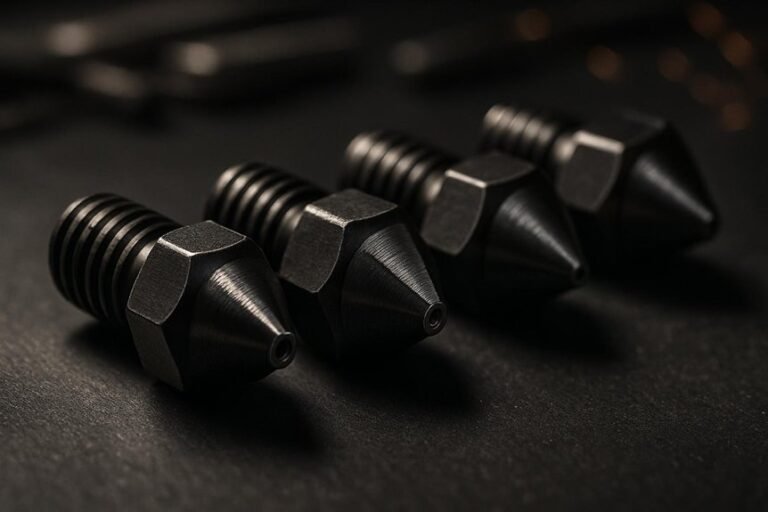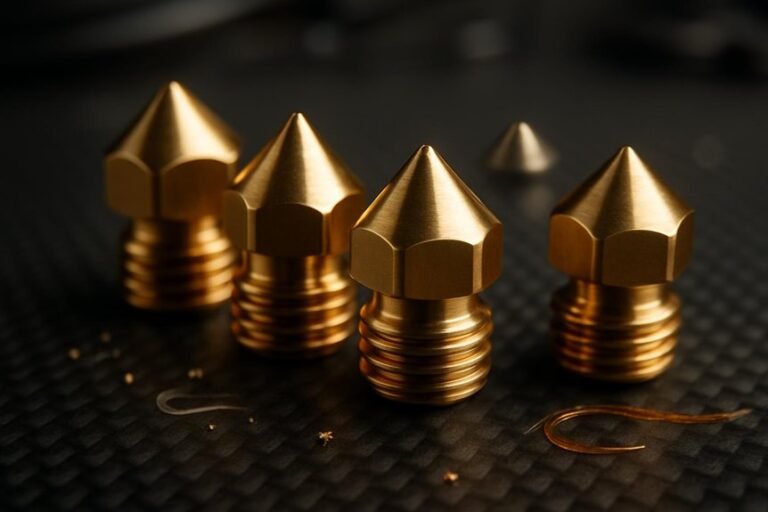
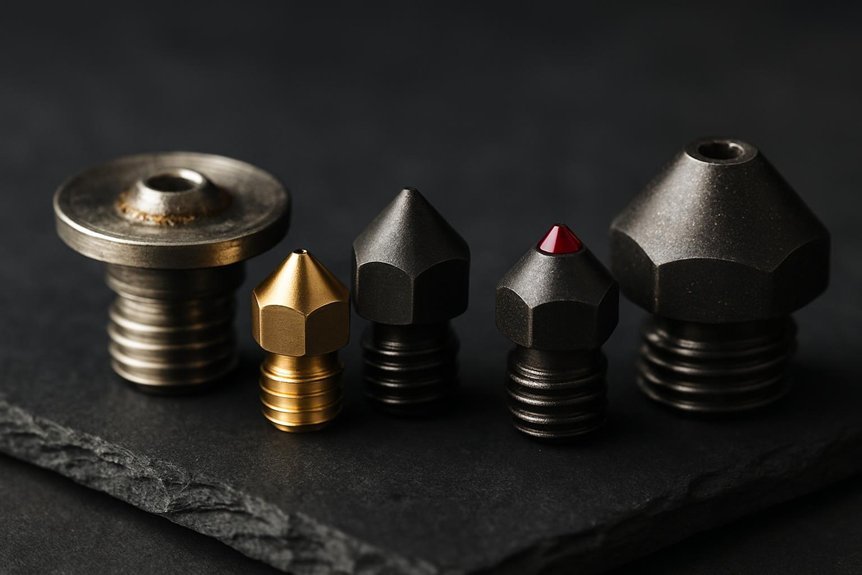
You’ll want the right nozzle for what you print, since size and material change speed, detail, and wear. I’ll walk you through top picks—from a fine 0.2mm brass for tiny features to a 1.0mm hardened steel for fast, tough prototypes, plus options for abrasive filaments like diamond-tipped nozzles—and explain why each works best so you can match tools to projects and avoid common mistakes that slow you down.
eSUN 1.75mm Cleaning Filament 100g Spool for 3D Printers (Natural)
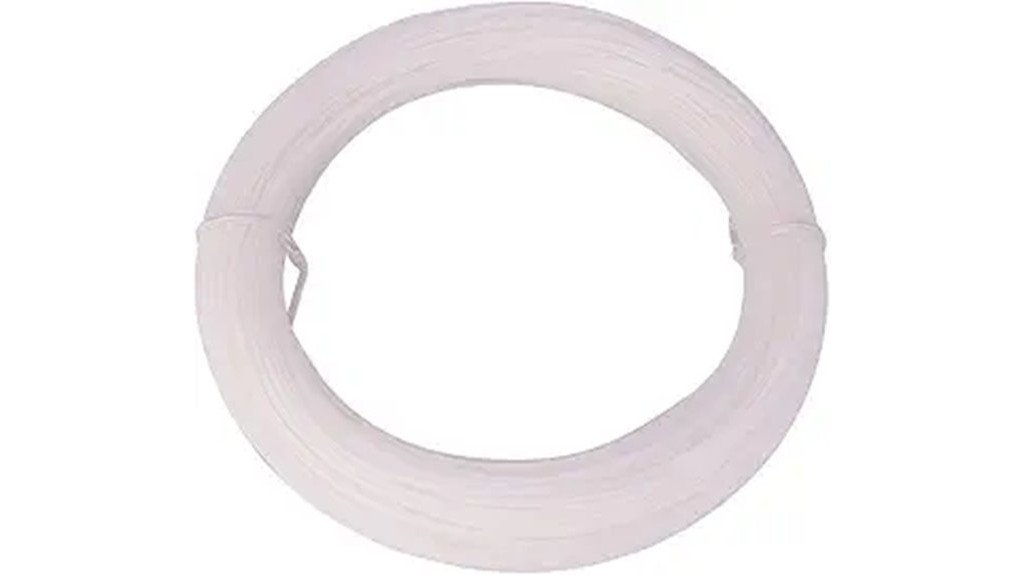
If you want a simple, reliable way to keep your printer’s nozzle working smoothly, the eSUN 1.75mm cleaning filament is a great choice — think of it as a maintenance tool that saves you time and frustration. You’ll get a 100g spool of natural, non-toxic filament that’s vacuum sealed with desiccant, so it stays fresh. It works across a wide temperature range (160–300°C), so you can use it before and after prints or when switching materials like PLA, ABS, or PETG. It grabs stray bits inside the nozzle to prevent clogs, though you can’t print with it like regular filament.
Best For: hobbyist and small-shop 3D printer owners who want an easy, non-toxic maintenance tool to prevent nozzle clogs and simplify filament changes.
Pros:
- Prevents nozzle clogs by picking up stray material and is usable across a wide temperature range (160–300°C).
- Compatible with common 3D printing materials (PLA, ABS, PETG, etc.) and useful before/after prints or during material changes.
- Supplied as a 100g vacuum-sealed spool with desiccant; environmentally friendly and non-toxic.
Cons:
- Cannot be used as a regular printing filament.
- Only 100g — may require frequent replacement for heavy users.
- May not remove severe or hardened blockages that need mechanical cleaning or nozzle disassembly.
MK8 3D Printer Brass Nozzles 24 Pack with Tools and Metal Storage Box
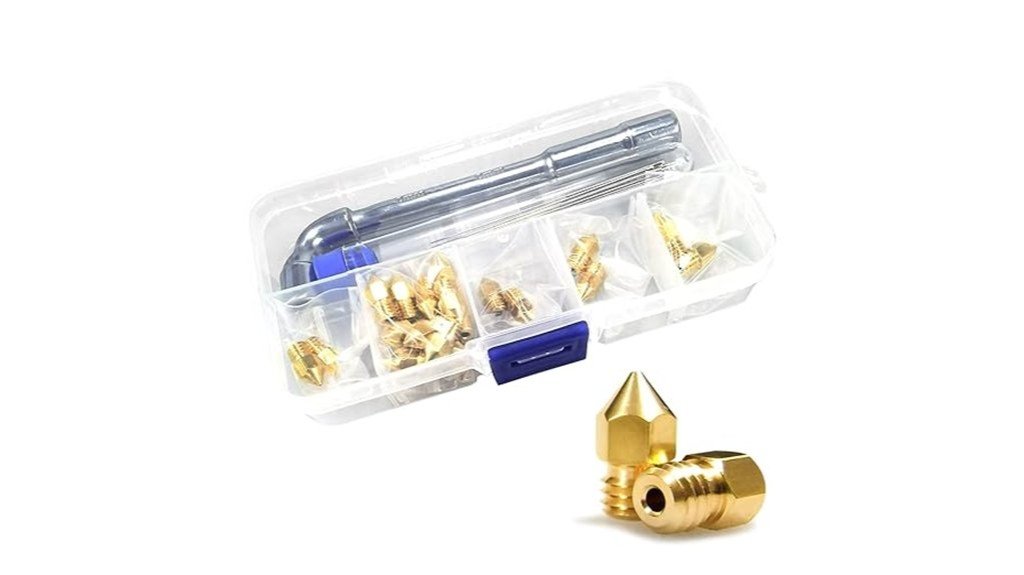
This 24-piece MK8 brass nozzle kit is a great choice if you’re just getting into 3D printing or need a low-cost way to stock different nozzle sizes, because it gives you everything from fine 0.2mm tips to chunky 1.0mm outlets along with tools and a metal storage box. You’ll get 24 nozzles (mostly 0.4mm), ten cleaning needles, a parts box, and an M6 hex wrench, all made of brass for good heat transfer and wear resistance. They’re compatible with many Creality and MK8-style printers, handle PLA/ABS well, and offer high precision for the price.
Best For: Hobbyist and beginner 3D printer users who want an affordable, versatile set of replacement nozzles and basic tools for MK8-style hotends.
Pros:
- Wide selection of nozzle sizes (0.2–1.0mm) with mostly common 0.4mm spares, good for experimenting with print detail and speed.
- Includes useful tools (ten cleaning needles, M6 hex wrench) and metal storage box for organization and maintenance.
- Brass construction offers good thermal conductivity and acceptable wear resistance at a low cost.
Cons:
- Brass is softer than hardened or plated nozzles, so it wears faster with abrasive filaments (e.g., carbon-filled or glow-in-the-dark).
- Some users report occasional clogging and bent cleaning needles during use, requiring replacements from the kit.
- Thread length and fit are MK8/M6-specific, so compatibility with non-MK8 hotends may be limited.
Creality Hardened Steel MK8 Nozzles Kit with DIY Tools and Storage Box
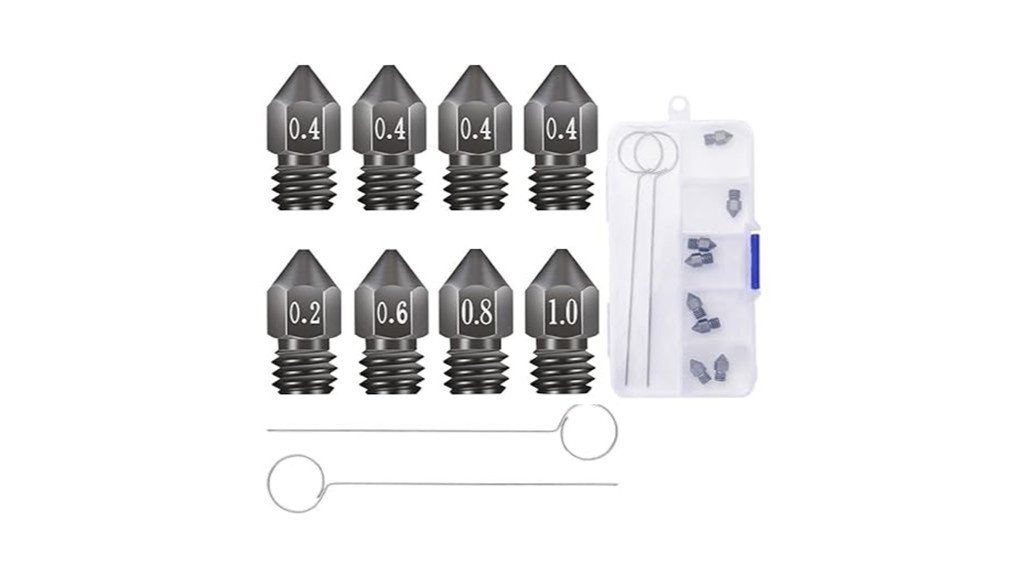
You’ll appreciate the Creality Hardened Steel MK8 Nozzles Kit when you print abrasive filaments or want longer-lasting parts, because the tungsten-steel tips resist wear far better than standard brass nozzles. You get eight MK8 nozzles in 0.2, 0.4, 0.6, 0.8, and 1.0 mm sizes, plus two nozzle needles and a handy storage box. The hardened tungsten steel exceeds HRC60, so carbon-filled and PEEK won’t eat through them quickly, and they tolerate up to 450°C for high-temperature jobs. CNC-crafted holes and smooth interiors cut clogs and keep extrusion even. They fit most MK8-style printers, including Ender and CR-10 models.
Best For: Makers and 3D printing enthusiasts who print abrasive or high-temperature filaments and need durable, long-lasting MK8 nozzles for consistent extrusion.
Pros:
- Hardened tungsten steel (HRC >60) resists wear from carbon-filled and other abrasive filaments.
- Wide size range (0.2–1.0 mm) and CNC precision provide improved print quality and reduced clogging.
- Includes two nozzle needles and a storage box for easy maintenance and organization.
Cons:
- Hardened steel conducts heat less than brass, which can require higher extrusion temperatures or slower speeds for some materials.
- More brittle than softer metals—can be damaged if overtightened or struck.
- Higher cost compared with standard brass nozzles.
3D Fuel Nozzle Cleaning Filament (50 Sticks, 1.75mm)
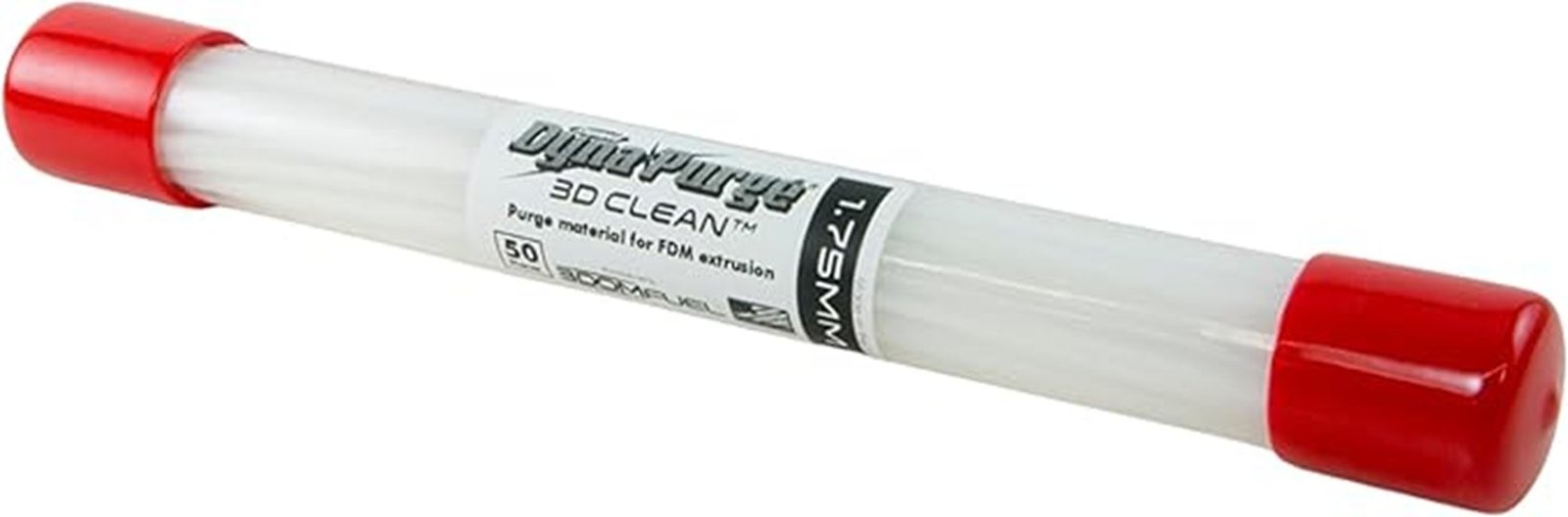
For hobbyists and small-shop makers who want fast, reliable nozzle maintenance, the 3D Fuel Nozzle Cleaning Filament makes a smart tool in your toolkit. You get fifty 8-inch, 1.75mm sticks made in the USA that let you clear hotend clogs without chemicals or abrasives. Pop a stick through to remove PLA, PETG, or ABS residue, and you’ll reduce color bleed and revive print quality. It’s gentle on extruder gears, consistent in diameter, and recommended every three months or after about 0.5 kg of filament. Customers praise ease of use and 3D Fuel’s responsive support when problems arise.
Best For: Hobbyists and small-shop makers who need a simple, chemical-free solution to keep their 1.75mm hotends clear and maintain consistent print quality.
Pros:
- Made in USA; consistent 1.75mm diameter in convenient 8-inch sticks for single-pass cleaning.
- Non-chemical, non-abrasive formula that safely removes PLA, PETG, and ABS residue and reduces color bleed.
- Recommended maintenance schedule (every 3 months or ~0.5 kg) with positive customer reviews and responsive manufacturer support.
Cons:
- Only compatible with 1.75mm setups (not suitable for 2.85/3.00mm extruders).
- Limited to clearing soft residue—may not solve severe mechanical hotend failures or hardened blockages.
- Small sticks (50 count) may require frequent replacement for heavy-use printers.
Diamondback V6 Compatible Polycrystalline Diamond Tip 3D Printer Nozzle (0.8mm)
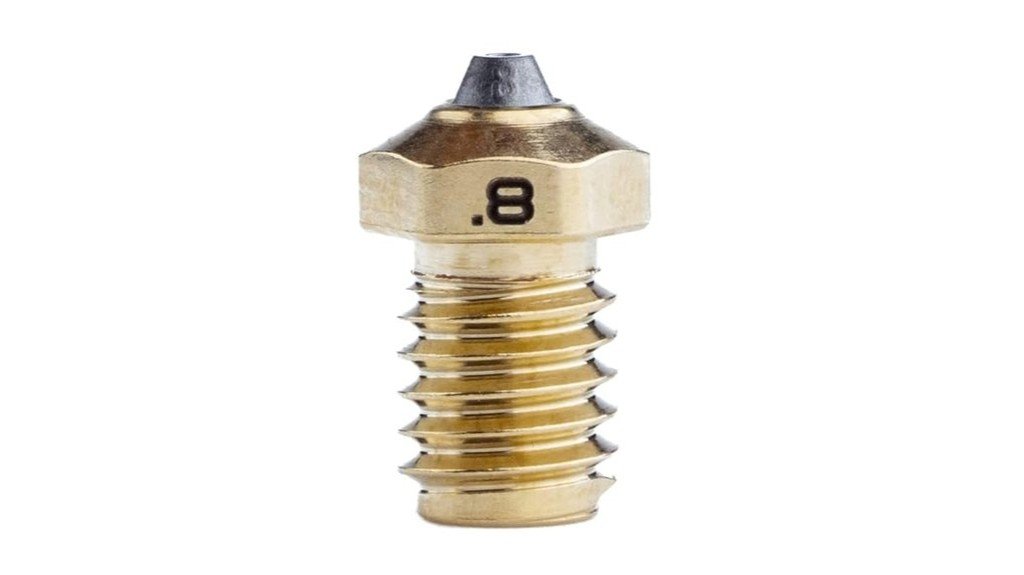
If you print a lot of abrasive filaments or run long production prints, the Diamondback V6-compatible nozzle with a polycrystalline diamond (PCD) tip is a smart upgrade that’ll save you time and replacements. You’ll get a solid diamond tip that resists wear far longer than steel or carbide, so carbon-fiber and other gritty blends won’t eat it away. It conducts heat well, helping filament melt evenly and stick between layers, and users report fewer clogs and even slightly lower print temps. It’s pricey, made in the USA, and ideal for pros and dedicated hobbyists who value uptime.
Best For: Professional makers and dedicated hobbyists who print abrasive filaments or run long production prints and need maximum nozzle longevity and reliable performance.
Pros:
- Exceptional wear resistance from the PCD tip — lasts far longer than steel or carbide with abrasive filaments.
- Superior thermal conductivity improves melt consistency, layer adhesion, and reduces clogs.
- Low friction and polished surface enable smoother filament flow and less maintenance during long runs.
Cons:
- High upfront cost makes it a significant investment compared with standard nozzles.
- Recommended max temperature ~300°C limits use with very high-temperature materials.
- Durability may be wasted for casual users or beginners who rarely print abrasive or long production jobs.
Factors to Consider When Choosing 3D Printer Nozzles by Use Case
When you pick a nozzle, think about what filament you’ll use and whether it will wear the tip quickly, because material compatibility and abrasion resistance affect both print quality and lifetime. You’ll also want to match nozzle diameter and thermal conductivity to the detail and speed you need, since a larger bore prints faster but a finer tip gives crisper features and different metals transfer heat differently. Finally, consider how easy the nozzle is to clean or replace so maintenance doesn’t slow your projects down.
Material Compatibility
Picking the right nozzle starts with knowing what materials you plan to print, because different filaments put very different demands on the tip of your hotend. You’ll choose brass for PLA, ABS, and PETG since its thermal conductivity gives smooth, consistent flow for everyday prints. If you plan to experiment with tougher or abrasive filaments, swapped-in hardened steel or diamond-tipped nozzles will keep performance steady without wearing out quickly. Pay attention to nozzle diameter too: tiny sizes like 0.2 mm boost detail with non-abrasive plastics, while larger bores around 1.0 mm handle thicker, faster extrusions and chunkier filaments. Finally, confirm the nozzle’s thread and fit match your printer and that it tolerates the extrusion temperatures your chosen materials demand.
Abrasion Resistance
Because abrasive filaments grind away at metal over time, choosing a nozzle with strong abrasion resistance will save you headaches and money down the road. When you print with carbon fiber or composite-filled filaments, standard brass wears quickly; hardened tungsten steel or polycrystalline diamond nozzles last far longer. You’ll notice fewer clogs and steadier print quality because the harder materials keep a polished interior that reduces friction. Check hardness ratings — top nozzles often exceed HRC60 — and inspect surface finish and internal shape, since smooth channels help filament flow. If you do lots of exotic filaments, invest in an abrasion-resistant nozzle: it’s pricier upfront but cuts replacement and downtime costs, letting you print reliably and confidently.
Nozzle Diameter Choice
Anyone planning a print will want to think carefully about nozzle diameter, because that tiny opening controls how much filament comes out, how fast you can print, and how much detail you’ll capture. Pick a 0.2mm nozzle when you need fine features and smooth surfaces; it slows you down but rewards you with detail. The 0.4mm nozzle is the everyday choice—balanced speed and quality—so most of your projects will work well with it. If you want faster prototyping or big, sturdy parts, step up to 0.6–1.0mm; they lay down thicker beads and improve layer bonding for quick builds. With abrasive filaments, larger sizes resist clogging and wear better, so they’re more forgiving in practical use.
Thermal Conductivity
After you pick a nozzle size, the metal it’s made from becomes the next big decision because that metal controls how heat moves into the filament and how reliably your printer will behave. You’ll notice brass nozzles transfer heat very well (around 100–130 W/m·K), so they heat filament quickly and work great for PLA and ABS. If you print abrasive or high-temp materials, hardened steel lasts longer but won’t conduct heat as efficiently, so you may need adjusted temperatures or slower speeds. Nozzles rated to 450°C let you tackle PEEK and carbon-fiber blends safely. Also pay attention to interior geometry: smooth chamfers and concentric holes reduce jams and promote even flow, which helps thermal transfer feel consistent during long prints.
Ease of Maintenance
When you pick a nozzle, think about how easy it will be to keep clean and running well over time, since regular maintenance is what keeps prints smooth and clog-free. You’ll want nozzles with smooth interiors and precise manufacturing because they cut down on filament sticking and make cleaning faster. Materials like hardened steel or polycrystalline diamond resist wear, so you replace them less often and spend less time fussing. Use cleaning filament every few months or after heavy use to clear residue and keep shifts between materials tidy. Also check that the nozzle works with simple tools — a needle for quick clogs or compatible cleaning kits — so you can fix issues without a long downtime or complicated procedures.
Cost Versus Lifespan
Think of a nozzle as an investment: you’ll pay more up front for tougher materials, but that choice can save you time and money down the road. If you mostly print with PLA and other mild filaments, a brass nozzle keeps costs low and prints well, but it wears faster. When you switch to abrasive filaments, hardened steel costs more initially yet lasts several times longer than brass, so you replace it less often. For heavy users or pros, polycrystalline diamond nozzles can outlast others by two to eight times and justify the high price. Regular maintenance and timely swaps prevent failed prints and wasted filament, so weigh your filament habits and print volume—spend more now to avoid bigger costs later.
FAQ
Can Nozzle Wear Be Measured Without Removing It From the Hotend?
1. Can I measure nozzle wear without removing it from the hotend?
Yes, you can measure nozzle wear while it’s still in the hotend.
2. What method can I use to gauge extrusion flow?
You can measure the amount of filament extruded over a specific time to assess if the flow is consistent, which may indicate nozzle wear.
3. How can calibration patterns help in detecting nozzle wear?
Printing calibration patterns allows you to observe any inconsistencies or defects in the final print, suggesting potential wear in the nozzle.
4. What signs of print quality issues should I look for?
Inspect for gaps, strings, or under-extrusion in your prints, which can indicate that the nozzle may be worn.
5. How does filament diameter relate to nozzle wear?
By comparing the filament diameter to the amount of extrusion, you can estimate if the nozzle’s bore has gradually enlarged due to wear.
6. Is it possible to detect minor wear during regular printing?
Yes, regular monitoring of print quality can help you catch minor wear early on before it becomes a significant issue.
7. What tools can assist in measuring extrusion flow?
Using a digital scale or an extrusion multiplier can help you accurately measure and adjust the extrusion flow.
8. Are there specific printing conditions that can exacerbate nozzle wear?
Yes, using abrasive filaments or printing at excessively high temperatures can accelerate wear on the nozzle.
9. How often should I check for nozzle wear?
It’s advisable to regularly check for wear, especially after significant print jobs or when changing filament types.
10. What are the consequences of ignoring nozzle wear?
Ignoring nozzle wear can lead to poor print quality, increased stringing, and potentially damaging other components of the hotend.
Are There Biodegradable Nozzle Materials Available?
1. What are biodegradable nozzle materials?
Biodegradable nozzle materials are eco-friendly alternatives to traditional metals, including PLA-derivative composites and certain bio-based polymers.
2. How do PLA-derivative composites perform compared to traditional materials?
While PLA-derivative composites are biodegradable, they typically wear out faster and are better suited for low-temperature printing applications.
3. Can bio-based polymers be used for nozzles?
Yes, some bio-based polymers are available as nozzle materials, offering a sustainable option for 3D printing.
4. What is the main drawback of using biodegradable nozzles?
The primary drawback is their reduced durability; they tend to wear more quickly than traditional metal nozzles, especially with abrasive filaments.
5. Are biodegradable nozzles suitable for all types of 3D printing?
Biodegradable nozzles are best for specific applications, particularly where low temperatures are involved, and may not handle high-temperature or abrasive materials effectively.
6. Why might someone choose traditional metal nozzles over biodegradable options?
Traditional metal nozzles are preferred for their durability and ability to handle a wider range of filament types, including abrasive materials.
7. How do biodegradable nozzles impact the environment?
Biodegradable nozzles help reduce plastic waste, as they can decompose over time, making them a more sustainable choice for environmentally conscious users.
8. What temperatures are suitable for printing with biodegradable nozzles?
Biodegradable nozzles generally operate best at lower temperatures, making them less versatile than their metal counterparts.
9. Can I use biodegradable nozzles with all types of filaments?
No, it is advisable to use biodegradable nozzles primarily with non-abrasive, low-temperature filaments to prevent excessive wear and damage.
10. Are there any performance differences in prints made with biodegradable nozzles?
Print quality may vary depending on the material used; biodegradable nozzles can yield satisfactory results with compatible filaments, but may not match the precision of metal nozzles in all cases.
Can Nozzle Upgrades Void My Printer Warranty?
1. Can upgrading nozzles void my printer warranty?
Yes, upgrading nozzles can void your warranty if the manufacturer prohibits modifications or if the upgrade leads to damage.
2. What should I check before upgrading nozzles?
Review the warranty terms provided by the manufacturer to understand any restrictions on modifications.
3. What happens if my nozzle upgrade causes damage?
If the upgrade results in damage, it may void your warranty, leaving you responsible for repair costs.
4. Should I keep the original nozzles?
Yes, keeping the original nozzles is advisable in case you need to revert to them to maintain your warranty status.
5. How can I document my nozzle installation?
Take photos or keep a log of your nozzle installation process to have a record in case of warranty claims.
6. Is it wise to contact support before upgrading?
Yes, reaching out to customer support can provide clarity on warranty implications and any recommended upgrades.
7. What types of nozzle upgrades are typically restricted?
Manufacturers may restrict any non-standard or third-party nozzles that are not specifically approved for use with your printer model.
8. Will all manufacturers have the same warranty policies regarding upgrades?
No, warranty policies vary by manufacturer, so it’s essential to verify the specific terms related to your printer.
9. Can I upgrade nozzles without voiding my warranty?
Some manufacturers allow upgrades if they are done with approved parts and do not cause any damage, so check your warranty.
10. What should I do if I’m unsure about my warranty status?
If in doubt, contact the manufacturer directly to clarify your warranty status regarding nozzle upgrades before proceeding.
Do Nozzle Coatings Affect Electrical Grounding or Sensors?
FAQ on Nozzle Coatings and Electrical Grounding or Sensors
1. Do nozzle coatings generally affect electrical grounding?
No, most nozzle coatings are thin and typically do not disrupt electrical grounding.
2. Can nozzle coatings interfere with sensors?
Generally, nozzle coatings do not interfere with sensors, but it is essential to verify their specific properties.
3. What should I check regarding conductivity specs?
It’s important to check conductivity specifications, as certain plated or metallic coatings can alter electrical behavior.
4. Are all nozzle coatings the same in terms of conductivity?
No, different types of coatings have varying conductivity levels; always refer to the manufacturer’s specifications for details.
5. How can I ensure continuity before installation?
If you are uncertain about the impact of a nozzle coating, perform a continuity test before installation to confirm proper electrical connections.
6. What types of coatings might change electrical behavior?
Plated or metallic coatings are more likely to affect electrical behavior, so pay special attention to these types.
7. Is it necessary to test every nozzle coating?
While not every coating requires testing, it is prudent to test those with metallic or plated finishes if grounding or sensor functionality is a concern.
8. Can environmental factors affect the performance of nozzle coatings?
Yes, environmental conditions can impact the performance of nozzle coatings; however, their effect on grounding and sensors is usually minimal.
9. Are there specific coatings I should avoid?
Avoid coatings that are known to have high resistivity or that are not recommended for electrical applications to maintain grounding integrity.
10. What should I do if grounding issues arise after installation?
If grounding issues occur after installation, check the continuity of the nozzle and inspect the coating for any potential interference.
11. How often should I inspect nozzle coatings for electrical functionality?
Regular inspections are advisable, particularly for nozzles in critical applications, to ensure that coatings have not degraded and are not affecting electrical performance.
How Do Nozzle Sizes Impact Retraction Settings Across Slicers?
FAQ 1: How does nozzle size affect retraction settings?
Larger nozzles require longer and faster retractions to prevent blobs during printing. In contrast, smaller nozzles benefit from shorter, slower retractions to avoid issues with under-extrusion.
FAQ 2: What is the recommended retraction distance for larger nozzles?
For larger nozzles, retraction distances typically need to be increased to effectively pull back the filament and prevent excess material from oozing out. Experimentation is essential to find the optimal distance for your specific setup.
FAQ 3: What retraction speed should be used for smaller nozzles?
Smaller nozzles often require slower retraction speeds to ensure that the filament retracts without causing under-extrusion. A gentle pull helps maintain consistent filament flow during printing.
FAQ 4: How do I determine the best retraction settings for my slicer?
Each slicer may have different default settings for retraction, so it’s crucial to test and adjust these settings incrementally based on your specific nozzle size and filament type. Monitor your prints for any signs of stringing or under-extrusion to guide adjustments.
FAQ 5: What factors should I consider when adjusting retraction settings?
Consider the nozzle size, filament type, and the specific characteristics of your 3D printer. These factors will greatly influence the effectiveness of your retraction settings.
FAQ 6: Can the type of filament affect retraction settings?
Yes, different filaments have unique properties that can impact how they react during retraction. For example, flexible filaments may require different settings compared to rigid ones to avoid issues like stringing.
FAQ 7: What are the symptoms of improper retraction settings?
Improper retraction can lead to issues such as stringing, blobs, or under-extrusion in your prints. Observing these symptoms can help you identify the need for adjustments in your retraction settings.
FAQ 8: How often should I test my retraction settings?
It’s a good practice to test your retraction settings whenever you change nozzle sizes or switch filament types. Regular testing ensures that you achieve optimal print quality.
FAQ 9: Is it necessary to use the same retraction settings across all slicers?
No, different slicers may require different retraction settings due to variations in their algorithms and capabilities. Always experiment within each slicer to find the most effective settings for your specific setup.
FAQ 10: What is the role of temperature in retraction settings?
Temperature can significantly influence filament behavior during retraction, with higher temperatures often leading to increased oozing. Adjusting both retraction settings and temperature can help mitigate issues related to stringing and blobs.
Final Thoughts
When it comes to choosing the right 3D printer nozzle, you have some excellent options that can significantly impact your printing results. For rapid and robust prototypes, the 0.6mm hardened steel nozzle is your best bet—it’s built to withstand the rigors of high-speed printing. If your project demands intricate details, the 0.2mm brass nozzle will deliver precision like no other. For those abrasive filaments that can wreak havoc on standard nozzles, the diamond-tipped nozzle is a game changer, providing unmatched durability.
The 0.4mm brass nozzle is the quintessential all-rounder, perfect for a variety of applications without sacrificing quality. And for those heavy-duty tasks where high flow is essential, the 1.0mm hardened steel nozzle is your go-to choice. Always align your nozzle material and size with your specific filament and project goals. This strategic approach will ensure you print smarter, not harder. Trust me, these choices will elevate your 3D printing game.