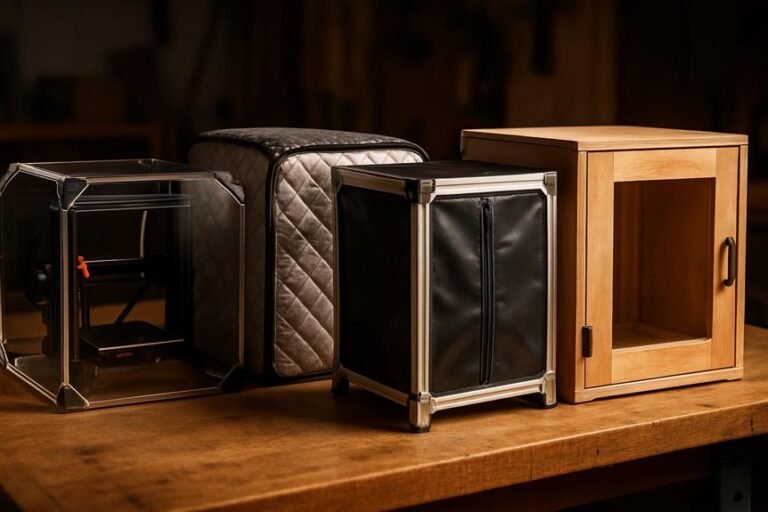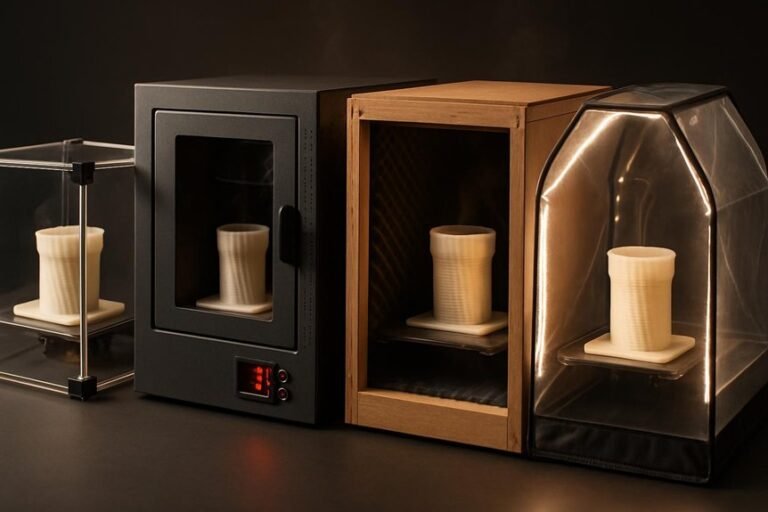
If you want strong, low-warp ABS prints from an enclosed 3D printer, picking the right filament makes a big difference. You’ll get better layer adhesion, fewer failed parts, and cleaner finishes with brands like Creality, FLASHFORGE, eSUN, SUNLU, and OVERTURE. I’ll walk you through what each offers—from high-speed toughness to budget-friendly consistency—so you can match a spool to your project and avoid common warping headaches.
Creality ABS 1.75mm 1kg 3D Printer Filament (Black)
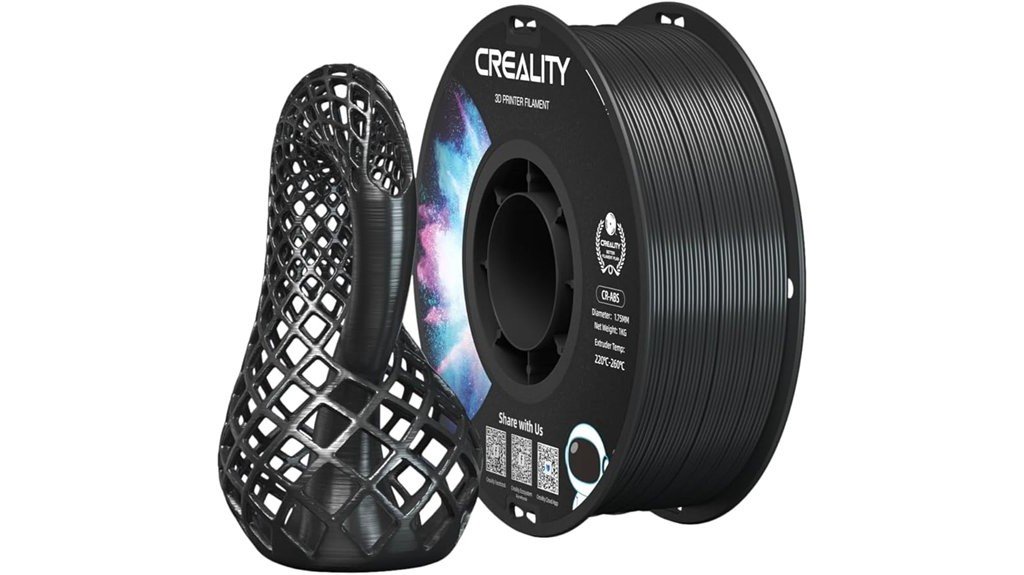
If you’re printing larger parts or functional prototypes and need a filament that fights warping and layer separation, Creality’s ABS 1.75mm (1kg) in black is a strong choice — think of it as the workhorse filament for everyday engineering prints. You’ll like its impact and heat resistance, plus the toughness that keeps prints rigid under stress. It flows smoothly, so you’ll see fewer splits and less warping on big pieces. It’s non-toxic and odorless, and it works with Creality FDM printers for easy setup. Store it dry, and remember Creality provides a 12-month warranty and 24/7 support.
Best For: Engineers and hobbyists needing a tough, heat- and impact-resistant filament for larger functional prints and prototypes that minimize warping and layer separation.
Pros:
- Excellent impact and heat resistance, producing durable, rigid parts.
- Improved fluidity reduces warping, layer separation, and splitting on large prints.
- Compatible with Creality FDM printers; non-toxic, odorless, with 12-month warranty and 24/7 support.
Cons:
- ABS typically requires a heated bed and enclosure for best results, adding setup complexity.
- Sensitive to moisture—needs dry, ventilated storage to maintain print quality.
- May still present adhesion challenges on some surfaces compared with specialty adhesion filaments.
FLASHFORGE ABS Pro 1.75mm Black 3D Printer Filament (1kg)
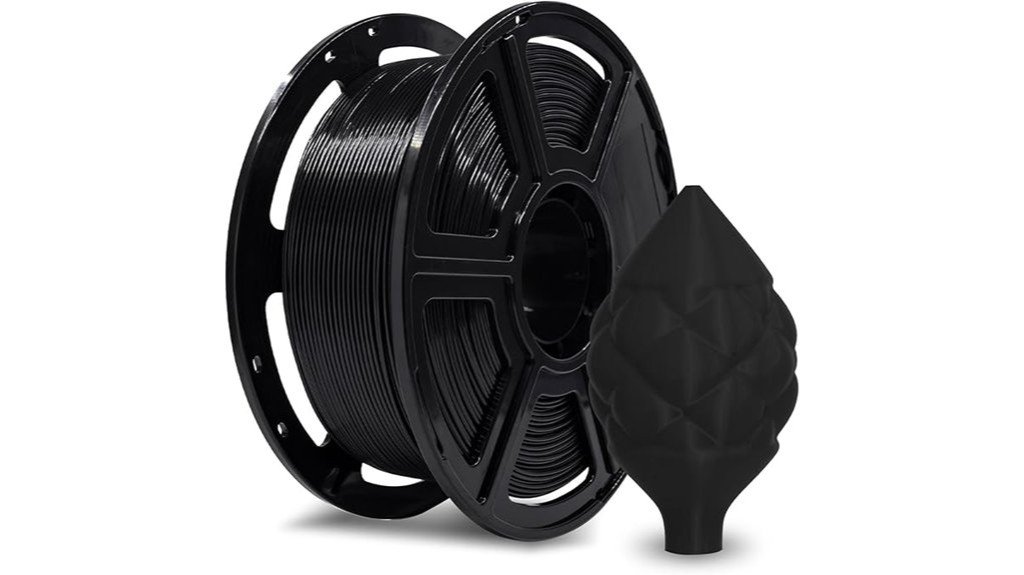
For makers who need tough, heat-resistant parts without a fuss, the FLASHFORGE ABS Pro 1.75mm Black is a solid pick because it mixes durability with easy printing—so you can make camera mounts, tool handles, or electrical housings that hold up under stress. You’ll appreciate its ±0.02mm dimensional accuracy and premium materials, which give reliable, repeatable results on many FDM printers. It resists warping and emits less odor than standard ABS, so large prints behave and your workspace stays pleasant. Prints stick well to the bed, bridge cleanly, and usually don’t need pre-drying or constant parameter tweaks.
Best For: Makers and hobbyists who need durable, heat-resistant FDM prints (camera mounts, tool handles, electrical housings) with reliable dimensional accuracy and low fuss setup.
Pros:
- High durability and heat resistance suitable for functional parts and demanding applications.
- ±0.02mm dimensional accuracy and premium materials for consistent, repeatable prints.
- Improved warping resistance and low odor; strong bed adhesion and good bridging without pre-drying or heavy tuning.
Cons:
- As an ABS variant, it may still require a heated bed and enclosure for best large-print results.
- Limited to 1.75mm filament diameter and sold in 1kg spools, which may not suit all usage volumes.
- May be less color/finish-varied than some specialized filaments (e.g., engineers-grade blends or composites).
eSUN High Speed ABS+ 1.75mm 1KG 3D Printer Filament (Black)
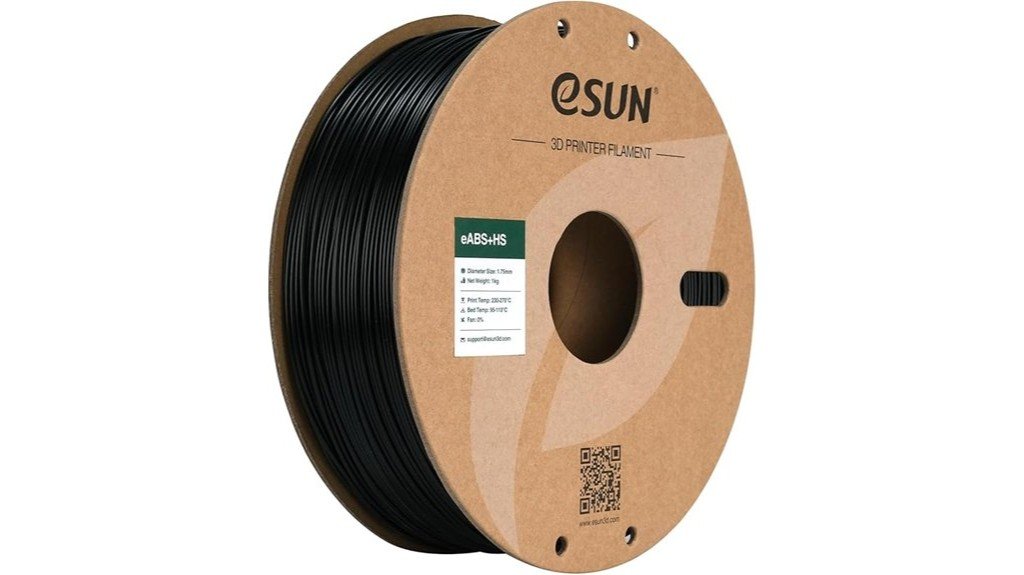
eSUN High Speed ABS+ is a great pick if you need a tough, low-warp filament for large prints that still runs fast. You’ll like its improved strength, impact resistance, and higher heat distortion temperature, which make parts durable for tools, toys, or automotive bits. It prints cleanly at 50–300 mm/s with excellent layer adhesion and less stringing, so big jobs finish faster without losing quality. The 1kg spool feeds smoothly with tight diameter tolerance and no tangles, and you can acetone-polish finished pieces for a glossy look. Grab the Bambu AMS adapter file on eSUN’s site if needed.
Best For: Makers and engineers who need a tough, low-warp ABS filament for large, high-speed prints that require good heat resistance and impact strength.
Pros:
- Prints cleanly at high speeds (50–300 mm/s) with excellent layer adhesion and reduced stringing.
- Improved strength, toughness, and higher heat distortion temperature for durable functional parts.
- Consistent 1kg spool with tight diameter tolerance and smooth feeding to prevent tangles and clogs.
Cons:
- ABS requires a heated bed/enclosure and can emit fumes, so ventilation and printer setup are necessary.
- May still need post-processing (e.g., acetone polishing) for a glossy finish.
- Not as easy to print as PLA for beginners; warping risk remains lower but not eliminated.
SUNLU ABS 1.75mm 3D Printer Filament, 1kg Spool (Black)
SUNLU’s 1.75mm ABS spool is a solid pick if you’re after durable, heat-resistant prints that stand up to daily use—think functional parts, housings, or tools that need to take a beating. You’ll get a 1kg black spool that fits most 1.75mm FDM printers and prints well at 250–260°C with a heated bed at 80–100°C. Prints show good layer accuracy and impact resistance, so parts stay tough over time. Some users mention occasional warping and spool tangles, so keep an eye on bed adhesion and inspect the spool before long jobs. Overall, good value for reliable ABS.
Best For: makers and hobbyists who need durable, heat-resistant ABS prints for functional parts, housings, or tools that require impact resistance and long-term toughness.
Pros:
- Good strength and impact resistance for functional, long-lasting parts.
- Broad printer compatibility (1.75mm) and reliable print quality with proper settings.
- Strong value: 1kg spool at an affordable price with multiple color options.
Cons:
- Prone to occasional warping; requires careful bed adhesion and heated bed.
- Some spool design/tangling issues reported — inspect before long prints.
- Requires high nozzle temps (250–260°C), which not all printers can safely reach.
OVERTURE ABS 1.75mm 3D Printer Filament (1kg), Black
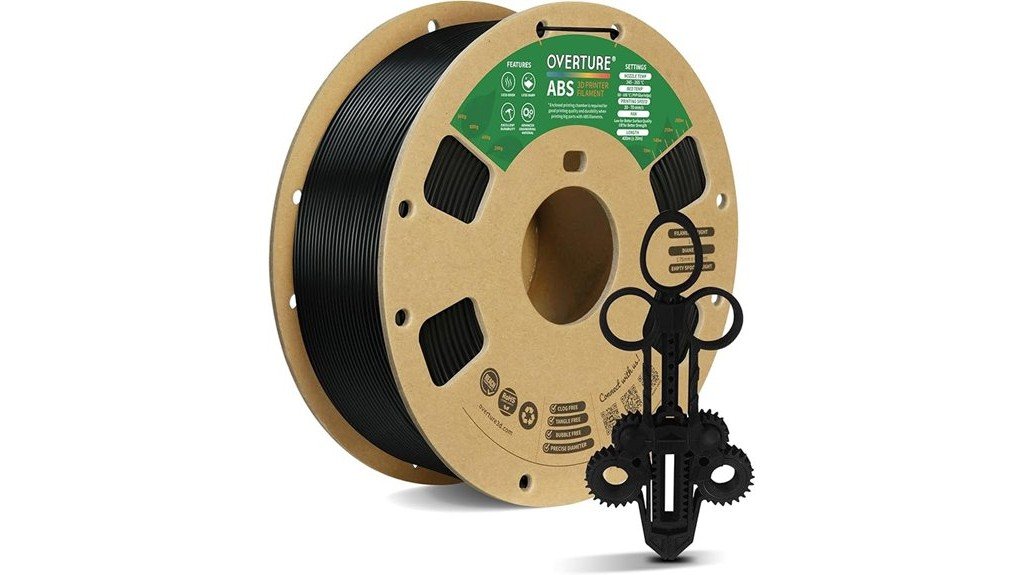
If you’re looking for a durable, heat-resistant filament that still gives you a glossy, professional finish, OVERTURE’s ABS 1.75mm is a strong choice for hobbyists and pros alike. You’ll get a 1kg spool of black ABS with tight diameter tolerance (+/-0.02mm) and a smooth, shiny surface that prints with good bed and layer adhesion. It feeds well thanks to the larger spool core and handy viewing hole, and prints fast with minimal stringing—though supports can stick hard. Expect odor during printing, so ventilate. Keep spools dry, use an all-metal hotend, and you’ll see reliable, strong parts.
Best For: Hobbyists and professionals who need a durable, heat-resistant ABS filament that delivers a glossy finish and reliable dimensional accuracy for functional parts and prototypes.
Pros:
- High strength and heat resistance with a glossy, professional surface finish.
- Tight diameter tolerance (±0.02 mm) and good bed/layer adhesion for consistent prints.
- User-friendly spool features (larger core, viewing hole) and generally minimal stringing or clogs.
Cons:
- Noticeable odor during printing—ventilation recommended.
- Supports can adhere strongly and be difficult to remove cleanly.
- Sensitive to moisture; best performance requires proper storage and an all-metal hotend.
Factors to Consider When Choosing ABS Filament for Enclosed Printers
When you pick ABS filament for an enclosed printer, think first about heat resistance and strength so your parts won’t deform under stress. You’ll also want options that minimize warping and shrinkage, keep tight dimensional tolerance, and won’t overwhelm your workspace with fumes — so plan for ventilation. Finally, store spools dry and watch packaging or specs for moisture control recommendations to keep prints consistent.
Heat Resistance and Strength
Heat resistance and strength matter a lot if you’re printing functional parts in an enclosed 3D printer, because they determine whether your model will hold up during and after printing. You want ABS that tolerates the hot nozzle and an elevated chamber without softening, so parts keep their shape when you test them or use them in warm environments. ABS is known for high impact resistance, so it’s great for gears, housings, or tools that take knocks. Enhanced ABS blends boost toughness and impact strength further, which helps when you need reliable performance. Choosing filament with good thermal properties also reduces the chance of cracking under stress, so your prints stay durable and dependable.
Warping and Shrinkage Control
Because ABS tends to shrink as it cools, you’ll often see corners lift or larger prints crack if you don’t control the environment, and that can turn a promising model into a frustrating fail. You’ll want a heated bed set between 80–100°C to keep the first layers stuck down; it’s simple but hugely effective. Using an enclosed printer helps a lot, too — it keeps temperatures steady so layers bond instead of peeling. Choose ABS blends advertised with low-shrink or high-speed formulations for big parts, since they warp less. Don’t forget storage: keep spools dry in sealed bags with desiccant, because damp filament warps more. Together these steps greatly cut warping and boost your print success.
Dimensional Tolerance Consistency
Although it might seem like a small detail, consistent filament diameter is one of the easiest ways to avoid headaches with ABS printing, and you’ll notice the difference in fit and finish right away. Dimensional tolerance refers to how steady that diameter stays; good ABS usually holds around +/- 0.02mm. When diameter wanders you can get clogs, weak layer bonds, or parts that don’t fit together, which is frustrating when you need precise, functional pieces. A well-manufactured spool feeds evenly and keeps extrusion reliable from first layer to last. You can keep control by measuring filament with calipers as you print and swapping spools that show variation. That simple habit saves time and improves part quality for engineering and everyday projects.
Odor and Ventilation Needs
If you plan to run ABS in an enclosed printer, pay close attention to odor and ventilation so you don’t end up with a room that smells like a chemistry lab. ABS can emit strong, persistent smells while printing, and you’ll want to avoid breathing those fumes. Choose advanced ABS blends like ABS Pro or High Speed ABS+ when possible, since they’re formulated to reduce odor and make enclosed use more pleasant. Always use an enclosure with good air circulation and, ideally, an exhaust or filtration system to capture fumes and lower health risks. Portable air purifiers and a fan that moves air away from your workspace help a lot. Treat ventilation as part of your setup — it protects your nose and keeps prints comfortable to do.
Storage and Moisture Control
1 simple habit will save you hours of frustration: store your ABS filament dry and cool. You’ll prevent moisture absorption that causes bubbling, weak layer adhesion, and inconsistent prints. Keep spools in a ventilated, low-humidity spot away from heat and direct sunlight. Use airtight containers or vacuum-sealed bags with desiccant packs to control moisture and extend filament life. Check your filament regularly for signs of water damage — brittleness, odd textures, or color shifts — so you can address problems before a long print fails. A consistent storage routine pays off: prints come out stronger, warping drops, and you waste less material. Treat storage like part of the workflow, and your enclosed printer will thank you.
FAQ
Can ABS Be Painted or Post-Processed Easily?
1. Can ABS be painted?
Yes, ABS can be painted easily. It requires proper surface preparation, such as sanding or priming, to achieve a good finish.
2. What is the process for painting ABS?
The process involves sanding the surface, using acetone vapor for smoothing, applying filler primer, followed by priming and painting.
3. Do I need to use a primer before painting ABS?
Yes, using a primer is recommended as it helps with paint adhesion and provides a smoother finish.
4. What types of paint work best on ABS?
Acrylic paints are often recommended for ABS, but you should always check compatibility with your chosen primer.
5. Is sanding necessary when preparing ABS for painting?
Sanding is an important step to create a rough surface that improves paint adhesion and helps achieve a better finish.
6. What safety measures should I take when painting ABS?
Always ensure proper ventilation when working with paints and solvents, and wear personal protective equipment (PPE) like gloves and masks.
7. Can I use acetone on ABS?
Yes, acetone can be used to smooth the surface of ABS through vapor smoothing, which gives a polished look.
8. How do I test paint adhesion on ABS?
Before applying paint to your final print, test adhesion on a scrap piece of ABS to ensure compatibility and desired results.
9. What is filler primer, and do I need it?
Filler primer is a thicker primer that helps fill in imperfections on the surface of ABS, improving the final appearance.
10. Can I post-process ABS after printing?
Yes, ABS can be post-processed through sanding, smoothing, and painting to enhance its appearance and functionality.
11. What should I do if the paint doesn’t adhere well to ABS?
If the paint doesn’t adhere well, consider re-sanding the surface, using a different primer, or testing a different type of paint for better compatibility.
Are These Filaments Food-Safe or FDA Approved?
1. Are ABS filaments food-safe?
No, most ABS filaments are not considered food-safe. They can contain additives that may contaminate food.
2. Is ABS filament FDA approved?
Typically, ABS filaments are not FDA approved. Manufacturers seldom provide certification for food safety.
3. What factors affect the safety of ABS for food contact?
Additives, dyes, and printing conditions can introduce contaminants. These variables make ABS unsuitable for direct food contact.
4. Can I use ABS for food-related items?
It is not recommended to use ABS for any items that will have direct contact with food without specific certification.
5. What should I look for in food-safe filaments?
Look for filaments that are specifically labeled as food-safe or have received FDA approval. Always check for documentation from the manufacturer.
6. Are there alternatives to ABS that are food-safe?
Yes, there are filaments like PLA that are often considered food-safe. Always verify with the manufacturer for specific certifications.
7. What happens if I use ABS for food contact?
Using ABS for food contact may lead to chemical leaching, which can pose health risks. It’s best to avoid it.
8. Is there a way to make ABS food-safe?
No, there is currently no method to make ABS food-safe without proper certification from the manufacturer.
9. How can I ensure the safety of 3D printed food items?
Use filaments specifically designed for food safety and verify that they have been tested and certified by relevant authorities.
10. What should I do if I need food-safe prints?
Choose food-safe filaments and confirm their safety through manufacturer documentation. Avoid using non-certified materials for food items.
How Long Can Unopened ABS Filament Be Stored?
FAQ on Storing Unopened ABS Filament
1. How long can unopened ABS filament last?
Unopened ABS filament can last several years, typically between 2 to 5 years, depending on storage conditions.
2. What are the ideal storage conditions for ABS filament?
ABS filament should be stored in a cool, dry place, away from direct sunlight to maintain its quality over time.
3. Does packaging affect the longevity of ABS filament?
Yes, the manufacturer’s packaging can influence how well the filament retains its quality during storage.
4. Can ABS filament degrade over time?
While unopened ABS filament has a long shelf life, it can still degrade if not stored properly or if it exceeds the recommended storage duration.
5. Is it safe to use ABS filament after a long storage period?
If the filament has been stored correctly and remains sealed, it should be safe to use, but it’s advisable to check for any signs of degradation.
6. What signs indicate that ABS filament has gone bad?
Look for brittleness, discoloration, or difficulty in extrusion, which may suggest that the filament has degraded.
7. Can humidity affect ABS filament storage?
Yes, high humidity can negatively affect ABS filament, potentially leading to issues like moisture absorption and poor print quality.
8. Should I store ABS filament in a vacuum bag?
Storing ABS filament in a vacuum-sealed bag can enhance its longevity by minimizing exposure to moisture and air.
9. Is exposure to sunlight harmful to ABS filament?
Yes, prolonged exposure to sunlight can degrade the filament, affecting its properties and printability.
10. What temperature is ideal for storing ABS filament?
A temperature range of 15-25°C (59-77°F) is generally recommended for optimal storage of ABS filament.
Can ABS Be Safely Used in Multi-Material Prints?
1. Can ABS be used in multi-material 3D prints?
Yes, ABS can be utilized in multi-material prints, provided certain conditions are met.
2. What temperature compatibility is required for using ABS with other materials?
When printing with ABS and other materials, ensure that their melting temperatures are compatible to achieve proper adhesion.
3. What type of adhesives work well with ABS in multi-material prints?
Using compatible adhesives or mechanical joints is essential for effective bonding between ABS and other materials.
4. Is an enclosed environment necessary for printing with ABS?
Yes, an enclosed, heated environment helps maintain consistent temperatures and prevents warping during the printing process.
5. What is differential shrinkage in ABS prints?
Differential shrinkage refers to the varying rates at which different materials contract during cooling, which can affect the overall print quality.
6. How can I ensure reliable bonding of ABS parts in multi-material prints?
Plan for post-processing techniques, such as sanding or using additional adhesives, to enhance the bond strength between ABS and other materials.
7. What are the challenges of using ABS in multi-material prints?
Challenges include ensuring temperature compatibility, managing shrinkage, and achieving strong adhesion between different materials.
8. Can I mix ABS with flexible materials in my print?
Mixing ABS with flexible materials is possible, but pay special attention to their thermal properties and bonding techniques.
9. What precautions should I take when printing with ABS?
Always use a well-ventilated area and consider employing a fume extractor, as ABS can emit harmful fumes during printing.
10. Are there specific post-processing methods recommended for ABS multi-material prints?
Common post-processing methods include acetone vapor smoothing for ABS and mechanical fastening techniques to ensure robust connections.
Do These Filaments Emit Harmful Vapors During Printing?
1. Do ABS filaments emit harmful vapors during printing?
Yes, ABS filaments release potentially harmful volatile organic compounds (VOCs) and ultrafine particles when printed.
2. What precautions should I take when using ABS filaments?
It is important to use proper ventilation, an enclosure with filtration, or a respirator to minimize exposure to harmful emissions.
3. How can I improve ventilation when printing with ABS?
You can enhance ventilation by using exhaust fans, opening windows, or printing in a well-ventilated area to help dissipate fumes.
4. Is it safe to print with ABS in a small room?
Printing with ABS in a small or poorly ventilated room is not recommended due to the accumulation of harmful vapors.
5. What are VOCs and why are they a concern?
Volatile organic compounds (VOCs) are chemicals that can evaporate into the air and may pose health risks, making it essential to mitigate exposure during printing.
6. Can I use an enclosure while printing with ABS?
Yes, using an enclosure with proper filtration can help contain and filter harmful emissions, making it safer to print with ABS.
7. What type of respirator should I use when printing with ABS?
A respirator with organic vapor cartridges is recommended to protect against inhalation of harmful vapors while printing with ABS filaments.
8. How long should I avoid exposure to ABS fumes?
To minimize health risks, it is best to avoid prolonged exposure to ABS fumes, especially in poorly ventilated areas.
9. Are there alternatives to ABS that are safer?
Yes, consider using filaments like PLA, which generally emit fewer harmful vapors during printing and pose a lower health risk.
10. What are ultrafine particles and how do they affect health?
Ultrafine particles are tiny particles that can penetrate deep into the lungs and bloodstream, potentially leading to respiratory issues and other health problems.
Final Thoughts
When it comes to choosing ABS filaments for your enclosed 3D printer, you have some outstanding options that are proven to deliver. Creality and FLASHFORGE ABS Pro stand out for their exceptional toughness and minimal warping, ensuring that you get reliable parts every time. If you’re looking to speed up your printing process, eSUN High Speed ABS+ is your go-to for larger prints without compromising on quality. For those who want to keep costs low while still achieving impressive results, SUNLU is a smart choice that doesn’t skimp on quality. Meanwhile, OVERTURE consistently provides a durable finish that you can count on.
Remember, maintaining optimal bed and ambient temperatures along with proper ventilation is crucial for achieving the best results. Always run a small test print before diving into larger projects to save both time and filament. Trust me, this approach will enhance your printing experience and yield far better outcomes.