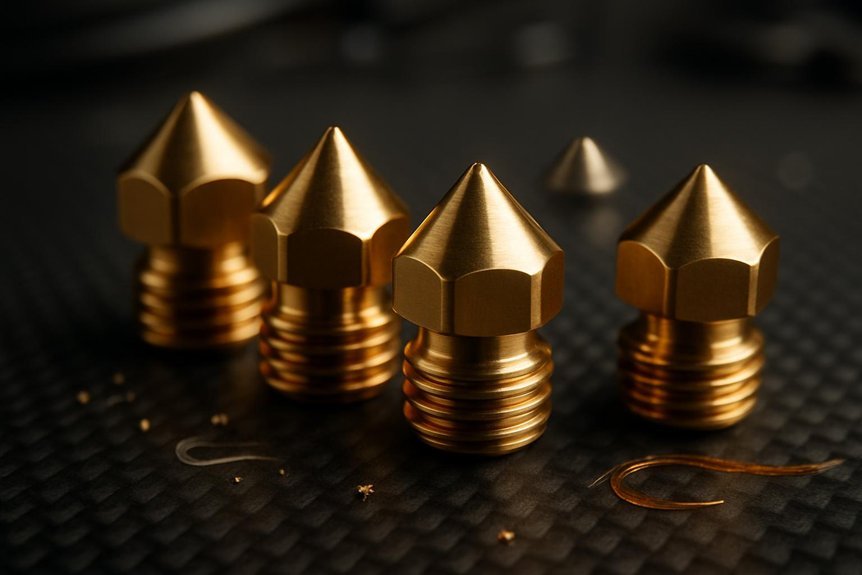
If you want reliable, easy-to-maintain brass nozzles for PLA and PETG, these four picks cover the bases: a complete MK8 brass set with cleaning tools, a budget-friendly Comgrow 25-pack, a multi-size MK8 kit for flexible prints, and Aokin Volcano nozzles for faster extrusion. I’ll explain what each does best, when to swap sizes, and which kit gives the best value—so you can stop guessing and print with confidence…
20 PCS MK8 Brass 0.4mm Nozzles with 54 PCS Stainless Steel Cleaning Needles for Ender 3/Ender 3 V2/CR-10 and Other 3D Printers
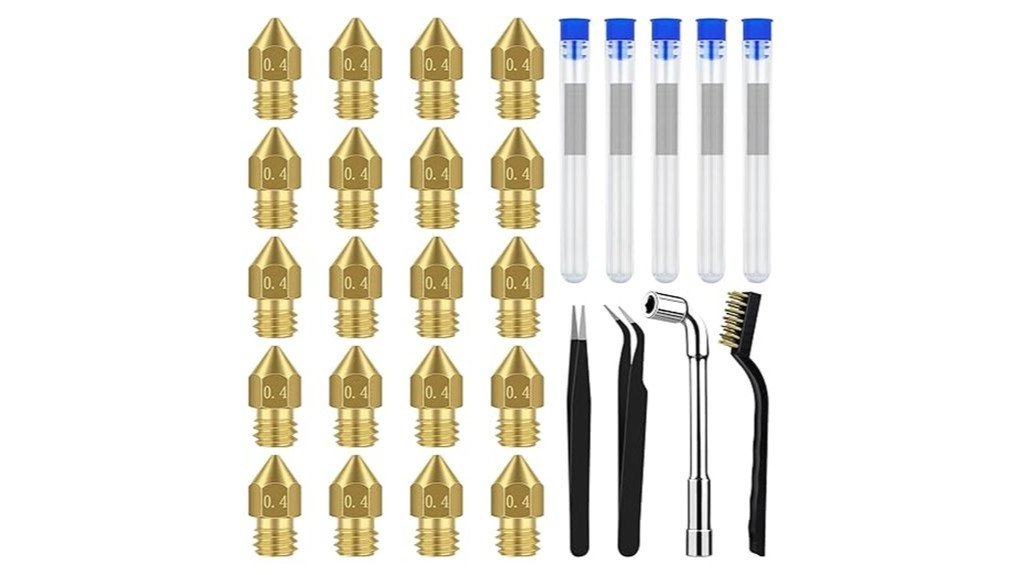
If you want a reliable, ready-to-use nozzle kit for PLA and PETG that keeps maintenance simple, this 20-piece MK8 brass set is a great choice—especially if you run a Creality Ender or CR series printer. You get twenty 0.4mm brass nozzles plus fifty-four stainless steel cleaning needles, tweezers, a copper brush, and a 6mm socket wrench, so you’re ready for most jobs. The brass nozzles heat well and resist wear, while engraved sizes make swaps quick. Heat the hotend above 200°C and use the needles to clear clogs. It’s practical, compatible, and a solid value for routine printing.
Best For: Makers and hobbyist 3D printer owners (especially Creality Ender and CR series users) who want an affordable, ready-to-use kit of replacement MK8 0.4mm brass nozzles and cleaning tools for routine PLA/PETG maintenance.
Pros:
- Includes 20 brass 0.4mm MK8 nozzles plus 54 stainless steel cleaning needles and useful accessories (tweezers, copper brush, 6mm socket) for full maintenance readiness.
- Brass nozzles heat and print well for PLA/PETG, with engraved sizes for quick identification and swap-outs.
- Smooth feeding chamfer and rounded aperture reduce friction; cleaning procedure is simple (heat to ≥200°C and clear with needles).
Cons:
- Excessive number of cleaning needles for most users; kit could be streamlined.
- Lacks some handy tools (e.g., additional hex keys) that users sometimes request for upgrades/maintenance.
- Small pointed parts and brass pieces require careful handling and may have slight size/color variations due to manual measurement and display differences.
Comgrow MK8 Brass 0.4mm Nozzles 25-Pack with Tools and Storage Box for Creality Ender 3 Series and CR-10 3D Printers
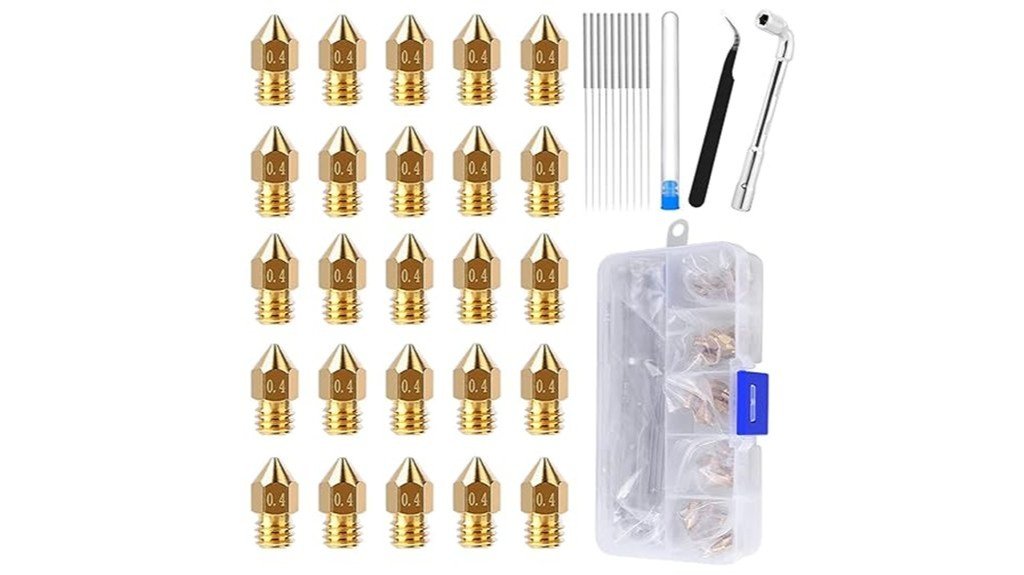
The Comgrow MK8 0.4mm brass nozzle 25-pack is a great choice for hobbyists and small workshop users who want a reliable, affordable spare-part stash for Creality Ender 3 and CR-10 printers. You get 25 precision 0.4mm brass nozzles that fit MK8 hotends and 1.75mm filaments like PLA and ABS. The kit includes cleaning needles, a hex wrench, tweezers, and a storage box so swaps are neat and fast. Users report easier installation and steadier prints, though brass wears faster with abrasive filaments. Keep spares handy, clean regularly, and you’ll minimize clogs and downtime.
Best For: Hobbyists and small workshops using Creality Ender 3 or CR-10 series printers who want an affordable bulk supply of replacement MK8 0.4mm brass nozzles and basic maintenance tools.
Pros:
- Affordable 25-pack ensures long-term spares and less downtime for frequent printing.
- Includes useful tools (cleaning needles, hex wrench, tweezers) and a storage box for organized maintenance.
- Precision-manufactured brass (0.4mm, ≤0.02mm error) improves print consistency for standard 1.75mm PLA/ABS filaments.
Cons:
- Brass nozzles wear faster with abrasive filaments (e.g., carbon/metal-filled), reducing lifespan.
- Durability may be lower compared with higher-end or branded hardened nozzles.
- Kit lacks hardened or specialty nozzle sizes for advanced or abrasive-material printing.
MK8 Brass 3D Printer Nozzles (24 pcs, 0.2–1.0mm) with DIY Tools and Metal Storage Box for CR-8/CR-10/Ender Series
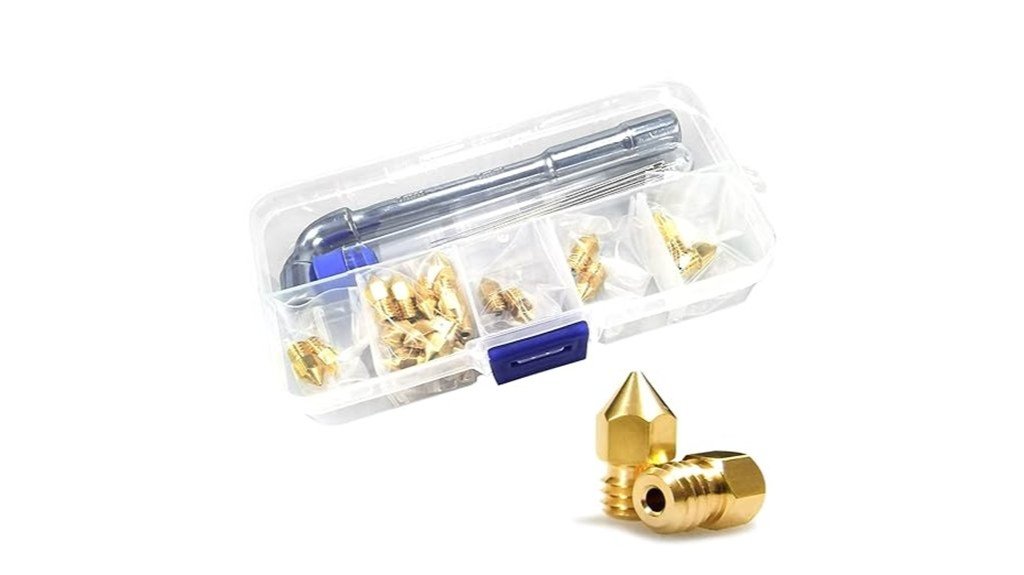
Hobbyists and small-scale makers will find a lot to like about this MK8 brass nozzle kit, because it gives you a full range of sizes (0.2–1.0mm) plus cleaning needles and a metal storage box so you can swap parts fast and keep spares on hand. You get 24 nozzles (mostly 0.4mm), ten steel needles, a hex wrench, and a ten-grid case that fits CR-10, Ender models, and many 1.75mm printers. Brass offers good heat transfer and wear resistance, and marked sizes speed swaps. Beginners praise the value; occasional clogs are easily fixed with the extras, making it a practical, affordable kit.
Best For: Hobbyists and small-scale makers who want an affordable, versatile MK8 nozzle kit with spare sizes and tools for 1.75mm PLA/ABS printers like Ender and CR-10 series.
Pros:
- Wide range of nozzle sizes (0.2–1.0mm) with extra 0.4mm pieces, plus cleaning needles and hex wrench for quick swaps and maintenance.
- Brass construction offers good thermal conductivity and marked sizes make identification and installation easy.
- Includes a metal storage case and parts box—good value for beginners and as a consumable backup kit.
Cons:
- Brass nozzles wear faster than hardened options when printing abrasive filaments (e.g., carbon-filled).
- Some users report occasional clogging initially, requiring needle cleaning or replacement.
- A few customers noted minor bending of cleaning needles during use.
Aokin 3D Printer Brass Nozzles 0.4mm (10 Pack) for Volcano Nozzle, 1.75mm Filament
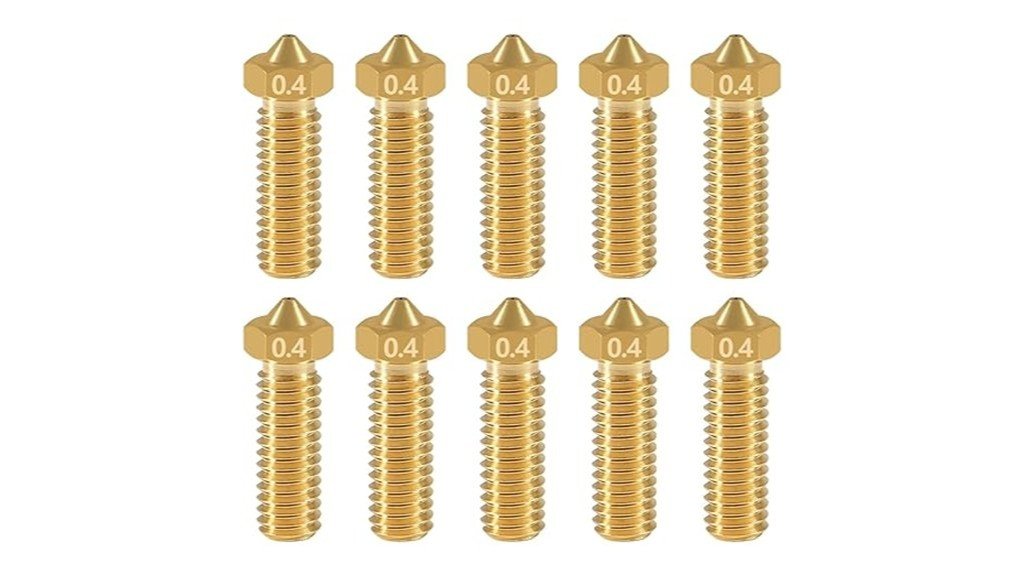
You’ll appreciate these Aokin 0.4mm volcano brass nozzles if you want faster, stronger PLA and PETG prints without fuss—especially when you run a Volcano-style hotend that benefits from a longer melt zone. You get ten premium brass nozzles with M6 threads, 1.75mm filament fit, and a 0.4mm aperture. Their extra length (about 21mm) and larger melt zone cut print time and boost layer bonding, while a chamfered tip reduces clogging. Fonts on the surface make size checks simple. They fit many printers like Anycubic Vyper and Sidewinder X1. Remember to recalibrate your Z-gap after installation.
Best For: Makers using Volcano-style hotends who want faster, stronger prints with 1.75mm PLA or PETG and need a pack of readily identifiable, replaceable 0.4mm brass nozzles.
Pros:
- Premium brass construction with clear stamped font makes nozzle size identification and basic handling easy.
- Extra-long (≈21mm) Volcano-compatible design and larger melt zone enable faster extrusion and improved layer bonding.
- Chamfered tip reduces filament resistance and helps prevent clogs; M6 thread fits many common hotends.
Cons:
- Brass wears faster than hardened or plated nozzles when printing abrasive filaments (e.g., carbon fiber, glow-in-the-dark).
- Requires Z-gap recalibration after replacement to maintain print quality.
- Specifically sized for 1.75mm filament and Volcano-style setups, so not ideal for printers using different filament diameters or standard short nozzles.
Factors to Consider When Choosing Brass Nozzles for PLA & PETG
When you pick a brass nozzle for PLA or PETG, think about nozzle diameter first since it controls print speed and detail. You’ll also want good thermal conductivity and a match with your hotend and heatbreak so the nozzle heats evenly and fits correctly, and don’t forget that wear resistance and filament compatibility matter if you plan to use abrasive blends. These choices affect your prints more than you might expect, so balance speed, durability, and the types of filament you’ll run.
Nozzle Diameter Selection
Because nozzle diameter changes how much plastic you push through the hotend, picking the right size for PLA or PETG matters more than it first seems. The 0.4mm nozzle is your go-to: it balances speed and detail, so you’ll get good prints without constant tweaking. If you want faster prints, try 0.6mm or 0.8mm and use thicker layers, but expect some loss of fine detail. For miniatures or intricate parts, a 0.2mm nozzle gives sharp features, though clogging risk rises, especially with slightly gummy PETG. Remember larger nozzles demand higher flow rates, so recalibrate extrusion, temperature, and speeds after any change. Recalibration prevents under- or over-extrusion and keeps prints reliable.
Thermal Conductivity Importance
Although it might seem like a small detail, the nozzle’s thermal conductivity plays a huge role in how well PLA and PETG print, and brass shines here because it heats quickly and evenly. You’ll notice faster heat-up times and steadier temperatures with brass, which helps filament melt uniformly and flow smoothly through the melt zone. That consistent heat reduces partial melting or scorching, so you get cleaner layers and fewer surprises mid-print. Brass’s roughly 100–120 W/mK conductivity outperforms materials like stainless steel, so you can push extrusion speed without losing quality. Good heat transfer also lowers clog risk by ensuring filament is fully molten before it exits, a real benefit when switching between PLA and the slightly trickier PETG.
Wear Resistance Matters
Even if brass feels like a small part of your printer, its wear resistance can make a huge difference in how long your nozzle lasts and how reliably it prints PLA and PETG. You should pick brass nozzles that resist abrasion because PLA and PETG can slowly grind away softer metals over time, degrading print quality. Higher-quality brass, made from better alloys and precise manufacturing, usually lasts longer and handles printing temperatures without softening. Look for nozzles with a smooth inner surface — they cut friction and reduce material build-up that leads to clogs. You’ll still need regular cleaning and maintenance, but starting with a nozzle designed for toughness gives you the best defense against wear and fewer surprises during long print runs.
Filament Compatibility Range
Wear resistance helps your nozzle last longer, but you also need to match the nozzle to the filaments you’ll run most often. Brass nozzles work well with a wide range of 1.75mm filaments, so you can confidently print PLA and PETG thanks to brass’s good thermal conductivity and smooth inner walls. The common 0.4mm outlet size gives you a solid balance of detail and speed for most projects, and precise manufacturing helps cut down on clogs. Check that the nozzle threading (often M6) matches your extruder before buying, because fit matters as much as material. While PETG runs hotter, standard brass nozzles usually tolerate up to about 260°C, so they’ll handle both materials for everyday prints.
Heatbreak and Hotend Match
When you pair a brass nozzle with the right heatbreak and hotend, you’ll get smoother, more reliable prints because the whole system controls where heat stops and where the filament melts. You want a heatbreak that keeps the hot zone tight so PLA and PETG melt only where they should, reducing heat creep and clogs. Match the heatbreak’s fit to your nozzle size; a poor fit causes uneven heating and inconsistent flow. Choose a hotend designed for your nozzle type — manufacturers optimize thermal pathways for better cooling and fewer jams. Finally, check maximum temperature ratings for both parts so they won’t deform or degrade at the temperatures you’ll use. A good match saves time and frustration during prints.
Maintenance and Cleaning
Matching your hotend and heatbreak sets you up for smoother prints, but keeping that performance means looking after the nozzle itself. You’ll want to clean brass nozzles regularly to prevent clogs, since PLA and PETG can leave residues that gum up flow. Heat the print head to about 200°C or higher, then use stainless steel cleaning needles to poke out blockages safely. A maintenance kit with hex wrenches and brushes makes the job quicker and less fiddly, and it’s satisfying to have the right tools at hand. Pick nozzles with smooth feeding chamfers and perfectly round apertures so filament moves cleanly and cleaning works better. After any cleaning or swap, recalibrate nozzle height to keep prints accurate and stick properly.
FAQ
How Often Should Brass Nozzles Be Replaced With PETG Printing?
FAQ 1: How often should I replace brass nozzles when printing with PETG?
Brass nozzles should generally be replaced every 200–400 printing hours when using PETG. However, this can vary based on usage and printing conditions.
FAQ 2: What signs indicate that I need to replace my brass nozzle?
Look for extrusion issues, increased stringing, or visible wear on the nozzle. These are clear indicators that it may be time for a replacement.
FAQ 3: Can I clean brass nozzles instead of replacing them?
Yes, regularly cleaning brass nozzles can extend their lifespan. However, if cleaning does not resolve issues, replacement may be necessary.
FAQ 4: Are there specific materials that wear out brass nozzles faster?
Yes, abrasive blends or frequent heavy use can wear out brass nozzles more quickly. In such cases, consider replacing the nozzle earlier than the recommended interval.
FAQ 5: What happens if I don’t replace a worn brass nozzle?
Failing to replace a worn nozzle can lead to print defects, such as inconsistent extrusion and poor print quality. Maintaining the nozzle is essential for optimal results.
FAQ 6: How can I tell if my nozzle is clean enough to continue using?
If you notice consistent extrusion and no visible clogs, your nozzle may be adequately clean. However, inspect it regularly for signs of wear or buildup.
FAQ 7: What type of nozzle is best for PETG printing?
Brass nozzles are generally suitable for PETG, but for more abrasive materials, consider using hardened steel or ruby-tipped nozzles to prevent wear.
FAQ 8: How can I prevent nozzle wear when printing with PETG?
Regular maintenance, including cleaning and monitoring print settings, can help reduce wear. Additionally, using lower print speeds can minimize stress on the nozzle.
FAQ 9: Is there a difference in nozzle lifespan between different printers?
Yes, the lifespan of a nozzle can vary between printers based on factors like print speed, temperature, and material flow rate. Always consider your specific setup.
FAQ 10: Should I have spare nozzles on hand for PETG printing?
Having spare nozzles is a good practice, especially if you frequently print with PETG. This ensures you can quickly replace a worn nozzle and avoid downtime.
Can Brass Nozzles Be Used With Abrasive Filaments Safely?
1. Can I use brass nozzles with abrasive filaments?
Yes, brass nozzles can be used with mildly abrasive filaments.
2. How quickly will brass nozzles wear out with abrasive materials?
Brass nozzles will wear faster when used with abrasive filaments, so you should expect reduced lifespan.
3. What should I monitor when using brass nozzles for abrasive printing?
It’s important to monitor extrusion and precision to ensure quality prints as the nozzle wears down.
4. When should I consider switching nozzles?
You should consider switching to hardened or plated nozzles if you are printing heavily or frequently with abrasive filaments.
5. What is the impact of using brass nozzles on print accuracy?
Using brass nozzles with abrasive materials can lead to degraded precision over time.
6. Are there specific types of abrasive filaments that are safer for brass nozzles?
Mildly abrasive filaments are generally safer for brass nozzles, but caution is still advised.
7. What happens if I continue using brass nozzles for heavy abrasive printing?
Continuing to use brass nozzles for heavy abrasive printing can lead to significant wear and potential print failures.
8. Can I use brass nozzles for all types of filaments?
Brass nozzles are suitable for many filaments, but performance may vary with abrasive types.
9. What are the benefits of using hardened or plated nozzles?
Hardened or plated nozzles offer increased durability and better performance when printing with abrasive materials.
10. Is it worth investing in specialized nozzles for regular abrasive printing?
Yes, investing in specialized nozzles can enhance print quality and reduce the frequency of replacements when working with abrasive filaments.
Do Different Nozzle Finishes Affect Print Adhesion?
FAQ on Nozzle Finishes and Print Adhesion
1. How does nozzle finish impact print adhesion?
Different nozzle finishes can significantly affect how well filament adheres to the print surface, influencing the quality of the first layer.
2. What types of nozzle finishes are there?
Nozzle finishes vary from polished brass to rougher or treated surfaces, each offering distinct properties that can alter adhesion.
3. Do rough nozzle surfaces improve adhesion?
Yes, rough or treated surfaces tend to enhance grip, which can lead to better filament wetting and increased adhesion during printing.
4. Does a polished brass nozzle affect adhesion?
Polished brass nozzles can reduce adhesion slightly, making it crucial to consider the type of filament being used for optimal results.
5. What is filament wetting?
Filament wetting refers to how well the molten filament adheres to the print bed and each layer during the printing process, which is influenced by the nozzle finish.
6. Can nozzle coatings affect print quality?
Yes, specially coated nozzles may promote better adhesion and can result in improved print quality compared to standard finishes.
7. Is there a nozzle finish that works best for all filaments?
No, different filaments may respond better to specific nozzle finishes, so it’s important to choose a nozzle based on the material being printed.
8. How often should nozzle finishes be assessed for adhesion?
It’s advisable to periodically assess nozzle finishes, especially if you notice issues with print adhesion, as wear and tear can alter performance.
9. Can changing nozzle finishes resolve adhesion issues?
Switching to a different nozzle finish can potentially resolve adhesion problems, depending on the type of filament and print conditions.
10. Are there specific nozzle finishes recommended for high-adhesion applications?
For high-adhesion applications, consider using rougher or coated nozzles that provide better grip, particularly with challenging materials.
What Maintenance Extends Brass Nozzle Lifespan?
1. How does printing temperature affect brass nozzle lifespan?
Printing at the correct temperatures prevents overheating, which can lead to nozzle wear. Maintaining optimal temperatures ensures smoother filament flow and reduces the risk of damage.
2. Why should I avoid abrasive filaments with brass nozzles?
Abrasive filaments can cause excessive wear on brass nozzles, leading to premature failure. Opting for smoother, less abrasive materials will help prolong the life of your nozzle.
3. What are the benefits of cleaning deposits from the nozzle?
Regular cleaning helps maintain optimal flow and prevents clogs. Using methods like nylon cleaning or cold pulls can effectively remove buildup without damaging the nozzle.
4. How should I clean my brass nozzle?
Use gentle brushes or nylon filament for cleaning to avoid scratching the surface. This method is effective for removing debris while preserving the nozzle’s integrity.
5. Why is it important to store nozzles dry?
Storing nozzles in a dry environment prevents moisture buildup, which can lead to corrosion and degradation. Keeping your nozzles dry is essential for maintaining their longevity.
6. What should I do if my nozzle becomes clogged?
Promptly swap out clogged nozzles to avoid further printing issues. Addressing clogs quickly helps maintain print quality and prevents damage to the printer.
7. How often should I inspect my brass nozzles?
Regular inspections should be done to check for wear or deformation. Early detection of issues can help you replace nozzles before they affect print performance.
8. What signs indicate that a brass nozzle needs replacing?
Look for signs like decreased extrusion quality, visible wear, or deformation. Any of these indicators suggest it’s time to replace your nozzle for optimal printing results.
9. Can regular maintenance really extend the life of my brass nozzle?
Yes, consistent maintenance practices such as cleaning and proper storage significantly enhance the lifespan of your brass nozzle. These steps ensure better performance and fewer replacements.
10. Is there a specific type of brush recommended for cleaning brass nozzles?
Gentle brushes designed for 3D printing maintenance are ideal. Avoid using hard bristles that could scratch or damage the nozzle surface.
11. What should I consider when choosing filaments to use with brass nozzles?
Select filaments that are known to be less abrasive and designed for compatibility with brass nozzles. This choice will help maintain the nozzle’s condition and improve overall printing efficiency.
Are There Health Risks From Brass Nozzle Fumes?
FAQs on Health Risks from Brass Nozzle Fumes
1. What are the health risks associated with brass nozzles?
Brass nozzles can release metal particles and volatile organic compounds (VOCs) when heated, which may pose inhalation risks.
2. How do brass nozzles release harmful substances?
When brass is overheated or used with specific filaments, it can emit fumes containing metal and VOCs.
3. What types of filaments are more likely to cause issues with brass nozzles?
Certain high-temperature or specialty filaments may increase the likelihood of harmful emissions when used with brass nozzles.
4. Is ventilation important when using brass nozzles?
Yes, proper ventilation is crucial to minimize exposure to harmful fumes released during printing.
5. What precautions can be taken to reduce inhalation risks?
Avoid overheating the nozzle and ensure good airflow in the printing area to decrease vapor concentration.
6. Are there alternatives to brass nozzles?
Yes, alternative nozzle materials, such as stainless steel or hardened steel, can be used to reduce health risks.
7. Can enclosures help in managing fumes from brass nozzles?
Yes, using enclosures with filtration systems can effectively capture and reduce harmful emissions from brass nozzles.
8. What symptoms might indicate exposure to brass nozzle fumes?
Symptoms may include respiratory irritation, headaches, or other allergic reactions. Seek medical advice if you experience these.
9. How can I tell if my nozzle is overheating?
Monitor the temperature settings on your printer; if they exceed recommended levels for the filament, the nozzle may be overheating.
10. Is it safe to use brass nozzles for all printing applications?
While many users do, it’s essential to assess the materials being printed and consider the potential for harmful emissions based on your specific setup.
Final Thoughts
When it comes to solid brass nozzles for printing with PLA and PETG, you have some excellent options at your disposal. The choice you make should reflect your printing habits—whether you’re frequently swapping nozzles or experimenting with different setups. For those who want peace of mind with spare parts and essential tools, go for the Comgrow or a 20-pack. If versatility is what you seek, the MK8 multi-size set is your best bet. And for those aiming for speed and thicker layers, the Aokin Volcano nozzles are unparalleled. Always consider size, compatibility, and maintenance in your decision-making. By doing so, you’ll ensure cleaner, more dependable results without any unnecessary hassle.