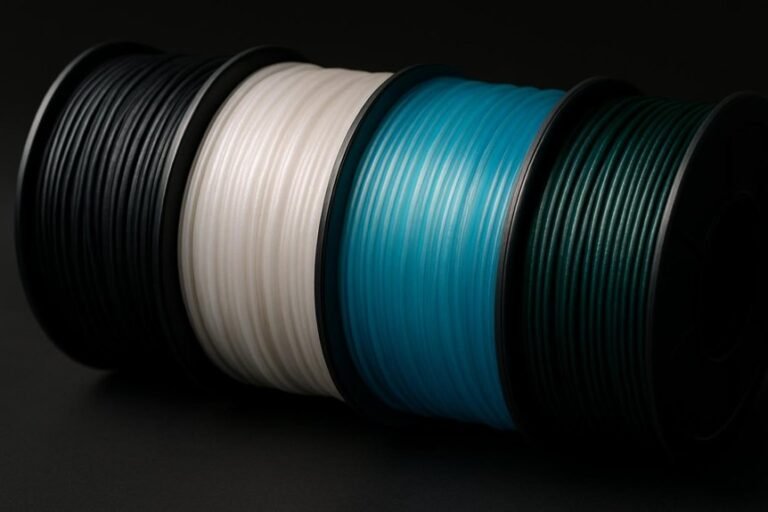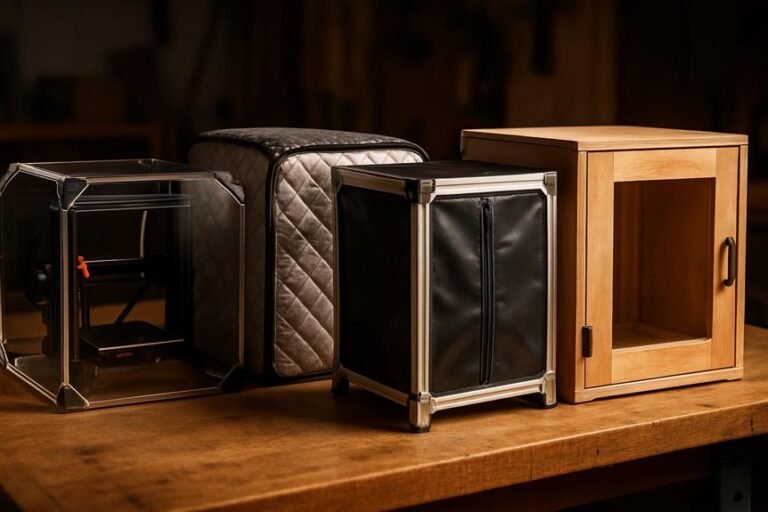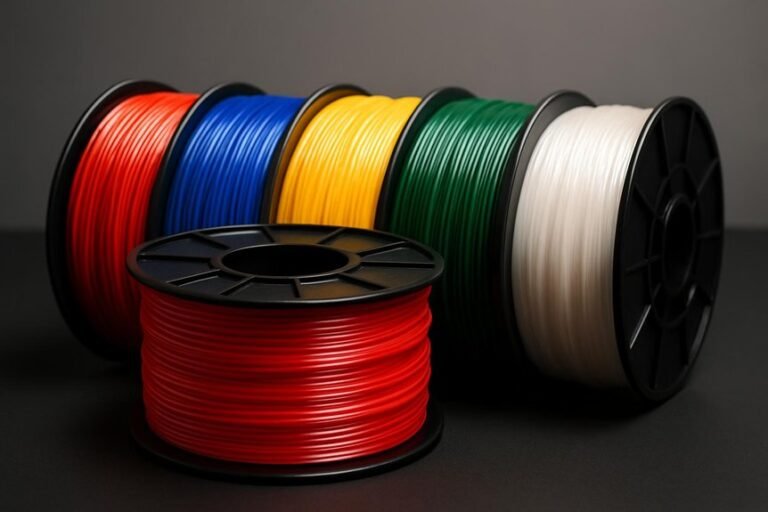
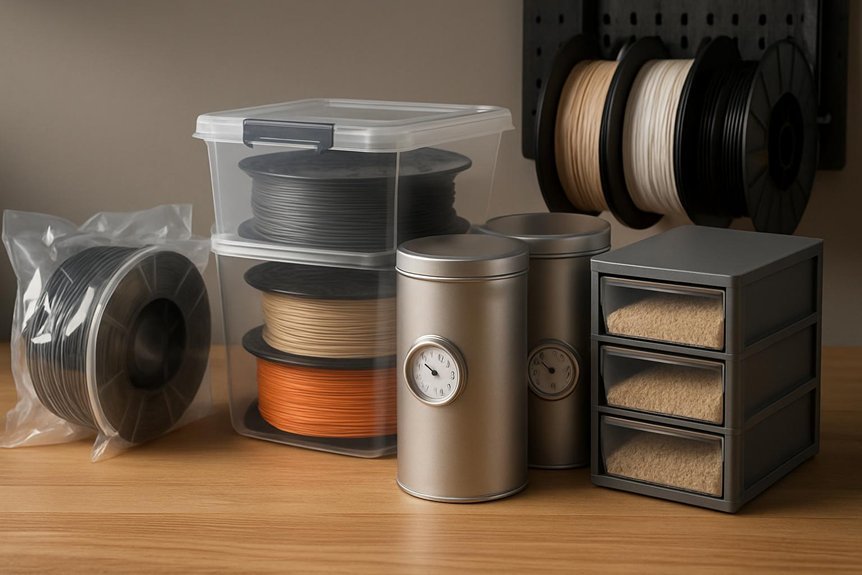
If you want your filament to print reliably and last longer, proper storage matters more than you might think. You’ll avoid brittle, moisture-swollen filament and tangled spools by choosing the right system—vacuum bags, dry boxes, or simple desiccant packs all work when used correctly. I’ll share five top solutions, what makes each one useful, and quick tips for keeping different materials in top shape—so you can stop troubleshooting and get back to printing.
3D Printing Filament Vacuum-Sealed Storage Kit (20 Packs with Pump & Desiccant)
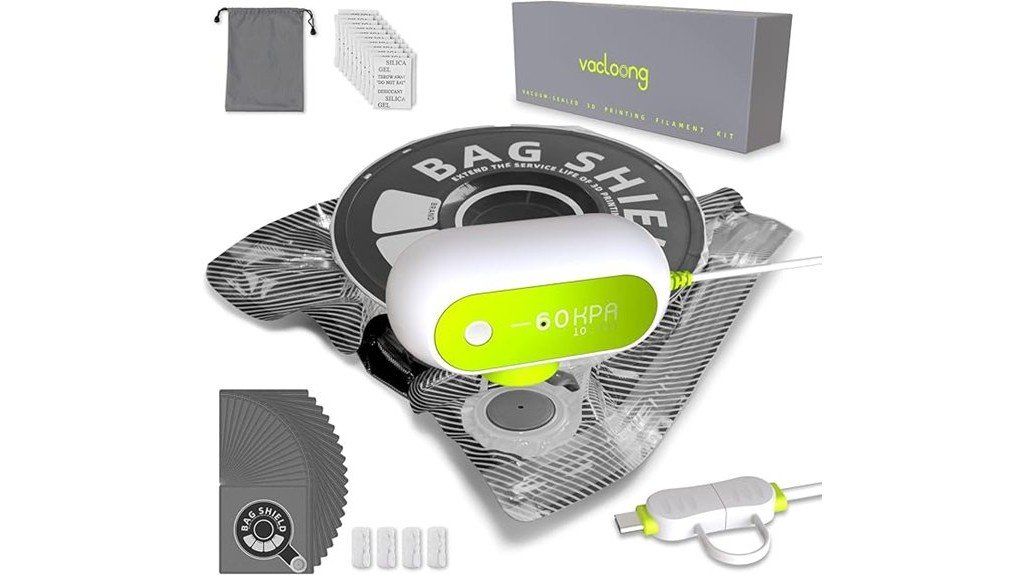
If you print regularly or keep a small stash of different filaments, this vacuum-sealed kit is built for you — it’s a simple way to protect up to 20 spools from moisture and light so your prints stay reliable. You’ll get twenty lightproof PA+PE bags sized to fit 0.5–1kg spools and common diameters, plus a pump that pulls a deep -60 kPa vacuum in seconds with under 2% air left. Each bag has a one-way valve, desiccant, sealing clips, and a label box so you can note material, color, and date. It’s practical, fast, and keeps filament usable longer.
Best For: Hobbyists and small-scale 3D printing users who want an easy, reliable way to protect up to 20 spools of common filaments from moisture and light to keep prints consistent.
Pros:
- High-performance pump achieves deep -60 kPa vacuum quickly with <2% air residue, effectively reducing moisture exposure.
- Lightproof dual-layer PA+PE bags with one-way valve, desiccant, and sealing clips — ready for 0.5–1 kg spools and 1.75/2.85/3 mm filaments.
- Includes labeling area for organization; patented seal holds vacuum ~72 hours without leaks for convenient storage.
Cons:
- Bags sized for 0.5–1 kg spools may not fit larger or unusually shaped spools.
- Vacuum hold time quoted (~72 hours) may require periodic re-sealing or re-pumping for long-term storage.
- Manual pump may be slower or more effortful than an electric vacuum sealer for frequent use.
Polymaker PolyDryer Filament Storage Box for 3D Printing Filament (1.75mm & 2.85mm)
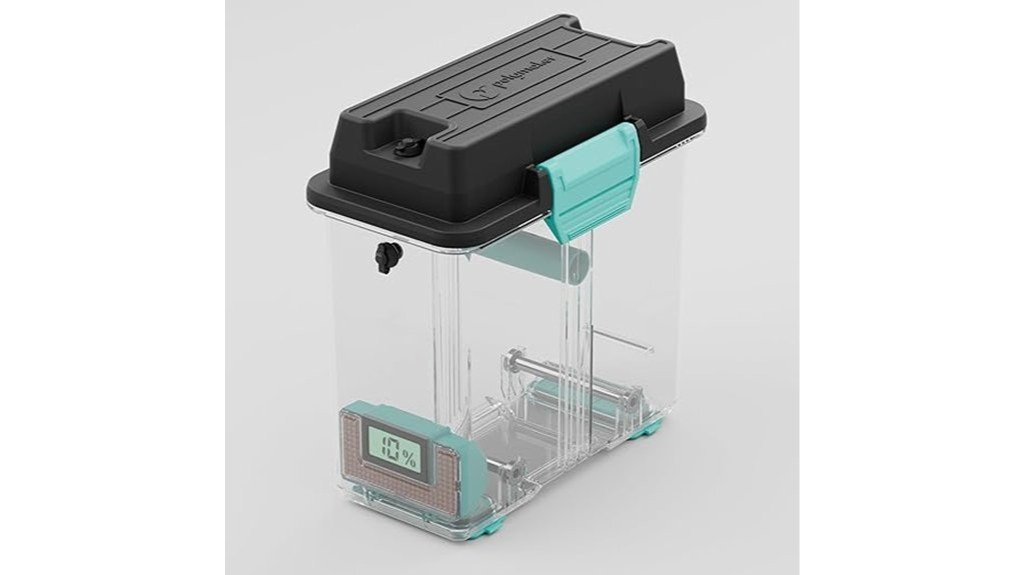
The Polymaker PolyDryer Box is a great pick when you need reliable filament protection that also lets you print straight from the storage—its airtight seal and built-in feed ports mean you can keep spools dry and dust-free while feeding filament directly to your printer. You’ll fit 1kg spools (1.75mm, 2.85mm, 3.00mm) and store most materials like PLA, PETG, TPU, and even some nylons. It dries well for low-to-moderate temp filaments but struggles with ABS/nylon and has limited heat settings. The LCD can be hard to read, latches are firm, and fan noise is noticeable.
Best For: Users who want an airtight, stackable filament storage and drying solution that lets them print directly from the spool and primarily use low-to-moderate temperature filaments (PLA, PETG, TPU).
Pros:
- Excellent sealing and dust/moisture protection with built-in feed ports for printing directly from the box.
- Includes hydrometer, silica pocket, central holder and rollers for smooth spool rotation and effective moisture management for common filaments.
- Compact, stackable design compatible with 1kg spools (1.75mm, 2.85mm, 3.00mm) and easy integration into typical printing setups.
Cons:
- Drying struggles with high-temperature/hygroscopic filaments (ABS, Nylon) and has only three basic heat settings.
- LCD display can be hard to read from off-angles and lid latches may be stiff for some users.
- Moderate fan noise and heating inconsistency (limited air movement) can reduce drying efficiency in specific areas.
Filament Vacuum Storage Kit with USB Pump and 20 Light-Proof Vacuum Sealed Bags
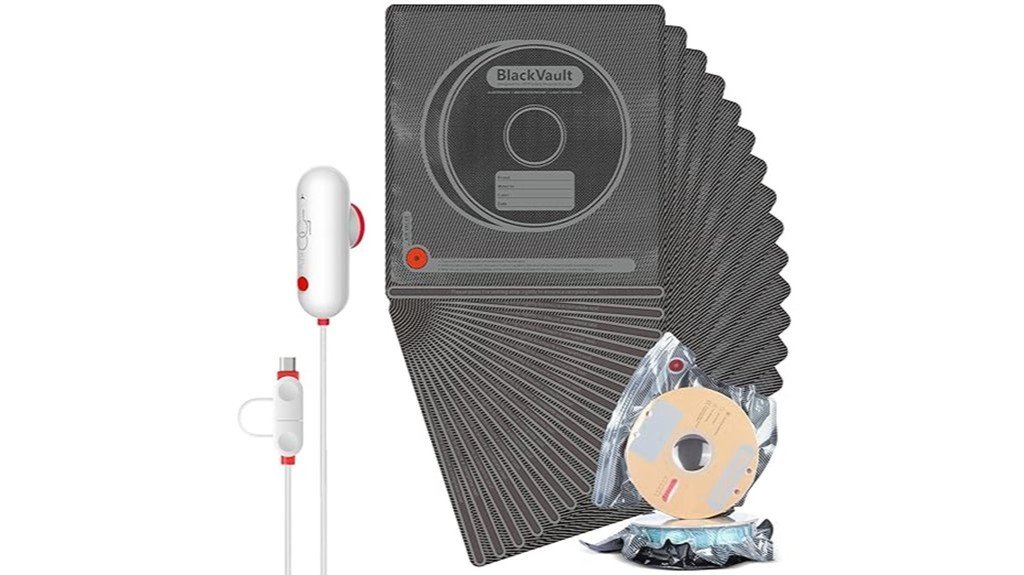
For hobbyists who print regularly and want an easy way to keep filament dry and organized, this Filament Vacuum Storage Kit with a USB pump and 20 light‑proof bags is a solid pick. You’ll get 20 durable PA+PE bags sized for common spools and filament diameters, plus a compact USB/Type‑C pump you can run from a wall adapter, power bank, or laptop. The black transparent bags block light yet let you peek inside, and the pump works quietly. Some users report occasional leaks, so learn proper zipper sealing. Overall it’s affordable and handy, though you may want refill bags later.
Best For: Hobbyist 3D printers who want an affordable, easy way to keep common filament spools dry, organized, and protected from light.
Pros:
- Durable PA+PE light‑proof bags sized for 0.5–1kg spools and 1.75–3mm filament, letting you see contents while blocking light.
- Compact, quiet USB/Type‑C pump that runs from wall adapters, power banks, or laptops for convenient vacuum sealing.
- Good value for keeping filament dry and organized; easy to use for regular printing needs.
Cons:
- Some users report inconsistent bag seals and occasional leaks, so vacuum retention can vary.
- Best pump performance is from wall adapters rather than computer USB ports, which may limit convenience for some setups.
- No refill‑only option in the kit—may require repurchasing the full set when bags wear out.
YOOPAI 3D Printer Filament Storage Box with Desiccants (Holds Up to 24 Rolls)
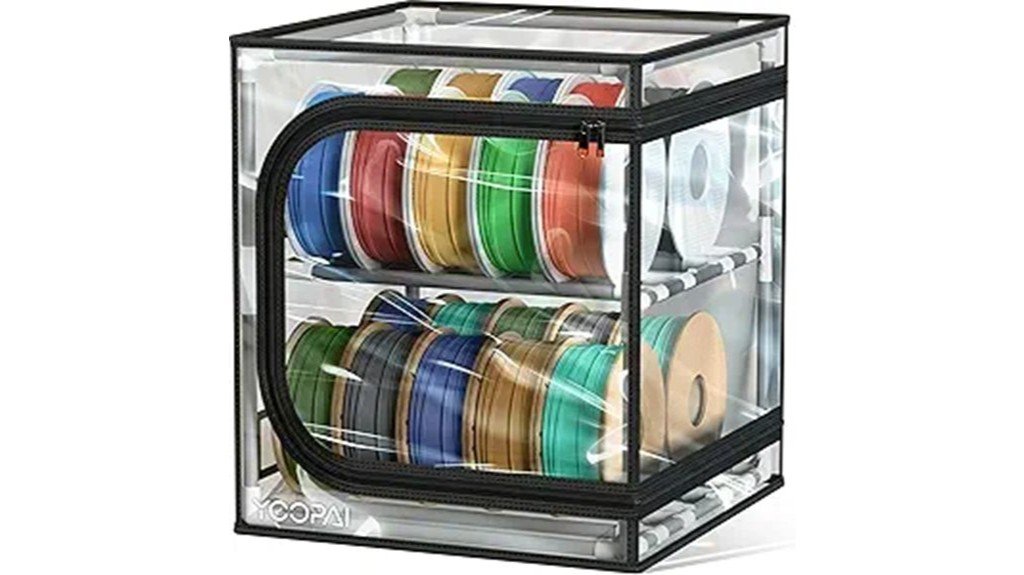
You’ll appreciate the YOOPAI 3D Printer Filament Storage Box if you want a neat, space-saving way to organize lots of spools without spending on a true dry box. You get a two-tier iron rack with a clear cover that holds up to 24 rolls (ten per tier for standard 1kg spools), and each layer supports 15 kg. It’s easy to assemble, fits on a desk or shelf, and includes four desiccant packs to help control moisture. It isn’t airtight, so vacuum-sealing or extra protection’s wise in humid areas, and some users note zipper quality varies.
Best For: People who want an affordable, space-saving way to organize and store many 1kg filaments on a desk or shelf without needing a fully airtight dry box.
Pros:
- Holds up to 24 rolls on a sturdy 2-tier iron rack with clear cover and 15 kg per layer capacity.
- Easy to assemble and access with a large opening flap; includes 4 desiccant packs for basic moisture control.
- Compact, space-saving design suitable for home, office, or garage storage.
Cons:
- Not a true dry/airtight box—may not prevent moisture in humid environments.
- Zipper/cover quality can be inconsistent according to some users.
- For best moisture protection you’ll likely need vacuum sealing or additional measures.
Silica Gel Desiccant Packets (100g, 20 Pack)
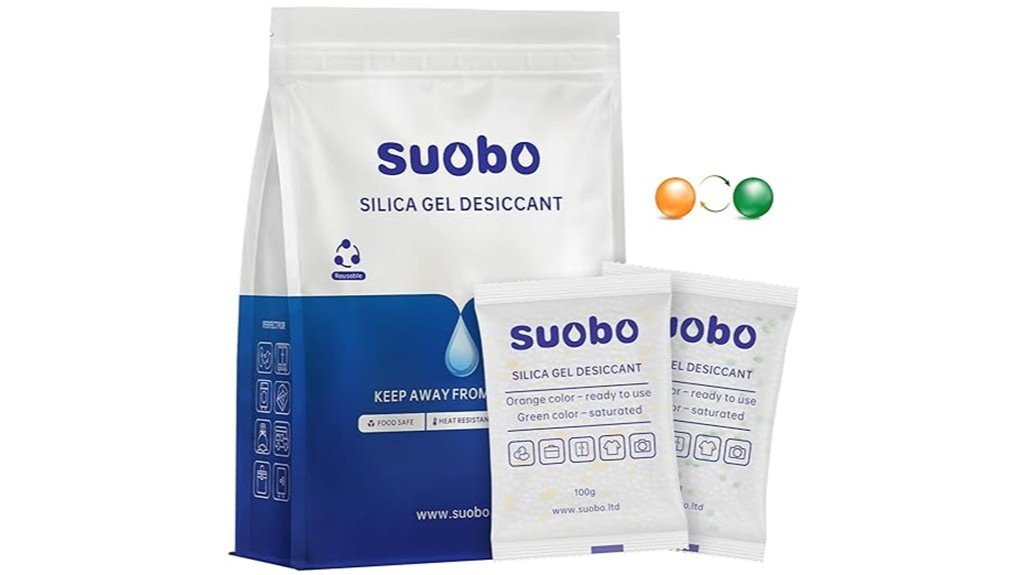
If you store lots of 3D printing filament, these 100g silica gel packets are a smart, low-effort way to keep spools dry and print-ready. You’ll get 20 food-safe packs that fit neatly in resealable bags or storage boxes, and their breathable paper plus leakage-proof edges mean no messy spills. Each packet soaks up about 40% of its weight in moisture, and the orange beads turn green when saturated so you know when to recharge. Pop them in the oven or microwave to revive them, but don’t overheat. They’re versatile, safe around food, and supported by responsive customer service.
Best For: 3D printing enthusiasts and hobbyists who store multiple filament spools and need an easy, food-safe way to keep them dry and print-ready.
Pros:
- Long-lasting 100g packs (20 included) absorb ~40% of their weight in moisture, helping prevent filament degradation.
- Food-safe, cobalt-chloride-free construction with leakage-proof edges and breathable paper for safe storage around consumables.
- Color-changing beads (orange to green) and rechargeable via oven or microwave make it easy to know when to revive and reuse packs.
Cons:
- May require multiple packs for very humid environments or large storage boxes, increasing cost and bulk.
- Recharge instructions require caution (specific temperatures/times) to avoid overheating or melting.
- Microwave recharge times vary and could cause uneven heating or risk if not monitored carefully.
Factors to Consider When Choosing Filament Storage Solutions
When you pick a storage solution for filament, think about how well it keeps moisture out and blocks light or UV, since those factors directly affect print quality and material strength. Also consider capacity and fit so your spools sit securely, and balance ease of access with maintenance needs and cost to find something you’ll actually use. I’ll walk through each point so you can match the right option to your filaments and printing habits.
Moisture Protection Level
A good moisture protection level can make the difference between crisp, reliable prints and a spool that gums up or cracks, so it’s worth paying attention to how you store filament. You’ll want storage that blocks humidity, especially for hygroscopic materials like nylon and TPU, which soak up water and print poorly when damp. Vacuum-sealed bags that reach about -60 kPa remove most air and sharply slow moisture uptake, extending shelf life. Desiccants such as silica gel can pull moisture out of the container—some absorb up to 40% of their weight—so include fresh packets and swap them when saturated. Look for containers or bags with tight seals and consider systems with hygrometers or built-in silica pockets so you can monitor and maintain low humidity reliably.
Light and UV Blocking
Because light—especially UV—can slowly break down filament polymers, you’ll want storage that keeps rays out so your spools stay strong and colorful. Light exposure, particularly UV, can make filament brittle and fade colors, so choose lightproof options like dual-layer bags or opaque containers. These block harmful wavelengths and slow chemical reactions such as oxidation that degrade print quality. I once left a bright PLA spool near a window and watched it dull and snap sooner than expected, so I now always use dark storage. Regularly check spools for any signs of photo-oxidative damage and move vulnerable materials into darker environments. Using opaque or dark-colored bags is an easy, low-cost step that preserves filament performance and keeps your prints consistent.
Capacity and Fit
Although it might seem like any container will do, choosing the right capacity and fit for your filament storage makes a big difference in convenience and spool health, so think about how many spools you own, their size, and how you’ll access them. Pick a solution that accepts the spool diameters and heights you use—whether 1.75mm, 2.85mm, or 3mm filament—and supports common 1kg spool dimensions. Measure your space and choose storage that holds multiple rolls without crowding things; some two-tier designs store up to 24 rolls. Count compartments or individual bags so you can separate materials and colors. Make sure maximum spool diameter and height limits match your largest spools, and confirm the layout lets you organize clearly while keeping spools protected.
Ease of Access
Now that you’ve sized up capacity and fit, think about how you’ll get at those spools day-to-day — ease of access can make or break your workflow. Look for large openings or flaps so you can grab a spool without wrestling with a lid; little delays add up when you’re swapping colors. Feed tubes are a game-changer if you want to run prints nonstop, since they let filament go straight to the printer. Organized compartments, rotating holders, and clear labeling keep different materials sorted and easy to identify, which saves time and frustration. Choose designs that need minimal assembly and have intuitive layouts; you’ll thank yourself when a quick project turns into a smooth, uninterrupted session instead of a scavenger hunt.
Maintenance and Cost
When you’re choosing a filament storage system, don’t just count the spools — think about what it’ll take to keep the system working well over time. Maintenance and cost go hand in hand: vacuum-sealed bags may need occasional replacement, and desiccants require monitoring and rejuvenating to stay effective. You’ll pay more up front for drying boxes or quality kits, but they can save money by extending filament life and cutting waste. Rechargeable silica gel packets are a smart, low-cost option because you can reuse them many times. Keep in mind that cheap storage wears out faster, which means more replacements and hidden costs. Check durability, plan periodic upkeep, and weigh long-term savings against initial investment to pick the best fit.
FAQ
Can Filament Color Fade in Storage Over Time?
1. Can filament color fade over time?
Yes, filament color can fade over time if not stored properly.
2. What factors contribute to filament color fading?
Filament color can fade due to exposure to UV light, heat, and humidity.
3. How should I store my filament to prevent fading?
Filament should be stored in dark, cool, and dry conditions to minimize the risk of fading.
4. Is it necessary to use desiccant when storing filament?
Yes, using desiccant can help absorb moisture and preserve pigments in the filament.
5. What is the ideal storage environment for filament?
An ideal storage environment is a sealed container kept in a dark, cool, and dry place.
6. Does exposure to light affect filament color?
Yes, exposure to UV light can significantly affect and fade filament color over time.
7. Can heat affect the color of stored filament?
Yes, high temperatures can lead to color degradation in filament.
8. What humidity level is best for filament storage?
Keeping humidity low is crucial; ideally, it should be under 40% to prevent color fading.
9. How long can filament be stored without fading?
The duration varies, but proper storage can significantly extend the life of filament colors.
10. Are certain filament colors more prone to fading?
Yes, some colors may be more susceptible to fading, particularly bright or vivid hues.
Can Vacuum Sealing Damage Spool Labels or Packaging?
FAQs about Vacuum Sealing and Spool Labels
1. Can vacuum sealing damage spool labels?
Yes, vacuum sealing can damage spool labels by crushing them or smearing the ink.
2. What happens to paper labels during vacuum sealing?
Paper labels are likely to get crushed or deformed due to the pressure applied during the vacuum sealing process.
3. Is ink affected by vacuum sealing?
Yes, the ink on labels can smear or run when exposed to the pressure and reduced air during vacuum sealing.
4. Can adhesives peel off during vacuum sealing?
Yes, adhesives may peel off labels or packaging when subjected to the pressure of vacuum sealing.
5. What can I do to protect my labels when vacuum sealing?
To protect labels, consider placing them in a thin plastic sleeve before sealing or removing them entirely.
6. Is there a risk of damaging packaging when vacuum sealing?
Yes, vacuum sealing can also damage the packaging itself, especially if it is made of softer materials.
7. What types of labels are more susceptible to damage?
Paper labels and those with heat-sensitive inks are generally more susceptible to damage during vacuum sealing.
8. Can vacuum sealing affect the readability of labels?
Absolutely, vacuum sealing can make labels less readable due to crushing or smearing, which can affect important information.
9. Is there a specific vacuum sealing method that reduces damage to labels?
Using a gentle vacuum sealing setting can help minimize damage, but it’s still advisable to protect or remove labels entirely.
10. Should I vacuum seal items with important labels?
If the labels contain crucial information, it’s best to remove them or protect them before vacuum sealing to prevent any damage.
11. Are there alternatives to vacuum sealing for items with labels?
Yes, consider using conventional storage methods or airtight containers that do not apply pressure on the labels.
Are Desiccants Recyclable or Reusable?
FAQs on Desiccants: Recyclability and Reusability
1. Can desiccants be reused?
Yes, many desiccants, such as silica gel, can be reused. They can often be reactivated for continued use.
2. How can I reactivate silica gel?
Silica gel can be reactivated by baking it in an oven. Check the specific instructions for the recommended temperature and duration.
3. Are molecular sieves reusable?
Yes, molecular sieves can often be regenerated. The reactivation method may vary, so refer to the packaging for guidance.
4. Is clay a reusable desiccant?
Clay desiccants can often be reactivated for reuse. Specific reactivation methods should be checked on the product packaging.
5. Can desiccants be recycled?
Some desiccants are recyclable, but this depends on the type and local recycling guidelines. Always check the packaging for recycling instructions.
6. What should I do with used desiccants?
Used desiccants can often be reactivated and reused. If they cannot be reactivated, consult local waste disposal regulations for proper disposal.
7. Is there a limit to how many times I can reactivate desiccants?
While many desiccants can be reused multiple times, their effectiveness may diminish over time. Regularly check their performance.
8. What types of desiccants are typically reusable?
Silica gel, molecular sieves, and clay are commonly reusable desiccants. Each type has its own reactivation method.
9. Are there any safety precautions for reactivating desiccants?
Yes, always follow the manufacturer’s instructions for reactivation. Ensure adequate ventilation and avoid overheating.
10. Where can I find reactivation instructions for my desiccants?
The best source for reactivation instructions is the packaging of the desiccant product. If it’s missing, check the manufacturer’s website or customer support.
How Long Can Filament Stay Stored Before Quality Drops?
FAQ 1: How long can dry filament be stored without significant quality loss?
Dry filament can typically be stored for 6 to 12 months with minimal quality degradation.
FAQ 2: Which types of filament degrade faster during storage?
Hygroscopic materials, such as nylon and PETG, tend to degrade faster than other types of filament.
FAQ 3: How does PLA compare to other filaments in terms of storage longevity?
PLA generally has a longer shelf life compared to hygroscopic materials, making it more resilient during storage.
FAQ 4: What storage conditions can help prolong filament life?
Storing filament in sealed containers with desiccants and maintaining low humidity levels can significantly extend its shelf life.
FAQ 5: Can filament remain usable after the recommended storage period?
While filament can remain usable beyond the 6-12 month range, its quality may deteriorate, affecting print results.
FAQ 6: What happens to filament quality if it absorbs moisture?
When filament absorbs moisture, it can lead to issues like bubbling, stringing, and poor print adhesion during the printing process.
FAQ 7: Is it possible to restore moist filament?
Yes, moist filament can often be dried using a filament dryer or an oven, restoring some of its original quality.
FAQ 8: How should filament be stored to prevent moisture absorption?
Filament should be stored in airtight containers with desiccants to minimize exposure to moisture in the air.
FAQ 9: Are there specific storage recommendations for nylon filament?
Nylon filament should be stored in a moisture-free environment, as it is particularly hygroscopic and can absorb water quickly.
FAQ 10: Does the type of spool affect filament storage?
Yes, the type of spool can influence storage; opaque, airtight spools provide better protection against moisture compared to clear or open spools.
Can Different Filament Types Be Stored Together Safely?
1. Can I store different filament types together?
Yes, you can store different filament types together, but it’s essential to take certain precautions to maintain their integrity.
2. What is the best way to store filaments?
Store filaments in individual, moisture-proof bags along with desiccant packets to keep them dry and protected from humidity.
3. Should I label my filament spools?
Yes, labeling spools is recommended to easily identify the filament type, ensuring you select the correct one when needed.
4. What materials should not be mixed?
Avoid mixing sticky or solvent-sensitive materials, as they can react negatively with each other and affect print quality.
5. How can I prevent physical tangling of filaments?
Use separate compartments or containers for each filament type to prevent them from tangling and ensure easy access.
6. Is moisture a concern for filament storage?
Yes, moisture can negatively affect filament quality, leading to issues like clogging during printing. Using moisture-proof bags helps mitigate this risk.
7. Can I store filaments in their original packaging?
While original packaging may offer some protection, it’s advisable to transfer them to moisture-proof bags for better long-term storage.
8. How long can I store filaments before they degrade?
The lifespan of filaments can vary based on material type and storage conditions; keeping them sealed and dry can extend their usability significantly.
9. Are there specific storage conditions for different filament types?
Different filament types may have specific storage needs, so research the requirements for each material to ensure optimal conditions.
10. Can temperature affect filament storage?
Yes, extreme temperatures can impact filament quality. Store them in a cool, stable environment away from direct sunlight and heat sources.
Final Thoughts
When it comes to keeping your 3D printing filament fresh and tangle-free, you have solid options at your disposal. I’ve tested various methods, and I can confidently say that vacuum-sealed bags, USB pumps, and purpose-built storage boxes with desiccants are among the best. Choose a solution that accommodates your spool sizes, blocks out light, and effectively keeps moisture at bay. Easy access is essential for those who print frequently, so factor that into your decision as well. For optimal performance, pair an opaque container with silica gel. This combination not only preserves your filament but also significantly reduces the risk of print failures. With the right storage setup, you’ll minimize material waste and ensure smoother, worry-free prints every single time. Trust me, investing in proper filament storage will pay off in the long run.