If you print nylon, you know nozzle choice matters—it’s not just metal on the hotend. You’ll want something that resists wear, handles high temps, and keeps flow smooth for those tricky bridges and thin walls. I’ll walk you through four strong options—from quick-swap silicon carbide to diamond-tipped extremes—so you can match performance to budget and print style. Keep going and you’ll pick the nozzle that actually makes nylon behave.
Creality Phaetus Silicon Carbide 0.4mm Quick-Swap Nozzle for 3D Printers (K1/K1C/K1 SE, Ender 3 V3/V3 Plus, K1 Max)
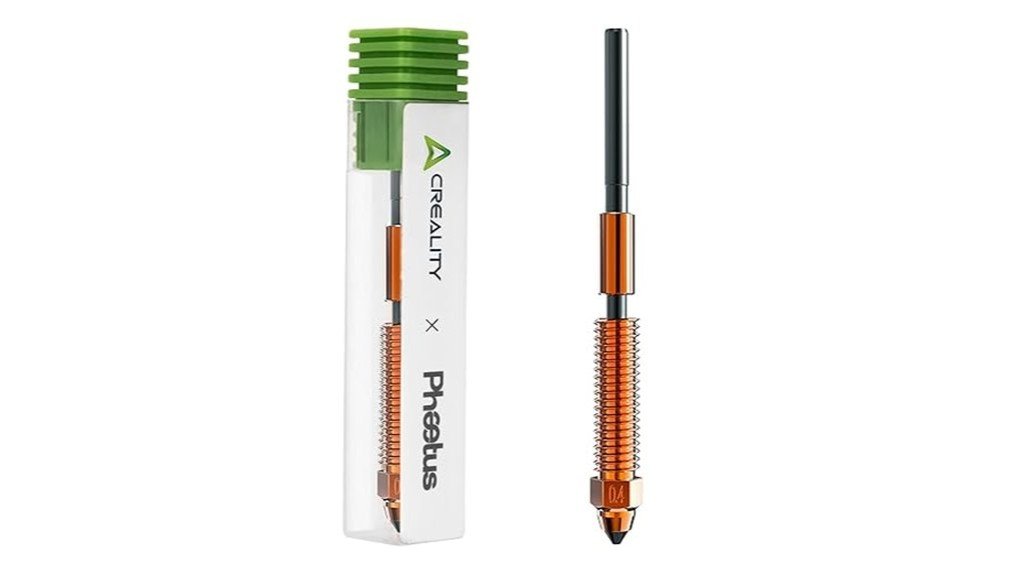
If you print with abrasive or composite filaments like carbon- or glass-filled nylon, the Creality Phaetus silicon carbide 0.4mm quick-swap nozzle is a top pick because it’s built to resist wear and keep prints consistent over time. You’ll appreciate the quick-swap design that makes changes fast and painless, and the all-metal build feels solid in your hand. It handles high flow (30mm³/s) and speeds up to 600mm/s, so you can push prints without sacrificing quality. The EndCoat plus silicon carbide combo lasts far longer than hardened steel, feeds smoothly (Ra<0.4), and shrugs off clogging. Friendly, reliable, and practical.
Best For: Makers and small-scale manufacturers who print abrasive or composite filaments (carbon/glass/wood-filled, nylon blends) and want a durable, high-flow quick-swap nozzle for high-speed, reliable printing.
Pros:
- Durable silicon carbide with EndCoat offers significantly longer wear resistance than hardened steel, ideal for abrasive filaments.
- Quick-swap all-metal design makes nozzle changes fast and easy while maintaining precision (Ra<0.4) to reduce clogging and filament leakage.
- Supports high flow (30 mm³/s) and high speeds (up to 600 mm/s), enabling faster prints without sacrificing consistency.
Cons:
- Higher cost than standard brass or hardened steel nozzles, which may deter casual users.
- May require compatible hotend and firmware/clearance checks on some printer models despite advertised compatibility.
- 0.4 mm diameter may limit very fine-detail prints compared with smaller nozzle sizes.
Hardened Steel Nozzles for Bambu Lab X1/X1 Carbon and P1P/S Hotend Kit (1.75 mm, 0.2–1.0 mm)
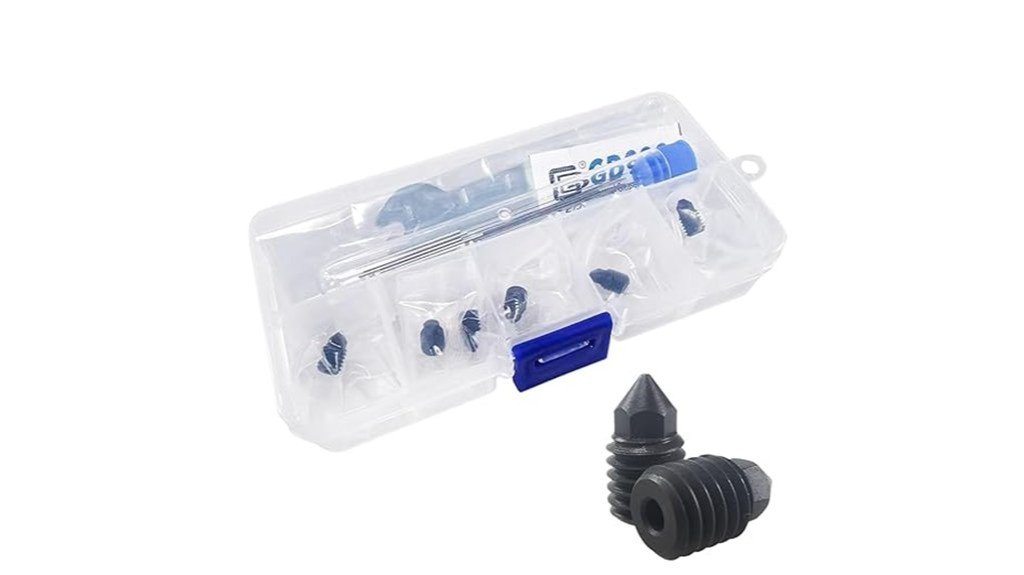
You’ll appreciate how these hardened steel nozzles were built for people who print tough, abrasive nylons and composite blends on Bambu Lab X1/X1 Carbon or P1P/S machines, since their hardened tool steel construction delivers far greater wear and heat resistance than brass. You’ll get sizes from 0.2 to 1.0 mm (two 0.4 mm included), marked on the outside for quick ID. They fit upgraded hotend kits only, use 1.75 mm filament, and have a smooth inner wall to cut clogs. The kit includes needles, wrench, thermal paste, and a parts box—just heat before tightening for a reliable seal.
Best For: Advanced hobbyists and professionals who print abrasive or high-temperature filaments (nylons, filled composites, PC, PEI, etc.) on Bambu Lab X1/X1 Carbon or P1P/S with an upgraded hotend.
Pros:
- Excellent wear and heat resistance from hardened tool steel, extending nozzle life versus brass.
- Includes a range of sizes (0.2–1.0 mm, two 0.4 mm), cleaning needles, wrench, thermal paste, and parts box for convenience.
- Smooth inner wall and size markings improve print quality and make nozzle selection and maintenance easier.
Cons:
- Only compatible with upgraded Bambu Lab hotend kits (not original hotend), limiting compatibility.
- 0.2 mm nozzle can clog with carbon-fiber or large-particle filled materials.
- Hardened steel has lower thermal conductivity than brass, which can affect flow/print settings and may require tuning.
Creality Hardened Steel MK8 Nozzles Kit (8pcs) with Tools Storage Box for Ender and CR-10 Printers
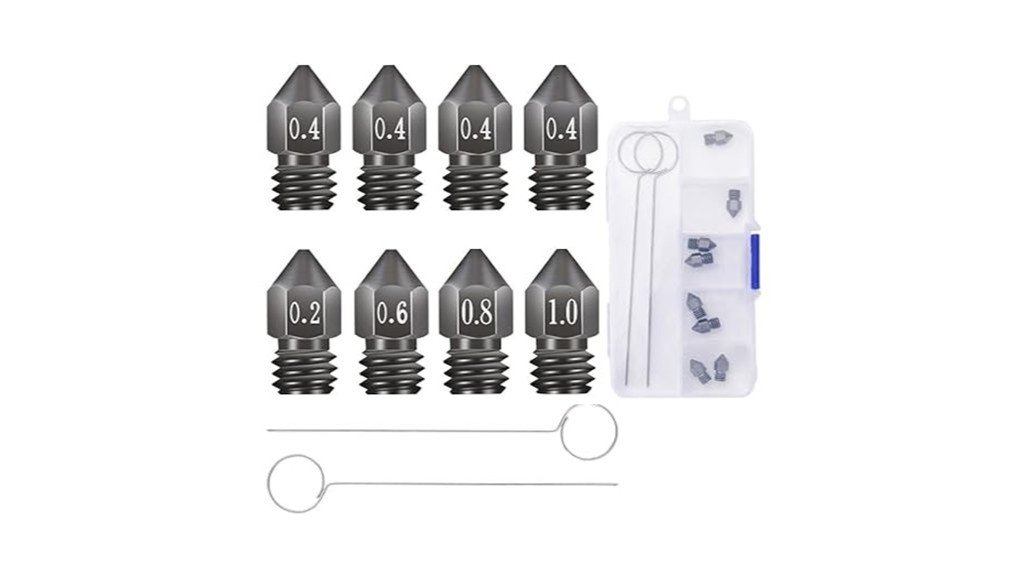
For hobbyists and small shops that print abrasive or high-temp filaments, the Creality Hardened Steel MK8 Nozzles kit is a smart upgrade that trades the soft brass of stock nozzles for hardened tungsten steel built to resist wear. You get eight nozzles (0.2–1.0 mm) in a handy tool box plus two needles for quick unclogs, so you’ll swap sizes fast and stay productive. These nozzles exceed HRC60, handle up to 450°C, and work well with PLA, ABS, carbon-fiber blends, and even PEEK. They fit MK8-style hotends like Ender and CR-10, offering CNC precision, smoother flow, and longer life.
Best For: Hobbyists and small shops that frequently print abrasive or high-temperature filaments and need durable, precise MK8 nozzles for Ender/CR-10-style hotends.
Pros:
- Hardened tungsten steel (HRC>60) greatly reduces wear when printing abrasive materials like carbon-fiber blends.
- Range of nozzle sizes (0.2–1.0 mm) in an organized tool box plus two cleaning needles enables quick swaps and unclogs.
- High temperature rating (up to 450°C) and CNC precision support consistent flow and compatibility with high-temp filaments (PLA, ABS, PEEK).
Cons:
- Hardened steel has lower thermal conductivity than brass, which can slow heat transfer and require slight print parameter adjustments.
- More brittle than brass; risk of damage if overtightened or mishandled during installation.
- May be unnecessary extra cost for users who only print non-abrasive, low-temperature filaments like standard PLA.
Diamondback V6 Compatible Polycrystalline Diamond Tip 3D Printer Nozzle (0.8mm, Brass)
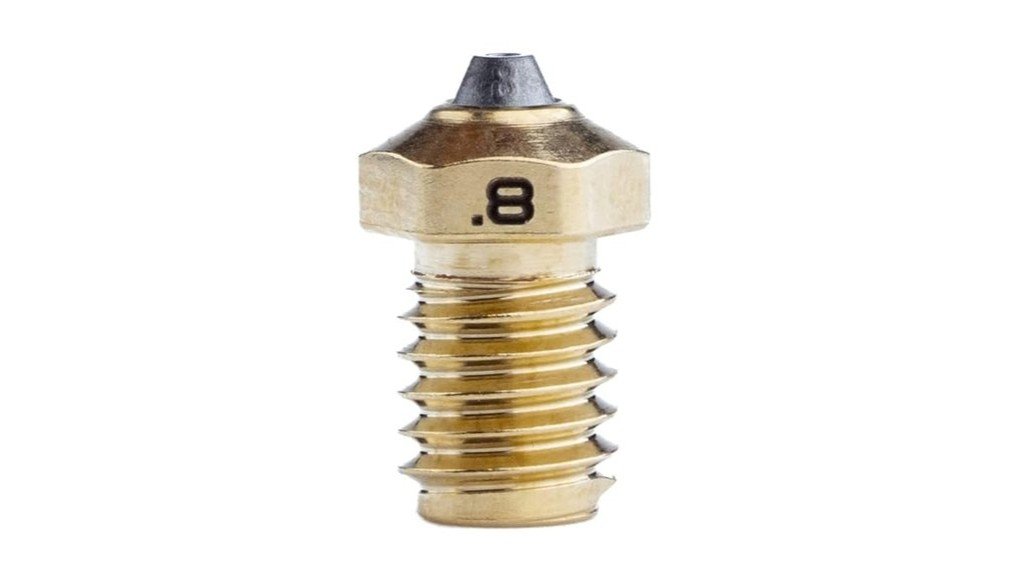
Think of the Diamondback V6 PCD-tip nozzle as a workhorse for serious nylon printing — it’s built for makers who push their printers with abrasive or high-strength filaments and want fewer nozzle swaps. You’ll appreciate the solid polycrystalline diamond tip that resists wear far longer than steel or carbide, so carbon-filled nylons and composites won’t eat through it. It conducts heat efficiently, improving layer bonding and cutting clogs, and users say it stays polished even after kilograms of abrasive filament. It’s pricey and capped at 300°C, so it suits pros and dedicated hobbyists rather than casual beginners.
Best For: Makers and professionals who print abrasive or high-strength filaments (like carbon-filled nylons and composites) frequently and want a long-lasting, high-performance V6-compatible nozzle.
Pros:
- Polycrystalline diamond tip offers exceptional wear resistance and much longer life than steel or carbide, reducing nozzle swaps.
- Excellent thermal conductivity and low friction improve layer adhesion, reduce clogs, and maintain a polished surface after heavy use.
- Enables reliable printing with abrasive and composite filaments, often allowing lower printing temperatures and consistent results.
Cons:
- Higher price makes it a significant upfront investment compared with brass or carbide nozzles.
- Maximum recommended temperature of 300°C limits use with very high-temperature materials.
- Not ideal for casual beginners who may risk nozzle damage through frequent setup errors or crashes.
Factors to Consider When Choosing Nozzles for Nylon Printing
When you pick a nozzle for nylon printing, think about abrasion resistance and the materials used so you don’t wear out the tip when printing reinforced or composite filaments. Also consider the internal surface finish and thermal conductivity, because a smooth bore and good heat transfer help nylon flow consistently and reduce clogs. Finally, nozzle size affects detail and flow rate, and you’ll want to check compatibility with composite blends to avoid surprises during long prints.
Abrasion Resistance Materials
Abrasion is one of the biggest concerns you’ll face when printing with nylon, so picking a nozzle material that can stand up to wear is key to getting consistent results and avoiding frequent replacements. You’ll want hardened steel or polycrystalline diamond nozzles for abrasive nylon blends; they resist wear far better than brass. Hardened steel gives you reliable durability for long runs, and a hardness above HRC60 is a good benchmark to look for. If you want the longest life and fewer clogs, polycrystalline diamond outperforms even tungsten carbide and other hard metals. Match your choice to how often you print and the filament you use, and keep up simple maintenance — that combo keeps flow steady and saves you hassle and money.
Internal Surface Finish
Surface smoothness matters a lot for nylon printing, so you’ll want a nozzle with a finely polished internal bore to keep filament flowing reliably. A smooth bore lowers friction, which cuts down on clogs and gives you steadier extrusion — vital with nylon’s tendency to absorb moisture. Aim for an Ra under 0.4; that level of polish really helps nylon feed without snarling. Remember, rough interiors can wear faster and trap bits of nylon, so even a good start can degrade if the nozzle material isn’t durable. I’ve swapped nozzles mid-print and felt the difference immediately: cleaner lines and fewer blobs. Pick a nozzle material that holds its finish, inspect it periodically, and swap it before performance slips.
Thermal Conductivity Importance
Because nylon needs steady, predictable heat to behave well, you’ll want a nozzle that moves heat efficiently from the hotend into the filament. When you pick a nozzle with good thermal conductivity, nylon melts more evenly and you get smoother extrusion, fewer clogs, and better layer bonding. That means parts stick together stronger and you waste less time clearing jams. Materials that transfer heat well also let you print at slightly lower temperatures, which helps prevent warping and deformation of tricky nylon prints. Good conductivity helps control cooling, too, reducing stringing and oozing so you spend less time post-processing. Think of the nozzle as a tiny heat manager; choosing one with superior conductivity makes your nylon prints more reliable and less frustrating.
Nozzle Size Effects
When you change nozzle sizes for nylon, you’ll notice big shifts in speed, detail, and how well the layers stick together, so it’s worth choosing deliberately rather than grabbing whatever’s on the printer. Smaller nozzles (0.2–0.4mm) give finer detail and smoother surfaces, but they push less plastic and raise clog risk with moisture-sensitive nylon. Larger nozzles (0.6mm+) let you push more filament, print thicker layers, and cut print time—useful for big parts or when you want stronger layer bonding. That extra flow often improves inter-layer strength, so parts resist stress better. Pick a nozzle size based on the tradeoff: detail versus speed and strength. Try both on test pieces to find the sweet spot for your nylon prints.
Compatibility With Composites
If you plan to print nylon with carbon or glass fibers, you’ll want to pick a nozzle that can take the extra wear and the thicker flow those blends bring. You’ll find brass wears fast with abrasive composites, so consider hardened steel or silicon carbide nozzles — they last much longer and save you headaches. Also think about nozzle bore: a slightly larger diameter eases the thicker, viscous nylon blends and cuts clogs. Precision machining matters too; a smooth, well-cut internal path helps feed fiber-filled nylon reliably and reduces leakage, which nylon’s moisture attraction can worsen. Finally, don’t ignore thermal conductivity — better heat transfer keeps the filament fluid for consistent layers and stronger adhesion.
FAQ
Can Nozzle Coatings Affect Nylon Adhesion to the Print Bed?
FAQ About Nozzle Coatings and Nylon Adhesion
1. How do nozzle coatings impact nylon adhesion?
Nozzle coatings can influence the surface energy and friction characteristics, which directly affects how well nylon adheres to the print bed.
2. What characteristics of nozzle coatings affect adhesion?
Some coatings can reduce ooze during printing, which may negatively impact initial bed wetting, while others can enhance flow, leading to better adhesion.
3. Do all nozzle coatings have the same effect on nylon?
No, different nozzle coatings exhibit varying properties, resulting in different impacts on nylon adhesion to the print bed.
4. Can a nozzle coating reduce the need for adhesion aids?
Yes, certain coatings can improve flow and adhesion, potentially reducing or eliminating the need for additional adhesion aids like sprays or tapes.
5. Are there specific nozzle coatings recommended for nylon printing?
While there are no universal recommendations, coatings that enhance flow and reduce friction may generally improve nylon adhesion.
6. Does the temperature of the nozzle affect the performance of coatings with nylon?
Yes, the temperature can interact with the coating properties, affecting how the nylon adheres during the printing process.
7. How does initial layer adhesion change with different coatings?
Some coatings may improve flow and adhesion during the first layer, while others may hinder it due to reduced wetting properties.
8. Can nozzle wear impact nylon adhesion as coatings degrade?
Yes, as nozzle coatings wear down, their ability to influence adhesion and flow can diminish, potentially affecting nylon printing quality.
9. Is it better to use a smooth or textured nozzle coating for nylon?
A smooth coating might facilitate easier flow, while a textured one could improve grip; the choice depends on the specific nylon and desired printing results.
10. What should I consider when choosing a nozzle coating for nylon?
Consider factors like the coating’s effect on surface energy, flow characteristics, and how they interact with the specific nylon material you are using.
How Often Should I Replace Nozzles When Printing Nylon Regularly?
1. How often should I replace nozzles when printing with nylon?
Nozzles should be replaced every 100–200 hours of nylon printing.
2. What signs indicate that I need to replace my nozzle sooner?
Look for signs like increased stringing, under-extrusion, or surface roughness, which may indicate it’s time for a replacement.
3. Do abrasive filaments affect nozzle lifespan?
Yes, abrasive filaments can wear down nozzles more quickly, necessitating earlier replacements.
4. What should I do if I experience clogging?
If you experience clogging, you should consider replacing the nozzle to ensure consistent printing quality.
5. How does hardened residue affect nozzle performance?
Hardened residue can lead to poor extrusion and frequent clogs, indicating that a nozzle replacement is needed.
6. Can I clean my nozzles instead of replacing them?
Cleaning can help in some cases, but if issues persist, it’s best to replace the nozzle for optimal performance.
7. Is the replacement frequency the same for other materials?
No, different materials have varying impacts on nozzle lifespan; nylon is particularly demanding.
8. What are the risks of using a worn-out nozzle?
Using a worn-out nozzle can lead to poor print quality, including defects and inconsistent extrusion.
9. How can I extend the life of my nozzles when printing nylon?
Regular maintenance and monitoring for signs of wear can help extend nozzle life, along with using appropriate printing settings.
10. Does nozzle size affect how often I should replace it?
Yes, smaller nozzles may clog more easily and may need more frequent replacements compared to larger nozzles.
Do Nozzle Interior Shapes Influence Nylon Stringing and Oozing?
1. How do nozzle interior shapes influence nylon stringing?
Nozzle interior shapes significantly impact nylon stringing. Streamlined and tapered throats facilitate smoother material flow, reducing the chances of stringing.
2. What nozzle shapes minimize oozing in nylon printing?
Polished bores and conical profiles are effective in minimizing oozing. These shapes reduce material hang-up, leading to cleaner prints.
3. Why do rough nozzle interiors contribute to stringing?
Rough or abrupt nozzle interiors can create turbulence in the flow of nylon, which leads to drooling and increased stringing. This disruption can cause excess material to escape during printing.
4. Are tapered throats beneficial for nylon filament?
Yes, tapered throats promote a more controlled flow of nylon filament, which helps in reducing both stringing and oozing. Their design encourages consistent extrusion.
5. What effect does a polished bore have on nylon extrusion?
A polished bore reduces friction and material adherence, which minimizes the risk of stringing and oozing. This results in a smoother extrusion process.
6. Can nozzle design impact print quality with nylon?
Absolutely. The design of the nozzle, including its interior shape, plays a crucial role in print quality by influencing stringing and oozing behaviors.
7. Is it possible to reduce stringing by changing the nozzle?
Yes, changing to a nozzle with a more streamlined interior can significantly reduce stringing issues. Selecting the right shape can enhance print accuracy.
8. What are the consequences of using a rough nozzle interior?
Using a rough nozzle interior can lead to increased stringing and oozing, resulting in messy prints. This can negatively affect the overall quality of the finished product.
9. How does material flow relate to nozzle shape?
The shape of the nozzle directly affects material flow. Streamlined designs allow for a steady extrusion rate, preventing excess material buildup.
10. Should I choose a specific nozzle shape for nylon filament?
Choosing a nozzle with a streamlined and polished interior is highly recommended for nylon filament. Such designs will help minimize stringing and improve print quality.
Are There Temperature Limits for Nozzle Materials With Nylon Blends?
1. What temperature limits exist for brass nozzles?
Brass nozzles begin to soften at temperatures around 900–1000°C. While melting is not the primary concern, wear and deformation can occur at lower temperatures.
2. What temperatures does nylon typically require for printing?
Nylon usually requires printing temperatures between 240–300°C. This range can cause wear and deformation in some nozzle materials.
3. Which nozzle materials are best for high-temperature applications?
Hardened steel and ruby-tipped nozzles are recommended for higher temperature applications. These materials can withstand the heat and abrasive nature of nylon blends.
4. Can standard brass nozzles be used for nylon blends?
Standard brass nozzles may not be ideal for nylon blends due to their susceptibility to wear and deformation at typical nylon printing temperatures.
5. What happens to brass nozzles at nylon printing temperatures?
At nylon printing temperatures, brass nozzles may experience wear and deform rather than melting. This can affect print quality and nozzle lifespan.
6. Are there alternative materials for nozzles when using nylon?
Yes, alternatives like hardened steel and ruby-tipped nozzles are better suited for nylon blends. They offer improved durability and heat resistance.
7. What issues arise from using low-quality nozzles with nylon blends?
Low-quality nozzles can wear out quickly and lead to inconsistent print quality. They may also cause clogs and other printing issues.
8. How does temperature affect the lifespan of a nozzle?
Higher temperatures can accelerate wear and decrease the lifespan of nozzles made from softer materials like brass. Using more durable materials can extend nozzle life.
9. Is melting a concern for nozzle materials when printing nylon?
Melting is not typically a concern for nozzle materials; however, thermal wear and deformation are significant issues at the temperatures required for nylon blends.
10. What is the best nozzle choice for abrasive nylon blends?
For abrasive nylon blends, ruby-tipped nozzles are an excellent choice due to their hardness and durability. Hardened steel nozzles are also effective in these applications.
Can Nozzle Size Impact Nylon Part Strength or Layer Bonding?
1. How does nozzle size influence nylon part strength?
Nozzle size affects the thickness of the filament layers being deposited. Larger nozzles create thicker roads, which can enhance the bulk strength of the printed part.
2. What impact does nozzle size have on layer bonding in nylon prints?
Smaller nozzles allow for finer detail and improved interlayer fusion, leading to better layer bonding. In contrast, larger nozzles may reduce the quality of adhesion between layers.
3. Can using a smaller nozzle improve print resolution?
Yes, smaller nozzles provide finer detail, which enhances the overall print resolution. This is beneficial for intricate designs requiring precision.
4. Does a larger nozzle size affect the speed of printing?
Generally, larger nozzles can increase print speed as they deposit more material at once. However, this may come at the cost of resolution and detail.
5. What should I adjust if I change the nozzle size?
When changing nozzle size, it’s important to adjust print speeds and temperatures accordingly to ensure optimal adhesion and quality. Each material may require different settings.
6. Is there a trade-off between strength and detail when choosing nozzle size?
Yes, using a larger nozzle can enhance bulk strength but may compromise the resolution and detail of the print. This trade-off must be considered based on the application.
7. How does interlayer adhesion change with nozzle size?
Interlayer adhesion can be weaker with larger nozzles due to the thicker roads, which may not fuse as effectively with subsequent layers. Smaller nozzles improve this fusion.
8. Does the type of nylon affect how nozzle size impacts strength?
Yes, different nylon formulations may respond differently to changes in nozzle size. It’s essential to test and optimize for the specific nylon material being used.
9. What printing conditions are ideal for using a smaller nozzle?
When using a smaller nozzle, it’s best to print at lower speeds and slightly higher temperatures to ensure good flow and bonding. Monitoring these conditions can improve print quality.
10. Can I achieve high strength and detail simultaneously?
While challenging, it’s possible to achieve a balance by optimizing print settings and experimenting with different nozzle sizes. Consider using a medium-sized nozzle for a compromise between strength and detail.
Final Thoughts
When it comes to nylon 3D printing, choosing the right nozzle is crucial for achieving optimal results. I’ve narrowed it down to four exceptional options, each providing a unique balance of wear resistance, heat handling, and flow characteristics. Select a nozzle that aligns with your specific filament and printing objectives.
If you’re frequently switching between different filaments, a quick-swap silicon carbide nozzle is a game changer, saving you significant time and hassle. For those working with abrasive or high-temperature nylon blends, you need the durability of a hardened steel or diamond-tipped nozzle to ensure longevity and consistent performance.
Always keep in mind the nozzle size and ensure compatibility with your printer. This attention to detail will lead to cleaner extrusion, minimize clogs, and ultimately produce stronger, more reliable prints. Trust me, investing in the right nozzle is a step you won’t regret.