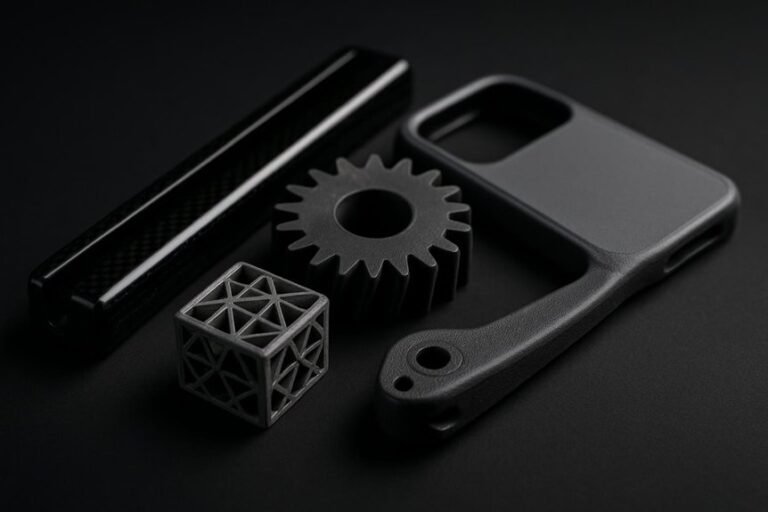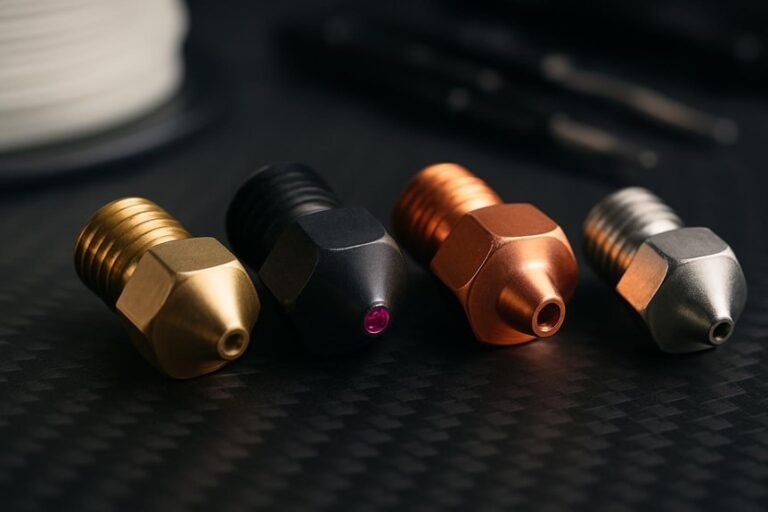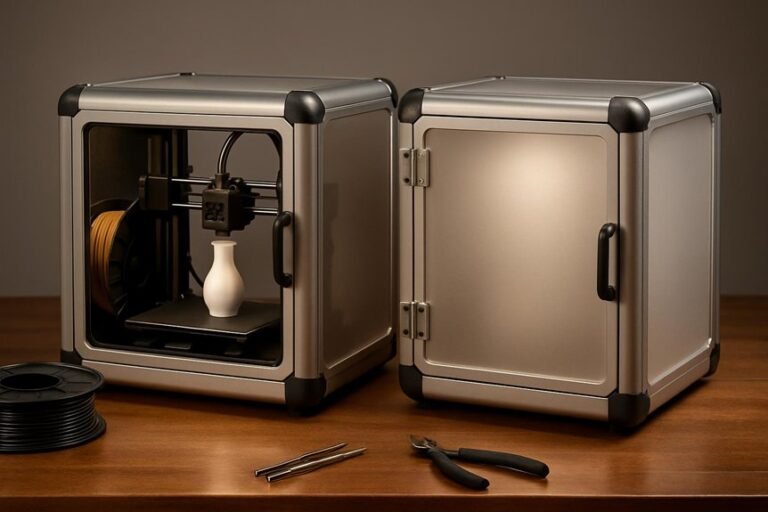
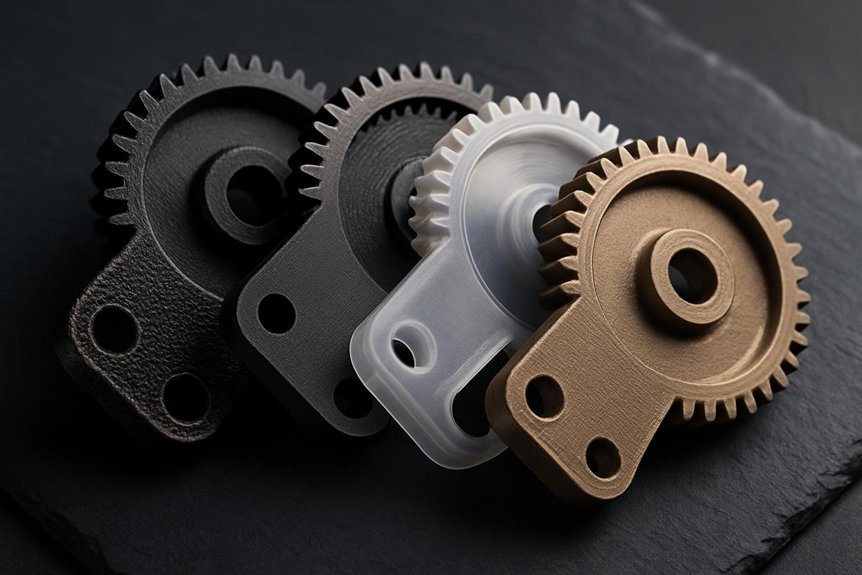
If you’re printing parts that must hold up under stress, you want filaments that are strong, stable, and precise — not just flashy. I’ll walk you through five top choices like PETG, ABS, Nylon, PPA, and carbon-fiber nylon, explain when each shines, and point out the trade-offs so you can pick the right one for gears, brackets, or housings. Grab your printer settings and stick around — the best fit depends on how the part will be used.
OVERTURE PETG 3D Printer Filament 1.75mm (1kg), Black
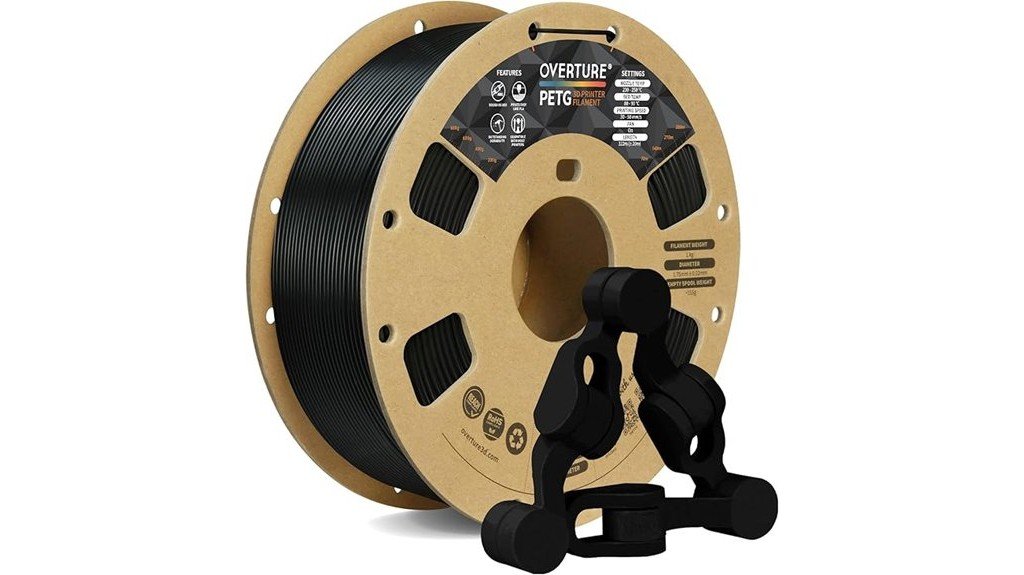
If you need a dependable filament for strong, functional parts, OVERTURE’s PETG is a solid pick — it blends the toughness of ABS with the ease of PLA, so you’ll get durable prints without a lot of extra hassle. You’ll appreciate the consistent 1.75mm diameter and +/-0.02mm accuracy on the 1kg spool, which cuts down on surprises and improves fit for mechanical pieces. It prints best around 245–255°C with a 70–85°C bed, and the precision winding avoids tangles. Expect good layer adhesion, low shrinkage, and high impact resistance — great for outdoor and load-bearing parts.
Best For: hobbyists and makers who need a reliable, easy-to-print filament for strong, functional parts and outdoor or mechanical applications.
Pros:
- Consistent 1.75mm diameter with ±0.02mm tolerance reduces extrusion issues and improves part fit.
- Strong, durable PETG with excellent layer adhesion, low shrinkage, and high impact resistance.
- Precision-wound 1kg spool, vacuum-sealed packaging, and resealable bag help prevent tangles and moisture.
Cons:
- Optimal printing requires higher nozzle temperatures (245–255°C), which some printers may struggle to reach or maintain.
- Can be prone to stringing or oozing at higher speeds or without tuned retraction settings.
- Unopened shelf life of ~1 year; moisture absorption may necessitate drying before use.
SUNLU ABS 1.75mm 3D Printer Filament, 1kg Spool (Black)
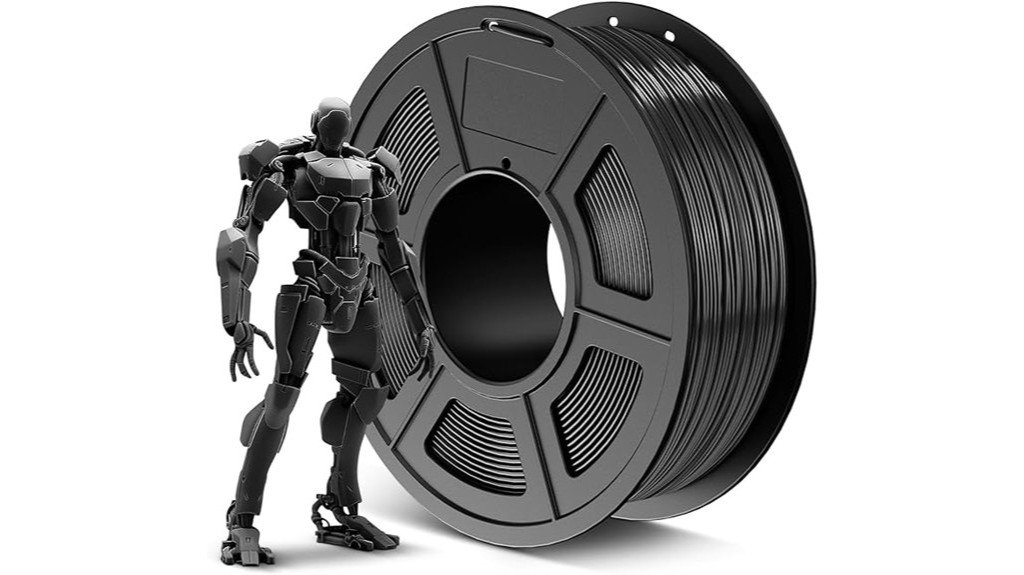
SUNLU’s ABS 1.75mm filament is a great pick when you want rugged, heat-resistant parts that hold up under stress—perfect for mechanical components like gears, brackets, and housings. You’ll get a 1kg spool of black ABS that fits most 1.75mm FDM printers, offering high impact resistance and long-term durability. Print at 250–260°C with a heated bed around 80–100°C, and keep speeds modest for best results. Users praise its adhesion and finish, though some report warping and occasional spool tangles. Overall, it’s a reliable, value-packed choice if you manage temperature and spool handling carefully.
Best For: Makers and hobbyists who need tough, heat-resistant parts (gears, brackets, housings) printed on 1.75mm FDM printers.
Pros:
- High impact resistance and long-term durability for functional parts.
- Good adhesion and polished finish when printed with correct temperatures.
- 1kg spool offers strong value and broad compatibility with most 1.75mm printers.
Cons:
- Prone to warping if bed temperature or enclosure not properly managed.
- Some users report filament tangling due to spool design.
- Requires high nozzle temperatures (250–260°C), which not all printers can reliably reach.
SUNLU Easy PA 1.75mm Nylon 6+66 1KG 3D Printer Filament (Black)
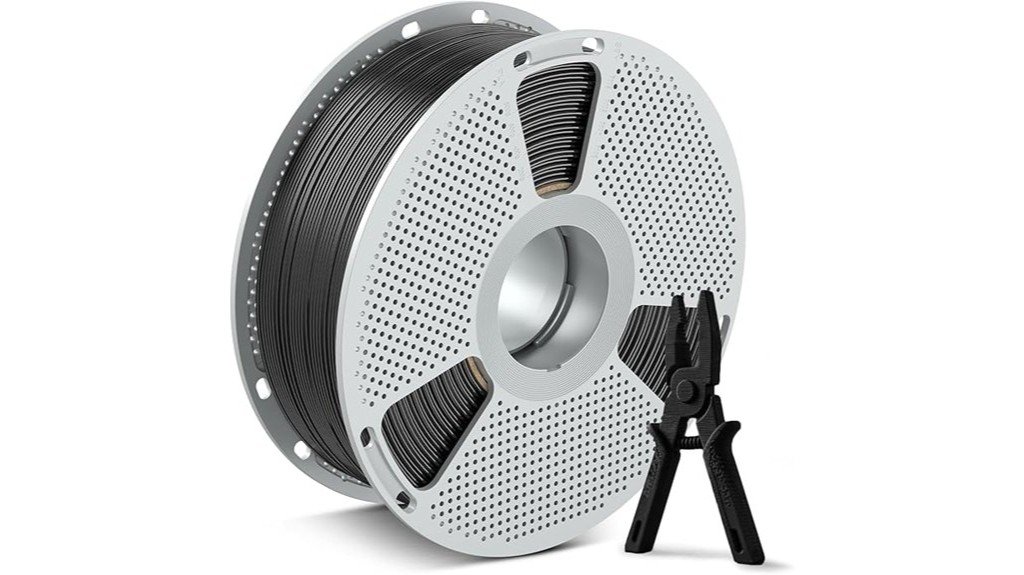
For makers who need tough, wear-resistant parts that can handle real stress, the SUNLU Easy PA Nylon 6+66 filament is a smart choice because it combines high strength with low warping so your functional prints come out precise and reliable. You’ll appreciate its nylon 6+66 build on a 1.75mm, 1kg spool, vacuum-sealed to keep moisture out and ready for an E2 dryer. It beats PLA and ABS in tensile and bending strength, resists drops, and has carbon-fiber-enhanced layer adhesion to cut delamination. Low shrinkage, 121°C heat deflection, and annealing options make it ideal for gears and drone arms.
Best For: Makers and engineers who need durable, low-warp functional parts (gears, drone arms, robotic joints) that withstand mechanical stress and heat.
Pros:
- High tensile and bending strength with excellent drop and wear resistance, outperforming PLA/ABS.
- Low shrinkage and warp-free printing with vacuum-sealed spool and carbon-fiber-enhanced layer adhesion for reliable, precise prints.
- High heat resistance (121°C HDT) and annealing capability; spool and PC core tolerate drying and high temperatures.
Cons:
- Nylon 6+66 typically requires higher nozzle/bed temps and good moisture control, adding complexity versus PLA.
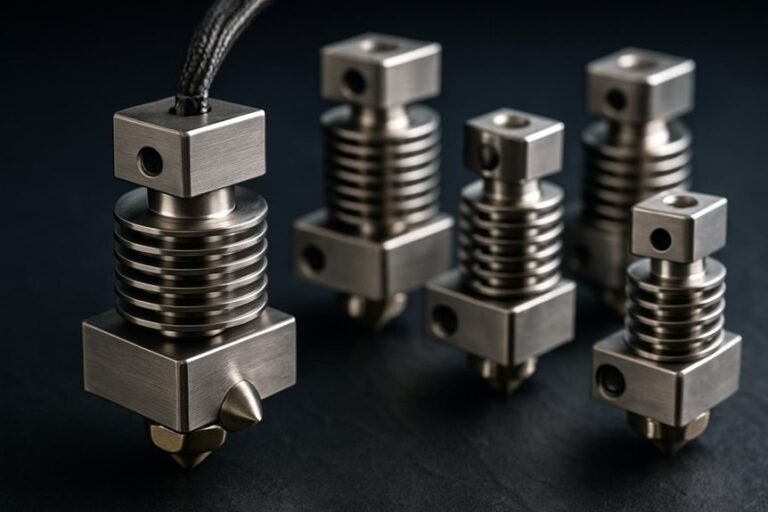
- Carbon-fiber reinforcement can increase nozzle wear—hardened nozzles recommended.
- More difficult to print and post-process than standard filaments, and may require an enclosed/hot printer environment for best results.
Siraya Tech Fibreheart PPA 3D Printing Filament (1kg, 1.75mm)
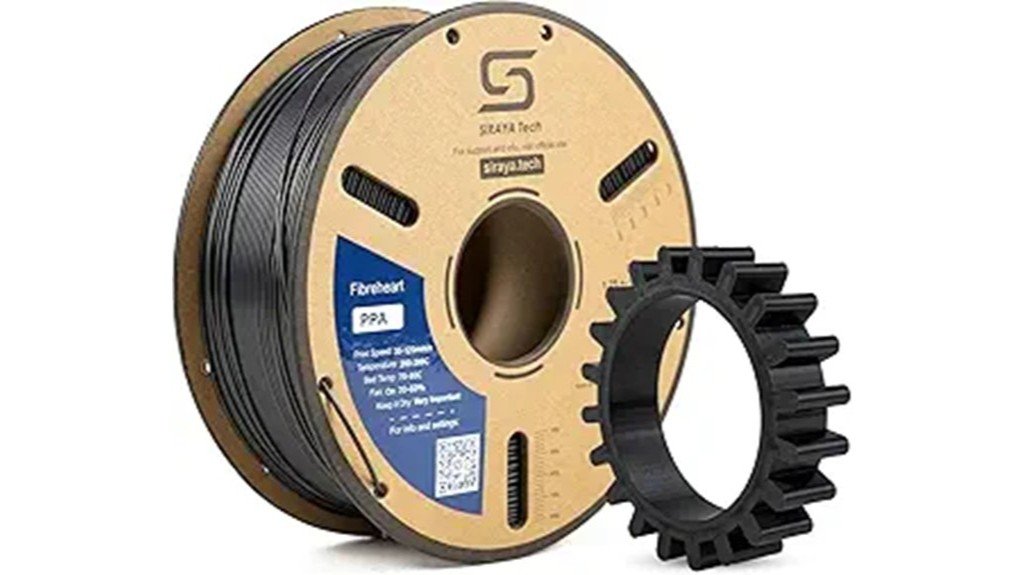
Siraya Tech’s Fibreheart PPA is a smart pick when you need tough, low-moisture nylon for functional parts that must handle heat and wear—think high-strength gears, bearings, or automotive prototypes. You’ll get a stiff, high-strength PPA with 70 MPa tensile and 114 MPa flexural strength when dry, plus much lower moisture uptake than PA6. It resists chemicals and heat, and its self-lubricating feel helps wear-prone parts last longer. Print at 260–300°C with a heated bed and expect some tuning for shrinkage or brittleness. Reviews praise strength and finish after a bit of dialing-in.
Best For: Engineers and advanced hobbyists needing a high-strength, low-moisture nylon filament for functional, heat- and wear-resistant parts like gears, bearings, and automotive prototypes.
Pros:
- High dry tensile (70 MPa) and flexural (114 MPa) strength for durable, load-bearing parts.
- Low moisture absorption (about one-fifth of PA6) improves dimensional stability and performance.
- Excellent chemical, heat, and wear resistance with self-lubricating properties for long-lasting moving components.
Cons:
- Requires high nozzle (260–300°C) and bed temperatures and a capable printer, limiting beginner setups.
- Can exhibit brittleness and shrinkage that demand tuning (slicer adjustments, drying) for precise prints.
- Some users report initial print difficulty and need for trial-and-error to achieve optimal results.
Polymaker Fiberon PA612-CF Carbon Fiber Nylon 1.75mm 3D Printing Filament (0.5kg)
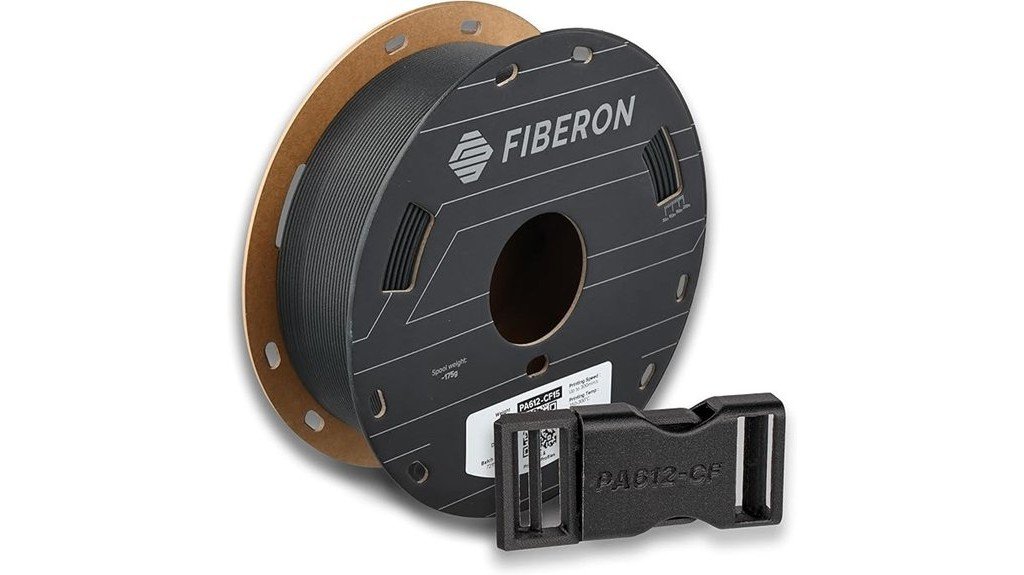
If you need a filament that combines toughness with precise, reliable prints, Polymaker’s Fiberon PA612-CF is a standout choice for mechanical parts — think gears, brackets, and tooling that need to last. You’ll like its carbon fiber-reinforced nylon blend: strong, thermally stable, and less moisture-sensitive than many nylons. It prints cleanly with good first-layer adhesion and minimal warping, and users report consistent dimensional accuracy. The spool is tangle-free, vacuum-sealed with desiccant, and eco-friendly. Note it can be slightly abrasive and somewhat brittle, so use a hardened nozzle and consider drying before printing for best results.
Best For: Engineers, hobbyists, and small-scale manufacturers who need strong, thermally stable, and dimensionally accurate parts (gears, brackets, tooling) with reliable printability.
Pros:
- Carbon-fiber reinforced nylon offers high strength, thermal stability, and excellent dimensional accuracy.
- Lower moisture sensitivity than many other nylons and generally prints with good first-layer adhesion and minimal warping.
- Tangle-free spool, vacuum-sealed packaging with desiccant, and recycled cardboard spool for improved handling and storage.
Cons:
- Carbon fiber makes the filament slightly abrasive — use a hardened nozzle to avoid wear.
- Can be somewhat brittle, which may limit flexibility for some applications.
- Some users still recommend drying before use to ensure optimal performance.
Factors to Consider When Choosing Rated Filament for Mechanical Parts
When you’re picking a filament for mechanical parts, you’ll want to weigh how strong and tough it is, whether it can handle heat, and how accurately it holds dimensions under stress. Also consider chemical and wear resistance plus how easy it is to print and finish, because a material that’s perfect on paper can be a pain to work with. I’ll walk you through each factor so you can choose a filament that actually performs in real-world use.
Mechanical Strength & Toughness
Because your printed parts have to do work and survive knocks, mechanical strength and toughness are two of the first things you should check when picking a filament. You’ll look at tensile strength — nylon, for example, resists stretching and bending so it’s great for gears and bearings. Toughness matters too: it’s the material’s ability to absorb energy and deform instead of cracking when hit. Check impact resistance ratings, since mechanical-grade filaments usually outperform PLA in wear and shocks. Don’t forget layer adhesion; strong bonding between layers cuts delamination and makes parts last. Finally, consider reinforced blends — carbon or glass fibers can boost both strength and toughness, giving you reliable, high-stress performance without guessing whether a part will survive the job.
Thermal Stability & Heat
Heat matters more than most people expect when you’re choosing filament for mechanical parts, because it affects whether a piece will hold its shape, fit, and function under load. You want filament with a high heat deflection temperature so parts won’t sag when stressed; for example, Nylon 6+66 tolerates about 121°C, which makes it a solid pick for hot, high-stress uses. ABS needs higher print temps (250–260°C) and a heated bed (80–100°C) to stay stable while printing, so plan your setup accordingly. PETG gives you good layer adhesion and low shrinkage, keeping parts stable at higher working temps than PLA. And if you need extra thermal resistance, carbon-fiber–reinforced nylons boost heat tolerance and strength for demanding environments.
Dimensional Accuracy & Tolerance
Dimensional accuracy matters a lot when you’re printing mechanical parts, because tiny differences in filament and settings can turn a snug fit into a sloppy one. You’ll want filament with tight tolerance — top brands advertise ±0.02 mm — so holes, shafts, and mating surfaces come out true. Consistent diameter prevents under- or over-extrusion that ruins fits; imagine a bearing seat slightly undersized because the filament thickened mid-print. Pick materials with low shrinkage, like some nylons or PETG, to cut warping and keep final dimensions stable. Good layer adhesion also matters: weak layers can separate and change part geometry. Finally, dial in nozzle and bed temperatures and keep them steady during a print; temperature swings are a common source of dimensional defects.
Chemical & Wear Resistance
Once you’ve dialed in fit and tolerance, you’ll want to think about how parts will hold up when they meet real-world chemicals and wear. You’ll choose materials that resist corrosion and abrasion so parts last in harsh environments. PPA stands out for low moisture uptake and strong chemical resistance, so it’s a safe pick for industrial uses. Nylon variants, especially carbon-fiber reinforced ones, lower friction and resist wear where surfaces rub constantly. Nylon 6+66 gives you tensile and flexural strength that helps parts keep shape under stress, reducing gradual damage. You can also use post-print steps like annealing to boost chemical and wear resistance. Think about the fluids and contact your part will see, then match the filament accordingly.
Printability & Post-processing
Although choosing the right filament might feel like a small step, good printability and smart post-processing make a huge difference in how your mechanical parts perform, so you’ll want to pay attention to both from the start. Printability means the filament prints reliably: correct nozzle and bed temperatures, and sensible print speeds help prevent warping, stringing, and layer failures. Choose materials with low shrinkage and strong layer adhesion—Nylon 6+66 reduces warping and keeps dimensions true. Carbon-fiber reinforced nylons give extra stiffness and stability for tooling and automotive fits. After printing, post-processing like annealing can boost heat resistance and strength for high-stress parts. Finally, store filaments dry—vacuum seals and desiccants keep moisture out, preserving printability and mechanical performance.
FAQ
Can These Filaments Be Printed in a Standard Enclosed Printer?
1. Can I print high-temperature filaments in a standard enclosed printer?
Yes, you can print high-temperature filaments in a standard enclosed printer, but ensure that your printer can reach the necessary temperatures for those materials.
2. What is required for good bed adhesion when printing filaments?
To achieve good bed adhesion, you may need to use specific adhesives, a heated bed, or particular bed surfaces tailored for the filament type you are using.
3. Do I need to heat the enclosure for nylon or PAI filaments?
Yes, heating the enclosure can help prevent warping and improve adhesion when printing with nylon or PAI filaments, which are sensitive to temperature fluctuations.
4. Is ventilation necessary when printing certain filaments?
Ventilation is recommended for high-temperature or odor-prone materials to ensure a safe printing environment and to minimize any unpleasant fumes.
5. What temperature range is suitable for printing standard filaments?
Most standard filaments require a temperature range between 180°C to 240°C, depending on the material type; always consult the filament manufacturer’s guidelines.
6. Can I print flexible filaments in a standard enclosed printer?
Yes, flexible filaments can be printed in an enclosed printer, but ensure the printer’s extruder and bed settings are optimized to handle the material’s unique properties.
7. What precautions should I take when printing with odor-prone materials?
When printing with odor-prone materials, it’s advisable to use a well-ventilated area or an enclosure with an exhaust system to mitigate any fumes produced during printing.
8. Are there any specific settings for printing with PLA in an enclosed printer?
While PLA is less sensitive to temperature, using an enclosed printer can help maintain consistent temperatures and reduce warping, especially for larger prints.
9. Why is it important to use an enclosed printer for certain filaments?
An enclosed printer helps maintain a stable temperature, which is crucial for materials that are sensitive to temperature changes, reducing the risk of warping and improving print quality.
10. Can I mix different filaments in one print?
Mixing different filaments in one print can be done, but it requires careful consideration of the printing temperatures and adhesion properties of each filament to ensure compatibility.
Which Filament Resists UV and Outdoor Weathering Best?
1. What are the best filaments for UV resistance?
ASA and UV-stabilized PETG are both excellent choices for UV resistance, making them ideal for outdoor applications.
2. How does ASA compare to PETG in terms of UV resistance?
ASA offers superior UV and thermal resistance compared to PETG, making it a better option for prolonged outdoor exposure.
3. Is UV-treated PETG suitable for outdoor use?
Yes, UV-treated PETG is designed for outdoor durability and provides good protection against UV damage, though it may not be as resilient as ASA.
4. What are the advantages of using ASA filament?
ASA has enhanced UV stability and thermal resistance, making it ideal for outdoor applications where exposure to sunlight and heat is a concern.
5. Can UV-stabilized PETG warp during printing?
While UV-stabilized PETG is generally easier to print than ASA, it can still warp if not properly managed, although it tends to be less prone to warping than standard PETG.
6. Which filament is easier to print, ASA or PETG?
UV-treated PETG is typically easier to print than ASA due to its more forgiving nature and lower temperature requirements.
7. What is the main benefit of using ASA for outdoor prints?
The main benefit of ASA for outdoor prints is its exceptional resistance to both UV light and extreme temperatures, ensuring longevity and performance.
8. Are there any downsides to using ASA?
While ASA offers superior properties, it can be more challenging to print due to its higher temperature requirements and potential for warping if not handled correctly.
9. How can I improve the print quality of UV-treated PETG?
To improve print quality with UV-treated PETG, ensure proper bed adhesion, maintain consistent temperatures, and consider using a heated bed to reduce warping.
10. Which filament should I choose for outdoor projects with varying temperatures?
For outdoor projects exposed to varying temperatures and sunlight, ASA is preferable due to its robust thermal and UV resistance properties.
11. Is there a significant cost difference between ASA and UV-stabilized PETG?
Generally, ASA tends to be more expensive than UV-stabilized PETG due to its enhanced properties and materials, but the choice should depend on the specific requirements of your project.
Are Any of These Food-Safe or Fda-Compliant?
1. Are 3D printed parts food-safe?
Generally, no. Most 3D printed materials are not inherently food-safe due to the types of filaments used.
2. What makes a material FDA-compliant?
FDA-compliance requires certified materials that meet specific safety and health standards for food contact.
3. Can I use any filament for food-related items?
No, you should avoid using standard filaments. Instead, choose certified food-safe materials specifically designed for food applications.
4. What are food-safe coatings?
Food-safe coatings are protective layers applied to printed parts that help make them safe for food contact. These coatings must be approved for use with food.
5. Why should I avoid porous prints?
Porous prints can harbor bacteria and contaminants, making them unsafe for food use. It’s essential to use non-porous materials and print settings.
6. How can I ensure my print settings are sanitary?
Use high-quality printers and maintain a clean printing environment. This helps minimize contamination during the printing process.
7. What are the risks of using non-compliant materials?
Using non-compliant materials can lead to health risks such as chemical leaching into food, which may cause illness or allergic reactions.
8. Is post-processing necessary for food safety?
Yes, post-processing can help make a 3D printed item more food-safe by sealing the surface and reducing porosity.
9. How do I find approved suppliers for food-safe materials?
Research suppliers who specifically offer FDA-compliant and food-safe 3D printing materials. Look for certifications and customer reviews.
10. Are there any exceptions to the food-safety rules?
Certain applications may allow for non-food-safe materials if they do not come into direct contact with food. Always assess the intended use case carefully.
11. Can I modify existing prints to make them food-safe?
While you can apply food-safe coatings or perform post-processing, starting with a certified food-safe filament is the best practice for ensuring safety.
Do These Materials Require Special Storage or Drying Equipment?
1. Do hygroscopic materials require special storage?
Yes, hygroscopic materials like Nylon, PETG, and PVA need dry, sealed storage to prevent moisture absorption.
2. What additional equipment is needed for hygroscopic materials?
A filament dryer or an oven is often necessary for hygroscopic materials to ensure they are properly dried before use.
3. Do ABS and PLA require special storage?
While ABS and PLA are less demanding, they still benefit from being stored in sealed bins to maintain their quality.
4. Why is moisture a concern for 3D printing materials?
Moisture can negatively affect the performance of 3D printing materials, leading to poor print quality or failed prints.
5. What is the ideal storage environment for 3D printing filaments?
An ideal storage environment is cool, dry, and sealed to protect the filaments from humidity and environmental factors.
6. Can I use regular containers for filament storage?
Regular containers may not provide adequate protection against moisture; using sealed bins or vacuum-sealed bags is recommended.
7. How can I tell if my filament has absorbed moisture?
Signs of moisture absorption include brittleness, bubbling during printing, or a change in filament color or texture.
8. Is it necessary to dry my filament before printing?
Yes, drying filament before printing is crucial for hygroscopic materials to ensure optimal print quality and adhesion.
9. How often should I check my filament storage conditions?
Regularly checking your filament storage conditions, especially humidity levels, is important to maintain filament integrity.
10. Are there alternatives to filament dryers?
If a filament dryer is not available, an oven can serve as an alternative for drying hygroscopic materials, but care should be taken to avoid overheating.
Can Printed Parts Be Bonded With Standard Adhesives?
1. Can I use standard adhesives on 3D printed parts?
Yes, most 3D printed parts can be bonded using standard adhesives, but the effectiveness varies depending on the filament type.
2. How well do PLA parts bond with adhesives?
PLA generally bonds well with standard adhesives, making it a good choice for projects that require adhesive bonding.
3. Is ABS suitable for bonding with standard adhesives?
Yes, ABS also adheres well to standard adhesives, allowing for effective bonding in various applications.
4. What about nylon parts—can they be bonded?
Nylon requires specialized adhesives or surface preparation to achieve a strong bond, as standard adhesives may not work effectively.
5. Can polycarbonate be bonded with standard adhesives?
Similar to nylon, polycarbonate typically needs specialized adhesives or surface treatment for effective bonding.
6. How should I prepare PETG parts for bonding?
PETG benefits from proper surface cleaning and the use of primers to enhance adhesion when using standard adhesives.
7. Are there specific adhesives recommended for nylon?
Yes, look for adhesives specifically designed for nylon or consider surface-prepping techniques to improve bonding.
8. What surface treatments help improve adhesion for polycarbonate?
Surface treatments such as sanding or applying a primer can enhance the bonding ability of polycarbonate with adhesives.
9. Is there a difference in bonding strength among different filaments?
Yes, bonding strength can vary significantly among filaments, with PLA and ABS typically showing stronger adhesion compared to nylon and polycarbonate.
10. Do environmental factors affect adhesive bonding on printed parts?
Yes, factors like humidity and temperature can influence the effectiveness of adhesive bonding on 3D printed parts.
Final Thoughts
When it comes to crafting mechanical parts, you have some exceptional filaments at your disposal. PETG is your go-to for straightforward printing; it offers a good balance of strength and ease. If heat resistance is critical, ABS is your best bet—it’s tough and can handle higher temperatures without deforming. For those demanding toughness and flexibility, Nylon is unmatched in durability. When you’re dealing with harsh chemicals and wear, PPA stands out for its resistance. And if you need extra stiffness, carbon-fiber nylon is the way to go—it’s designed for high-performance applications.
Select the filament that aligns with the specific stresses, environmental factors, and tolerances your part will endure. Don’t skimp on fine-tuning your print settings for optimal strength. With the right material and precise adjustments, you will produce durable, high-precision components that perform reliably. This isn’t just theory—this is how you achieve dependable results every time.